%20During%20Play%20in%20the%20Home.webp)
Your pediatrician mentioned it. The school evaluation report referenced it. Other parents in your support group swear by it. But what exactly is ABA therapy used for? And more importantly—could it help your child?
These questions deserve straight answers. Not clinical jargon that leaves you more confused than when you started. Not vague promises that sound too good to be true. Just practical information you can actually use.
Here's the reality: ABA therapy has become one of the most widely recognized treatments for autism. But its applications extend further than many parents realize. Whether your child struggles with communication, melts down during transitions, or needs help mastering everyday skills like getting dressed, ABA might offer meaningful support.
Let's break down what this therapy actually does and who it helps.
What Is Applied Behavior Analysis (ABA)?
A Parent-Friendly Definition
Applied Behavior Analysis sounds intimidating. The name alone feels like something from a psychology textbook. But strip away the academic language and you'll find a surprisingly practical approach.
ABA examines behavior through a simple lens. What triggers a behavior? What happens afterward? How do these patterns influence whether that behavior shows up again? By understanding these connections, therapists can help children learn new skills and move away from behaviors that create problems.
Think of it like detective work. Your child screams every time you turn off the television. An ABA approach asks: What happened right before the screaming? What did the screaming accomplish? Did it delay the TV going off? Get your attention? Once you crack the code, you can teach a better way to handle that moment.
The therapy relies heavily on positive reinforcement. When a child does something helpful—asks nicely, follows a direction, tries a new food—good things follow. Maybe it's praise. Maybe it's a favorite activity. Over time, those helpful behaviors become stronger while problematic ones fade.
Why ABA Is So Often Associated With Autism
Walk into any autism resource center and you'll hear about ABA within minutes. There's a reason for that.
Decades of research have established ABA as an evidence-based treatment for autism spectrum disorder. Major health organizations recognize its effectiveness. Insurance companies cover it. School districts build programs around its principles.
The connection makes sense when you consider what many autistic children struggle with. Communication challenges. Difficulty with social interactions. Sensory sensitivities that trigger meltdowns. Trouble adapting to changes in routine. ABA provides structured methods for addressing each of these areas.
But autism isn't the only condition where ABA proves useful. The principles work across a range of developmental and behavioral challenges. More on that shortly.
What Is ABA Therapy Used For in Autism?
Most families discover ABA because their child has an autism diagnosis. So let's start there. What can this therapy actually accomplish?
Building Core Skills
Children with autism often need extra support developing skills that other kids pick up naturally. ABA breaks these complex abilities into teachable steps.
- Communication sits at the top of the list. Some children need help with spoken language— forming words, building sentences, asking questions. Others communicate through sign language, picture systems, or speech-generating devices. ABA teaches children to express their needs effectively, whatever form that expression takes. Imagine the relief when your child can finally tell you they're thirsty instead of crying until you guess correctly.
- Social skills present another common focus. Taking turns during games. Sharing toys with siblings. Responding when someone calls their name. Making eye contact during conversations. These interactions that seem effortless for neurotypical children often require explicit instruction for kids on the spectrum.
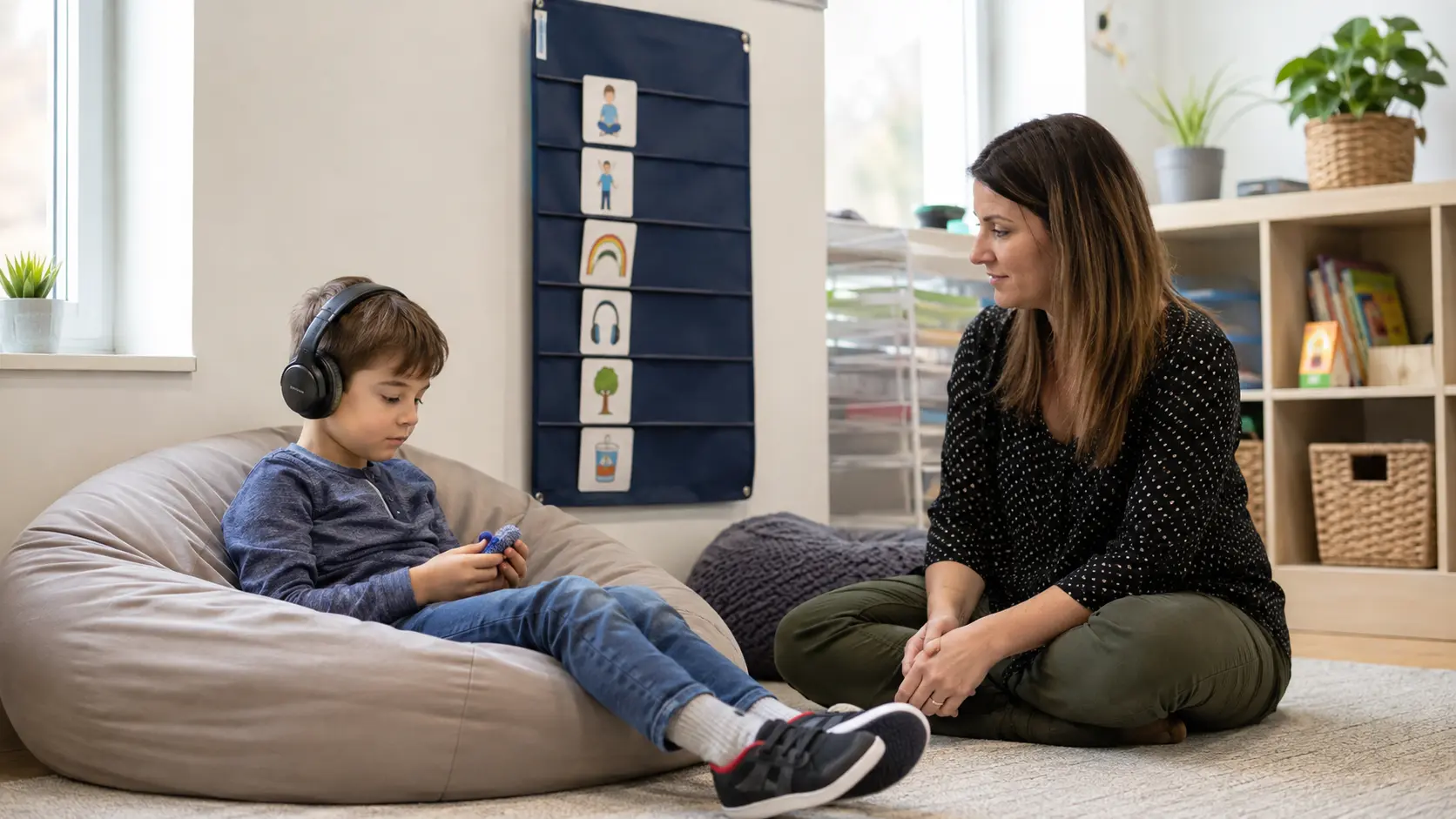
- Daily living skills round out the picture. Getting dressed independently. Using the bathroom. Brushing teeth without a battle. Following morning and bedtime routines. Each skill builds toward greater independence—for your child and for you.
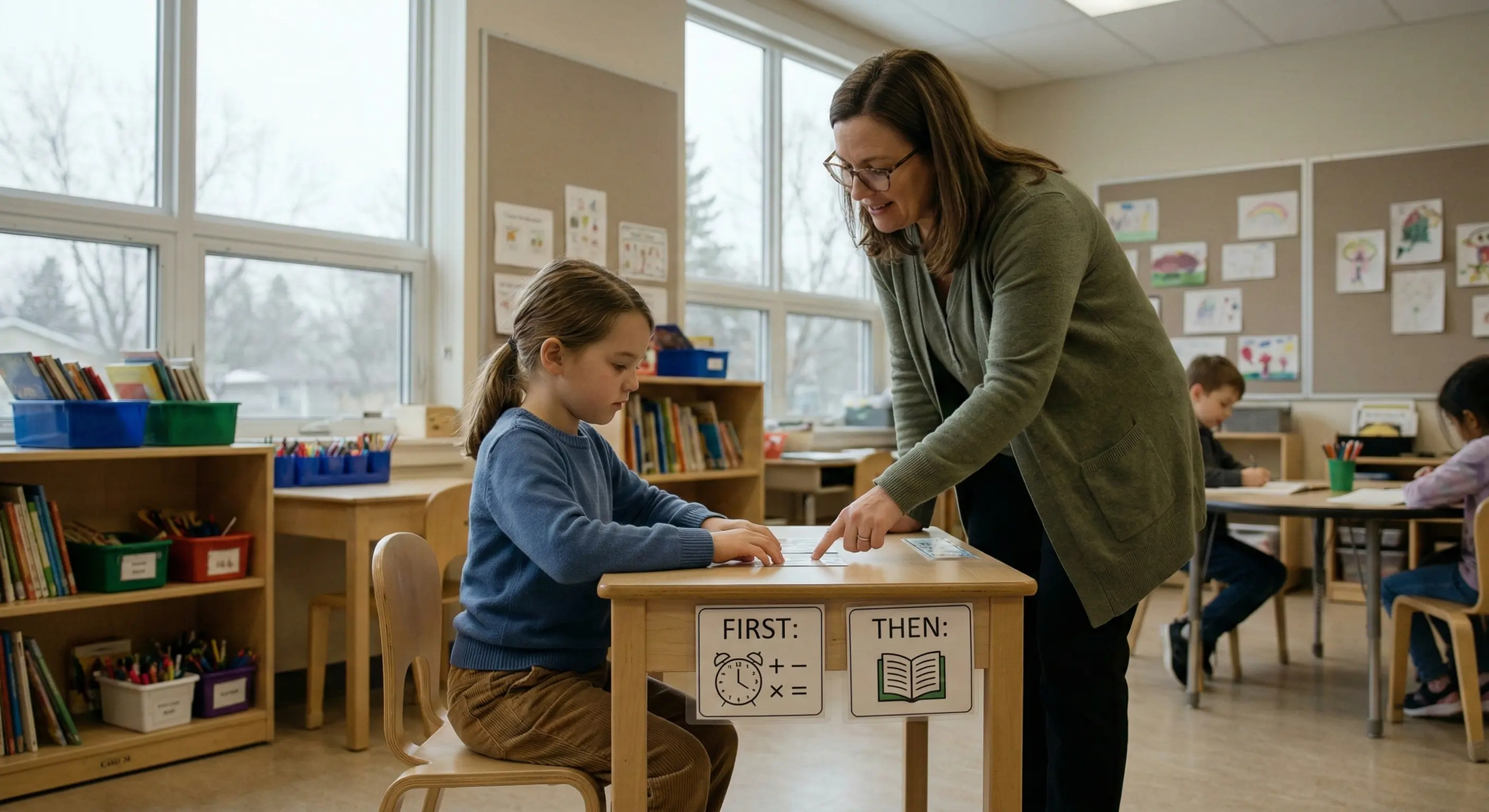
- School readiness matters too. Sitting during circle time. Following group instructions. Raising a hand instead of shouting out. Transitioning between activities without falling apart. These foundational abilities set children up for success in educational settings.
Reducing Challenging Behaviors
Let's be honest. Sometimes the behaviors bring families to ABA therapy faster than the skill deficits do.
Tantrums that last forty-five minutes. Aggression toward siblings or classmates. Self injurious actions like head-banging or biting. Running away in parking lots. Destroying property during meltdowns. These behaviors exhaust families and create safety concerns.
ABA doesn't just try to suppress these actions. That approach rarely works long-term anyway. Instead, therapists investigate the underlying function. Is the child trying to escape something overwhelming? Seeking attention? Attempting to communicate a need they can't express?
Once you understand the "why," you can teach alternatives. A child who hits to escape demands can learn to request a break. One who tantrums for attention can discover that asking to play together works better. The problematic behavior becomes unnecessary when a more effective option exists.
Supporting Families and Caregivers
Here's something that sets quality ABA apart: parent training isn't optional. It's essential.
Your child spends a few hours each week with therapists. They spend the rest of their time with you. Strategies that only work during therapy sessions won't create lasting change. But when parents understand the same principles and apply them consistently? Progress accelerates dramatically.
Parent training covers practical ground. How to use reinforcement effectively at home. Ways to structure routines that prevent meltdowns. Strategies for responding when challenging behaviors occur. Techniques for teaching new skills during everyday moments.
The goal isn't turning you into a therapist. It's giving you tools that make daily life smoother. Mealtimes become manageable. Bedtime stops being a two-hour ordeal. Grocery store trips no longer feel like extreme sports.
Other Conditions and Areas Where ABA Is Used
Autism dominates conversations about ABA. But the field extends beyond the spectrum. Understanding these broader applications helps paint a complete picture.
Developmental Disabilities and Delays
ABA principles apply wherever behavior change and skill building matter. Children with intellectual disabilities benefit from the same structured teaching approaches used in autism treatment. Those with global developmental delays often work on communication, adaptive skills, and behavior goals through ABA methods.
The techniques remain consistent. Break skills into small steps. Use reinforcement to strengthen helpful behaviors. Track progress through data. Adjust strategies based on what's working. These fundamentals translate across diagnostic categories.
ADHD and Behavioral Challenges
Some providers apply ABA strategies to attention and impulse control difficulties common in ADHD. Building routines becomes the priority. Reinforcing on-task behavior helps children stay focused. Teaching coping skills provides tools for managing frustration and impulsivity.
The approach differs from medication-based treatment but can complement it effectively. Children learn concrete strategies for organizing their behavior rather than relying solely on pharmacological support.
Other Applications Worth Knowing
The ABA toolkit finds use in additional areas too:
- Pediatric feeding challenges respond to behavioral intervention. Children with extreme food selectivity—eating only five foods, refusing anything with certain textures—can expand their diets through gradual exposure and reinforcement.
- Traumatic brain injury rehabilitation sometimes incorporates ABA principles. Patients relearning skills or managing behavioral changes after neurological events benefit from structured, reinforcement-based approaches.
- School-wide positive behavior support programs draw directly from ABA research. These frameworks help entire schools create environments where appropriate behavior thrives.
One important note: not every ABA provider offers services across all these areas. Clinics specialize. A provider excellent at autism treatment might not take feeding cases. Always ask what a particular clinic focuses on before assuming they can address your child's specific needs.
How ABA Works Across These Different Uses
Same Principles, Different Goals
Whether treating autism, addressing ADHD symptoms, or expanding a child's diet, ABA relies on consistent fundamentals.
Understanding function comes first. Every behavior serves a purpose. The child throwing food at dinner might be avoiding textures they find unbearable. The teen refusing homework might be escaping tasks that feel impossibly difficult. Effective intervention starts with figuring out what the behavior accomplishes.
Positive reinforcement drives change. When helpful behaviors produce good outcomes, they strengthen. When problematic behaviors stop working, they weaken. This principle operates universally across conditions and goal areas.
Data keeps treatment on track. Therapists don't guess whether strategies work. They measure. They chart progress. They adjust based on evidence rather than intuition. This scientific foundation separates ABA from approaches that rely purely on clinical impression.
Individualized Treatment Plans
Two children with identical diagnoses might have completely different ABA programs. One works primarily on language development. Another focuses on reducing severe aggression. A third targets toilet training and self-care independence.
Assessment determines direction. A Board Certified Behavior Analyst (BCBA) evaluates your child's current abilities, identifies priorities, and designs an intervention plan matching their unique profile. Your family's goals matter too. What skills would make the biggest difference in your daily life? What behaviors create the most stress? These questions shape treatment as much as clinical assessments do.
Plans evolve over time. Goals mastered get replaced with new ones. Strategies that aren't producing results get modified. The program your child starts with won't look identical to what they're doing six months later.
What Is ABA Therapy Used For at AtlasCare ABA?
The field of ABA covers tremendous ground. Individual providers focus more narrowly. Here's what AtlasCare ABA specifically addresses.
Our primary focus centers on children with autism and related developmental needs. We don't try to be everything to everyone. We specialize—and that specialization allows us to deliver excellent care in our focus areas.
- Communication and language development form a cornerstone of our work. Whether your child needs to develop first words, expand sentence length, or learn to use an augmentative communication device, we build programs around functional communication goals.
- Social interaction and play skills get significant attention. Learning to engage with peers, share materials, take turns, and navigate the unwritten rules of social exchange opens doors for children across environments.
- Independence in daily routines creates freedom for the whole family. Dressing. Toileting. Tooth brushing. Morning and bedtime sequences. Each mastered skill reduces the support burden and builds your child's confidence.
- Behavior support addresses the challenges disrupting safety, learning, and family harmony. We investigate why difficult behaviors occur and teach effective alternatives. The goal isn't robotic compliance. It's helping your child get their needs met in ways that work better for everyone.
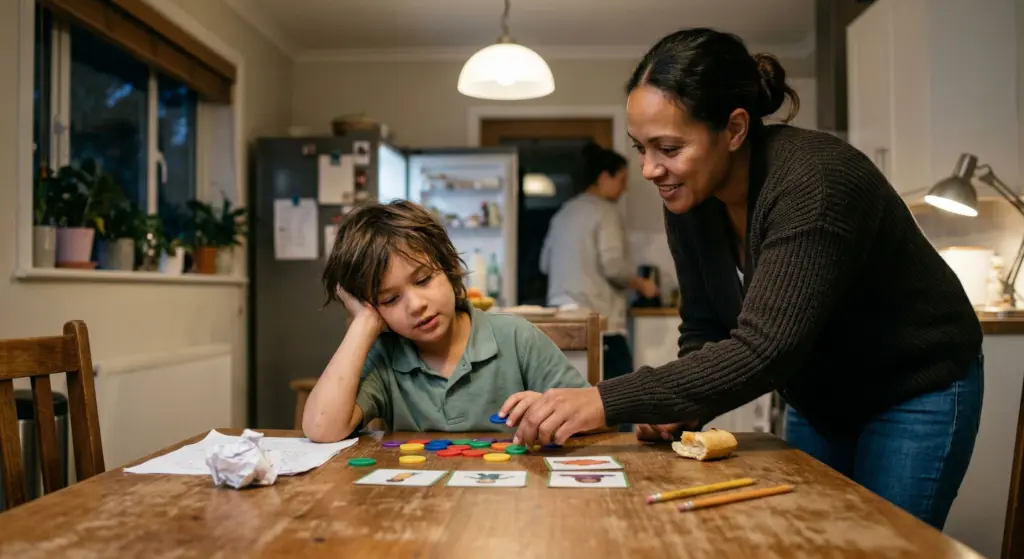
All of this happens where your child actually lives their life. Our services include in-home ABA therapy, school and daycare support, and parent training. We work in your kitchen during mealtimes. We practice getting ready for school in your actual bathroom. We collaborate with teachers in your child's real classroom. Skills learned in context stick better than those practiced only in clinical settings.
We proudly serve families across North Carolina, New Mexico, and Iowa.
Is ABA Therapy Right for Your Child?
Questions Parents Can Ask
Before starting any therapy, take time to clarify your priorities. What do you most want your child to be able to do? Where are the biggest pain points in daily life? What behaviors create safety concerns or family stress?
Then consider whether ABA aligns with those priorities. If communication tops your list, ABA offers well-established methods for building language skills. If dangerous behaviors keep you up at night, ABA provides systematic approaches for understanding and reducing them. If daily routines feel like constant battles, ABA can help create structure and predictability.
Ask providers realistic questions. What kind of progress can we expect? How will you measure whether treatment is working? How will I be involved as a parent? What happens if we're not seeing results?
Considering ABA Alongside Other Therapies
ABA rarely operates in isolation. Most children benefit from comprehensive support involving multiple disciplines.
Speech therapy addresses language and communication from a different angle than ABA. The two complement each other beautifully. Occupational therapy tackles sensory processing, fine motor skills, and self-regulation through approaches that enhance ABA work. School-based services ensure support continues in educational settings.
Coordination between providers creates the best outcomes. Look for ABA clinicians who communicate willingly with your child's other therapists and teachers. Fragmented care where nobody talks to each other produces fragmented results.
When to Talk to a Professional
Reading articles only takes you so far. At some point, you need individualized guidance.
Your child's pediatrician can offer referrals and help determine whether ABA makes sense given your child's profile. A BCBA can conduct assessments and explain specifically how ABA would address your child's needs. School teams provide perspective on how your child functions in educational environments.
These conversations help you move from general information to specific decisions. Don't try figuring everything out alone when professionals exist to guide you.
Final Thoughts
So what is ABA therapy used for? The short answer: building skills and reducing behaviors that interfere with learning, safety, and quality of life.
The longer answer depends on your child. For many families, ABA means teaching a nonverbal child to request their favorite snack. For others, it means ending the forty-minute meltdowns that happen every time plans change. For still others, it means finally getting through the morning routine without tears from everyone involved.
Autism remains ABA's most common application. But the principles extend to other developmental disabilities, behavioral challenges, and skill deficits across conditions. The unifying thread? Using what we know about how behavior works to help people learn and thrive.
Effective ABA isn't about forcing compliance or erasing your child's personality. Ethical providers prioritize respect, collaboration, and meaningful goals. They work with your family to identify what matters most and design treatment around those priorities.
You don't have to navigate this alone. Providers like AtlasCare ABA exist to walk alongside you, answer your questions, and help you determine whether ABA fits your child's needs.
Ready to Learn More?
If you're wondering what ABA therapy could accomplish for your child, AtlasCare ABA is here to help you explore the possibilities.
We provide in-home ABA therapy, school and daycare support, and parent training throughout North Carolina, New Mexico, and Iowa. Our team focuses on building communication, reducing challenging behaviors, and increasing independence—all while respecting your child and partnering with your family.
Contact us today to learn how ABA-based treatment can support your child's growth.


















.webp)


.webp)

.webp)
.webp)
.webp)







.jpg)


.webp)

.webp)
.webp)