You're standing in the grocery store checkout line when it happens. Your child suddenly drops to the floor, screaming. Everyone's staring. Your face is burning. And you're asking yourself the question so many parents of autistic children ask: Is this a tantrum, or is this something else entirely?
Here's the thing—that question matters more than you might think. Tantrums and meltdowns might look similar on the surface, but they come from completely different places. And the way you respond to each one can make all the difference in helping your child feel safe, understood, and supported.
Let's break this down together.
Why "Tantrum vs. Meltdown" Matters for Autistic Children
Most autistic kids experience both tantrums and meltdowns at some point. That's completely normal. But here's where things get tricky: these two situations need completely different responses from us as parents and caregivers.
When we mistake a meltdown for a tantrum, we might respond with consequences or try to "wait it out" while our child becomes more and more distressed. That doesn't help anyone. In fact, it can make things worse—for your child and for you.
Understanding what's actually happening helps you protect your child's emotional well being, keep everyone safe, and honestly, preserve your own sanity in those intense moments. You're not dealing with bad behavior. You're supporting a child whose nervous system works a bit differently.
What Is a Tantrum?
Let's start with tantrums because they're probably more familiar to most of us.
Characteristics of a Tantrum
A tantrum usually happens when a child wants something—a toy, more screen time, that candy bar right there at eye level—or when they're trying to avoid something they don't want to do. There's typically a goal behind it.
Here's what often gives it away: kids having tantrums usually have some awareness of what's happening around them. They might peek to see if you're watching. They might dial up the intensity when you say no, then calm down surprisingly fast when you give in (or when they realize it's not working).
Tantrums tend to stop when:
- Your child gets what they wanted
- They realize the tantrum isn't going to work
- You change your response in some way
Examples of Tantrums in Everyday Life
Picture this: You're at Target and your four-year-old spots a toy on the shelf. You say no, and suddenly there's screaming. But when you calmly hold your boundary and start walking toward the exit, the screaming gradually stops.
Or maybe your child throws their tablet across the room when screen time ends. It's intense, it's frustrating—but once they realize the tablet isn't coming back on, they move on to something else.
Now, I want to be clear about something. Tantrums aren't "fake" and they're not something to be ashamed of. They're a normal part of childhood, and they're especially common when kids are still learning how to handle big emotions. The goal here isn't to shame anyone. It's to respond in a way that actually helps.
What Is a Meltdown?
Meltdowns are a different animal entirely. And understanding this difference changed everything for so many families I've talked to over the years.
Meltdowns as a Fight-or-Flight Response
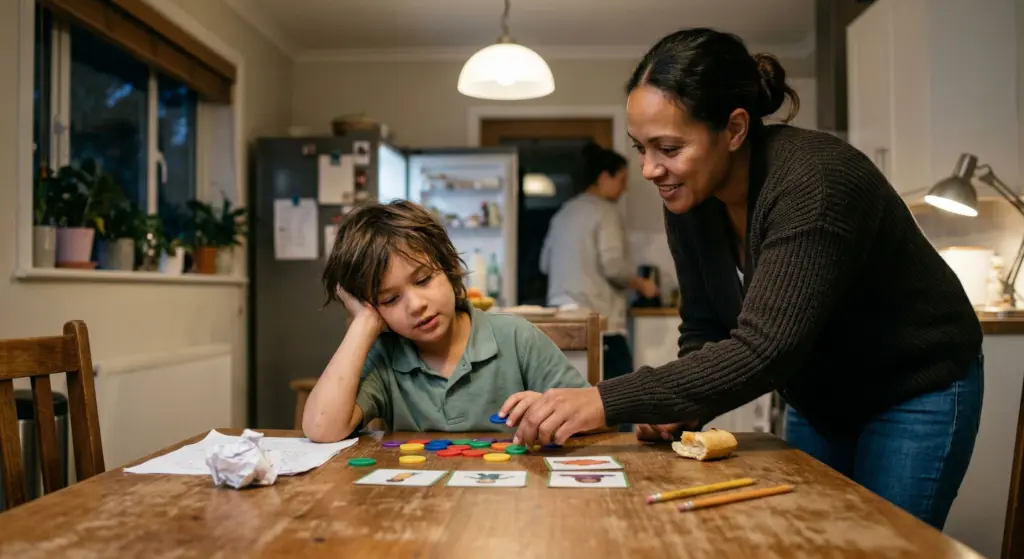
When an autistic child has a meltdown, their nervous system has essentially hit a breaking point. This isn't about wanting something or trying to get out of something. Their brain has shifted into survival mode—fight, flight, or freeze.
Think about what happens when you touch a hot stove. You don't think about pulling your hand away. Your body just does it. That's your nervous system protecting you. A meltdown works similarly. The child's system is so overwhelmed—usually by sensory input or emotional overload—that they've lost the ability to regulate themselves.
This is why you can't reason with a child in the middle of a meltdown. The part of their brain that handles logic, decision-making, and "good choices" has temporarily gone offline. They're not being defiant. They literally cannot just stop.
What a Meltdown Can Look Like
Meltdowns show up differently in different kids, but you might see:
- Fight responses: Screaming, crying, hitting, kicking, throwing things, or lashing out physically.
- Flight responses: Running away, hiding, desperately trying to escape the situation.
- Freeze responses: Going completely still, covering ears or eyes, curling up into a ball, "zoning out," or shutting down entirely.
Here's a key difference from tantrums: meltdowns often continue even after you remove the demand or give the child what they want. That's because the core problem isn't about getting something. It's about overload. The child's nervous system needs time to calm down and reset.
Autism Tantrum vs Meltdown: Key Differences
Sometimes it helps to see things side by side. Here's how tantrums and meltdowns typically compare:
What's driving it:
- Tantrum: Usually about getting or avoiding something specific
- Meltdown: Nervous system overload from sensory or emotional overwhelm
Level of control:
- Tantrum: Child may adjust their approach, check if you're watching, or try different tactics
- Meltdown: Child typically cannot "snap out of it" no matter what you do
How it ends:
- Tantrum: Often stops when the child achieves their goal or sees it won't work
- Meltdown: Ends when the overload decreases—quiet environment, time, co-regulation—and there's often a long recovery period afterward
Awareness:
- Tantrum: Child is usually aware of surroundings and may respond to audience
- Meltdown: Child may seem disconnected from what's happening around them
Of course, real life is messy. Sometimes a tantrum can escalate into a meltdown if a child becomes too overwhelmed by their own emotions. And sometimes it's genuinely hard to tell what you're dealing with in the moment. That's okay. What matters is paying attention and responding with compassion either way.
Signs of Sensory Overload: Early Warning Signals
One of the most powerful things you can do as a parent is learn to spot the signs of sensory overload before your child hits the breaking point. It's like seeing the storm clouds rolling in—you can't always prevent the storm, but you can get to shelter.
Subtle Signs Parents Can Watch For
Every child is different, but here are some common early warning signals:
- Heightened sensitivity: Your child starts covering their ears or eyes, squinting in normal lighting, or flinching away from touch that wouldn't usually bother them.
- Avoidance behaviors: They suddenly don't want to go into a store they were fine with last week. They refuse to go near the playground. They ask to leave a birthday party early.
- Verbal cues: "It's too loud!" "That hurts!" "I don't like it!" Sometimes kids can tell us exactly what's wrong if we're listening.
- Shutting down: Going very quiet. Staring into space. Becoming unusually still or "zoned out."
- Seeking input: Some kids seek sensory input when they're becoming dis regulated—wanting tight hugs, pressing against walls, hiding under heavy blankets, or climbing into small spaces.
- Increased stemming: More intense rocking, hand-flapping, pacing, or other self-regulatory movements than usual.
Why Catching Overload Early Matters
When you notice these signs early, you have options. You can leave the overwhelming environment. You can offer noise-canceling headphones or a quiet corner. You can provide whatever sensory supports help your particular child.
You won't always catch it in time. That's not a failure. But when you do catch it early, you can often reduce the intensity of what follows—and your child learns that you understand them and can help keep them safe.
De-Escalation Techniques for Tantrums vs Meltdowns
Here's where the "why it matters" really comes into play. Tantrums and meltdowns need different responses. Using meltdown strategies during a tantrum might accidentally reinforce the behavior. Using tantrum strategies during a meltdown will almost certainly make things worse.
Responding to Tantrums
When you're pretty sure you're dealing with a tantrum:
- Stay calm yourself. This is harder than it sounds when your kid is screaming in public, but your calm energy matters. Take a breath.
- Acknowledge the feeling without giving in. "I can see you're really upset that we can't buy that toy today. It's disappointing when we want something and can't have it."
- Hold your boundary. If the answer is no, keep it no. Giving in teaches kids that escalation works.
- Offer alternatives when possible. "You can't have candy right now, but you can choose between an apple or crackers when we get home."
- Wait it out if needed. Sometimes kids just need to express big feelings. You don't always have to fix it or make it stop.
- Reconnect afterward. Once the storm has passed, talk about what happened and brainstorm better ways to handle frustration next time.
Responding to Meltdowns
Meltdowns require a completely different approach. Remember, your child's thinking brain has gone offline. This is about survival mode, not behavior.
- Prioritize safety. Move dangerous objects. Make sure other people (including siblings) are safe. Don't worry about the mess or the stares.
- Reduce sensory input immediately. Find a quieter space if you can. Dim lights if possible. Ask other people to step back and stop talking.
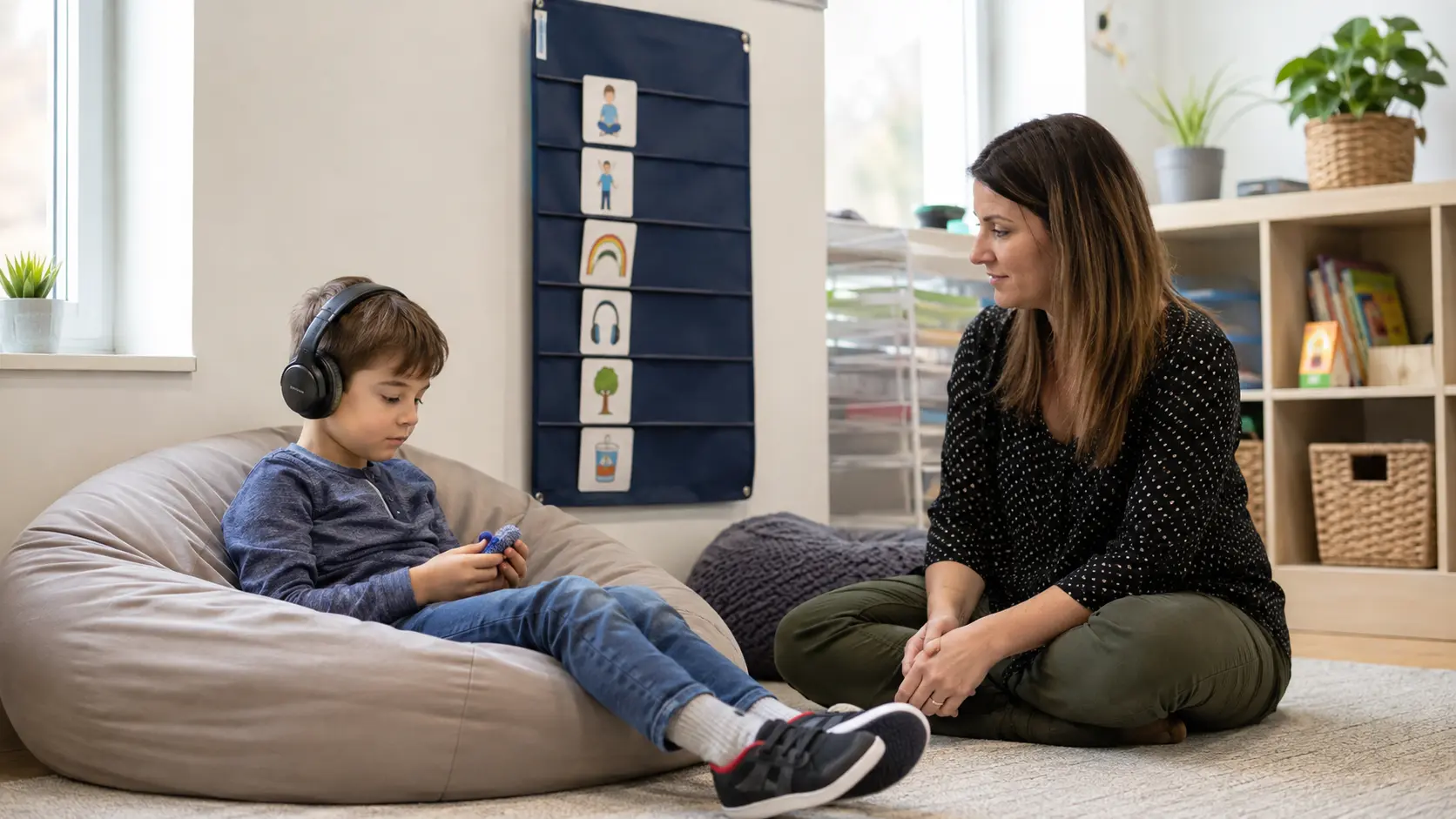
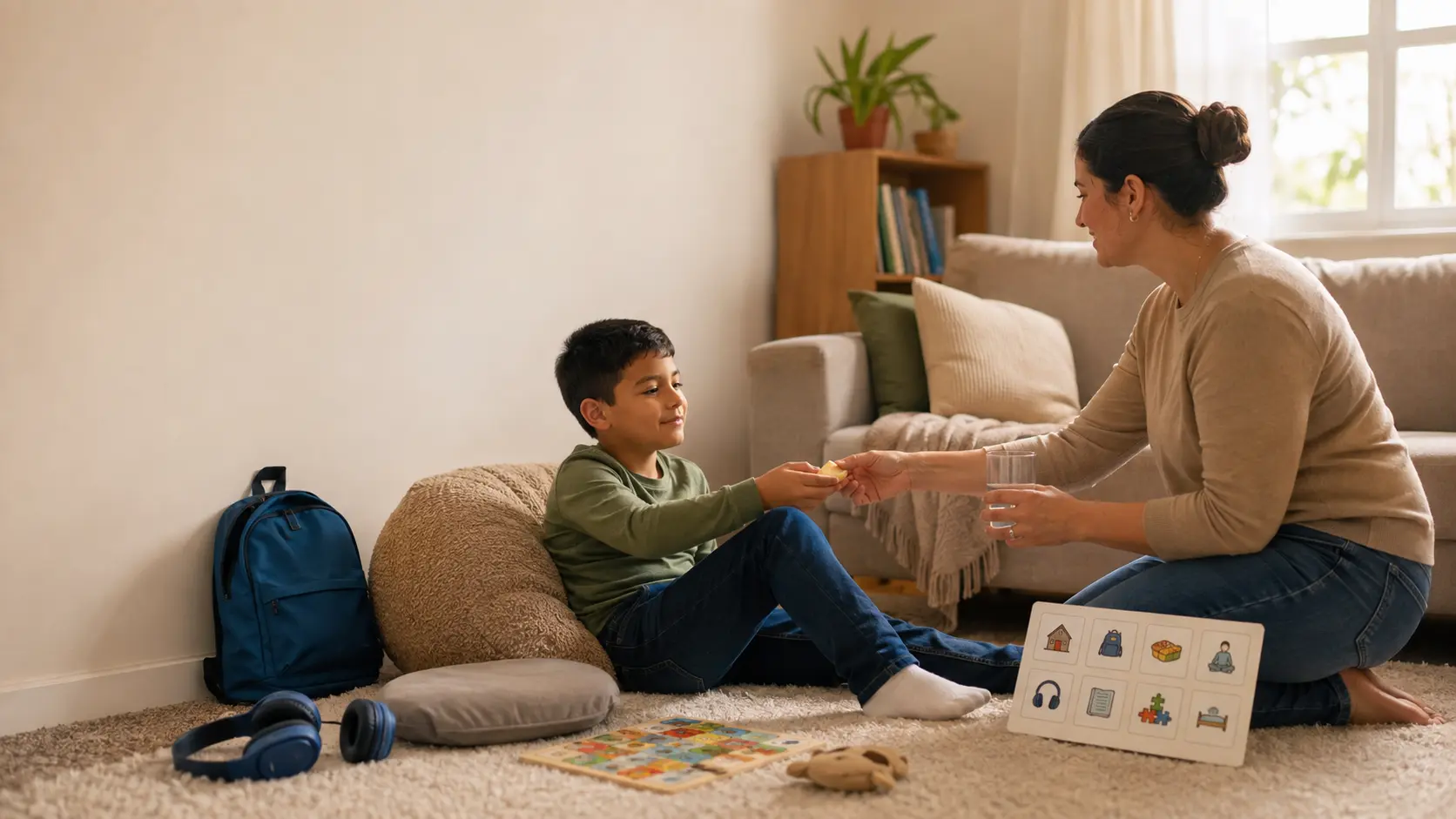
- Create a sensory retreat. If you're at home, this might be a quiet room, a tent, or a cozy corner with weighted blankets. In public, it might be a quiet corner of the store or your car.
- Minimize your words. Now is not the time to explain, reason, lecture, or teach. Keep phrases short and calm: "I'm here." "You're safe." "I've got you."
- Don't try to touch without permission. Some kids find touch comforting during meltdowns. Others find it overwhelming. If your child typically accepts comfort, offer it gently. If not, just stay close.
- Wait for the nervous system to settle. This takes as long as it takes. There's no rushing it.
- Save the problem-solving for later. After your child has fully recovered, you can talk about what happened and what might help next time.
Co-Regulation and Emotional Regulation: Helping Your Child Feel Safe
You've probably heard the term "self-regulation"—the ability to manage your own emotions and reactions. But here's the thing: kids aren't born knowing how to do that. They learn it from us, through something called co-regulation.
What Is Co-Regulation?
Co-regulation is basically what happens when you help your child calm down by being calm yourself. Your steady presence, soothing voice, and gentle support actually help their nervous system settle.
Think of it like this: if your child's nervous system is a boat being tossed by waves, your calm presence is the anchor that helps steady them. Over time, with enough of these experiences, they start to internalize that ability to anchor themselves.
Research consistently shows that children whose parents provide effective co-regulation develop better emotional regulation skills over time and show fewer behavioral challenges. It works. It just takes patience and practice.
Co-Regulation Strategies Parents Can Use
- Regulate yourself first. You can't pour from an empty cup, and you can't be a calm anchor if you're drowning yourself. Take slow breaths. Relax your shoulders. Soften your voice. Your child picks up on your state more than you might realize.
- Use simple, validating language. "You're having really big feelings right now. I'm right here with you." "Your body is telling you something is wrong. Let's help it feel safe."
- Stay close without demanding. Sometimes just sitting nearby is enough. You don't have to fix it. Your presence itself is regulating.
- Offer sensory support if welcomed. Deep pressure (firm hugs, weighted blanket), rocking, fidgets, or whatever your child finds soothing. Let them lead on what helps.
- Name feelings after the storm passes. "That was really hard. It seemed like all those sounds got too loud for your body." This builds emotional vocabulary over time.
Meltdowns in Public: Managing Safety, Judgment, and Your Own Stress
Let's be honest: public meltdowns are brutal. Not because of your child—but because of the stares, the comments, and that crushing feeling of being judged by people who have no idea what's really happening.
Immediate Priorities in Public
When a meltdown happens out in the world, your priorities are simple:
- Safety first. Get your child away from any immediate dangers—parking lots, escalators, crowded areas. Move to the safest nearby spot, whether that's a quiet corner, an empty aisle, or your car.
- Ignore the audience. I know, easier said than done. But those people staring don't matter right now. Your child does. Focus on them.
- Use the same strategies. Lower sensory input however you can. Fewer words. Calm presence. Wait it out.
- Let go of the errand. The groceries can wait. The appointment can be rescheduled. Nothing on your to-do list is more important than your child's well being.
Planning Ahead for Public Settings
Preparation won't prevent every meltdown, but it can help:
- Know your child's triggers. Loud echoing spaces? Fluorescent lights? Crowded areas? Transitions? Pay attention to patterns.
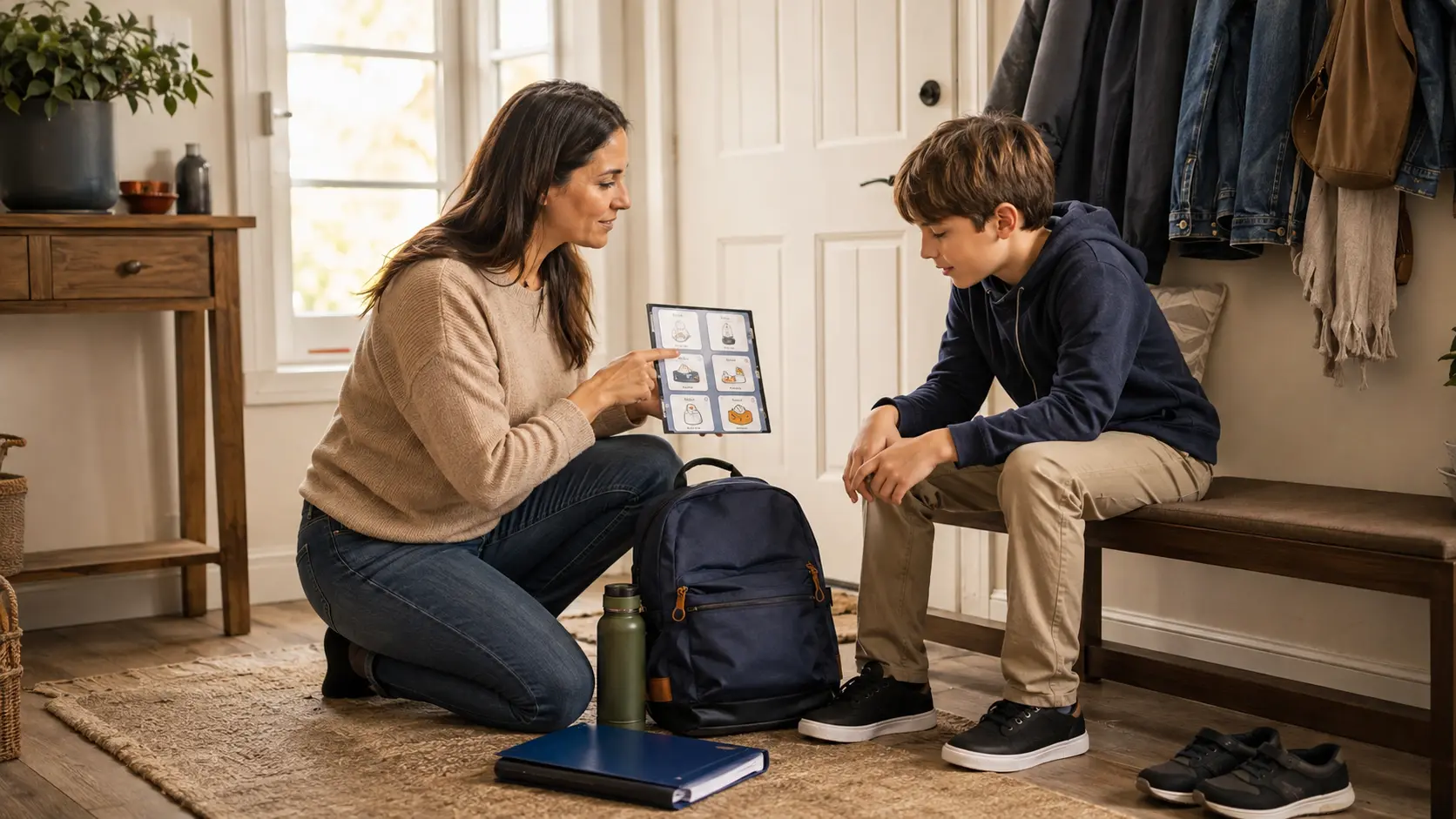
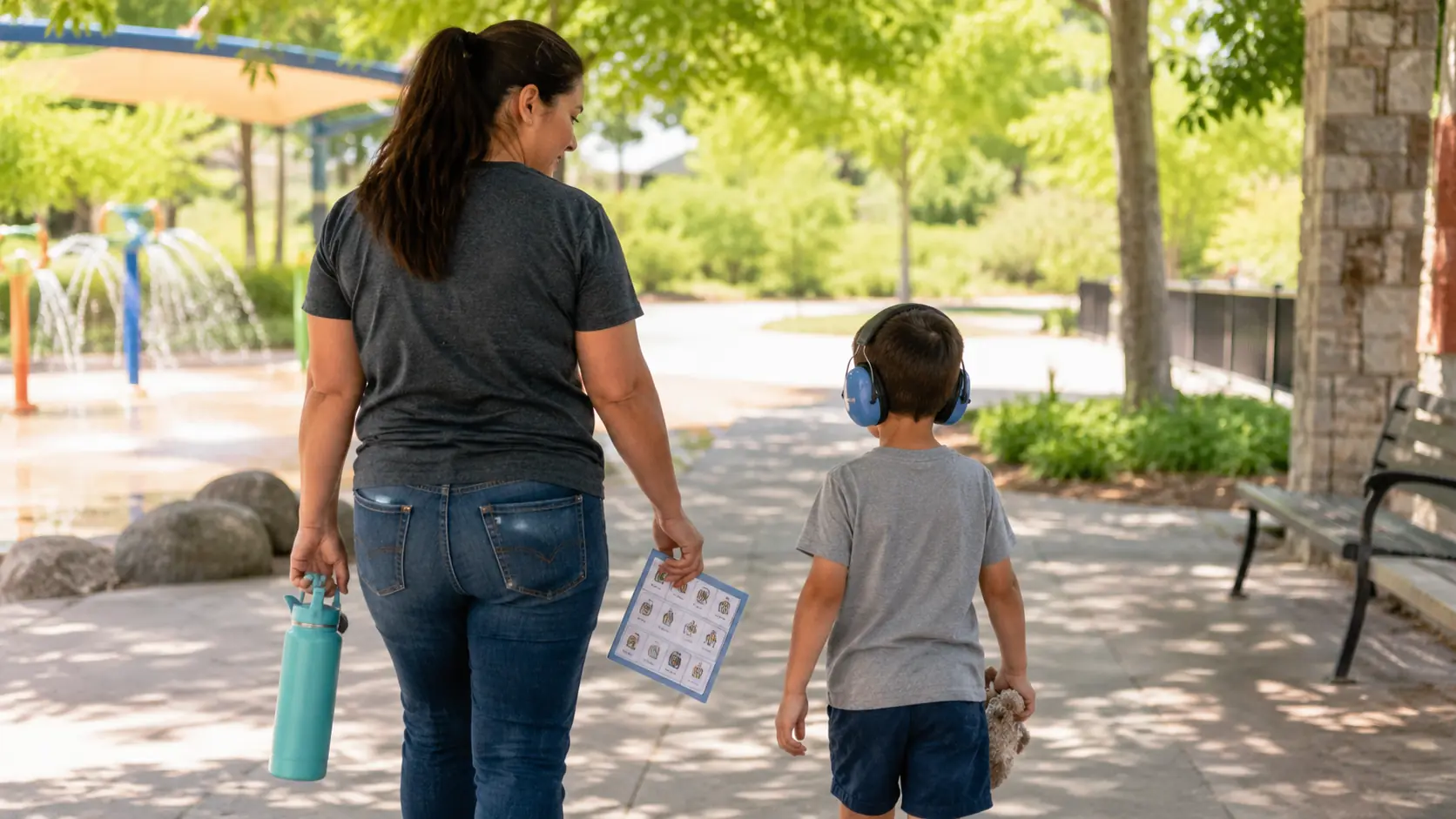
- Create a "regulation toolkit." Pack noise-canceling headphones, sunglasses, fidgets, a favorite comfort item, and snacks. Keep it in your bag or car.
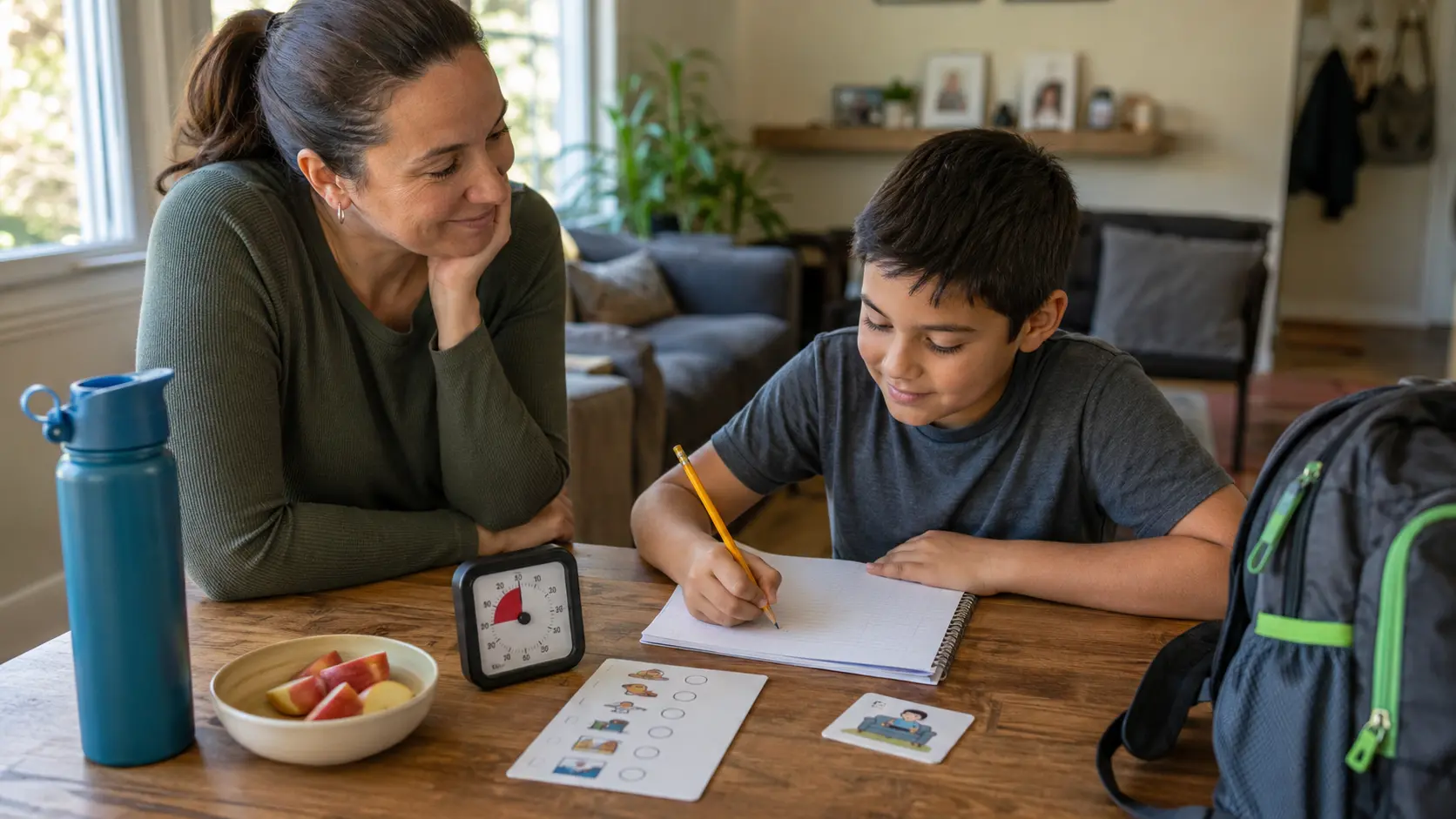
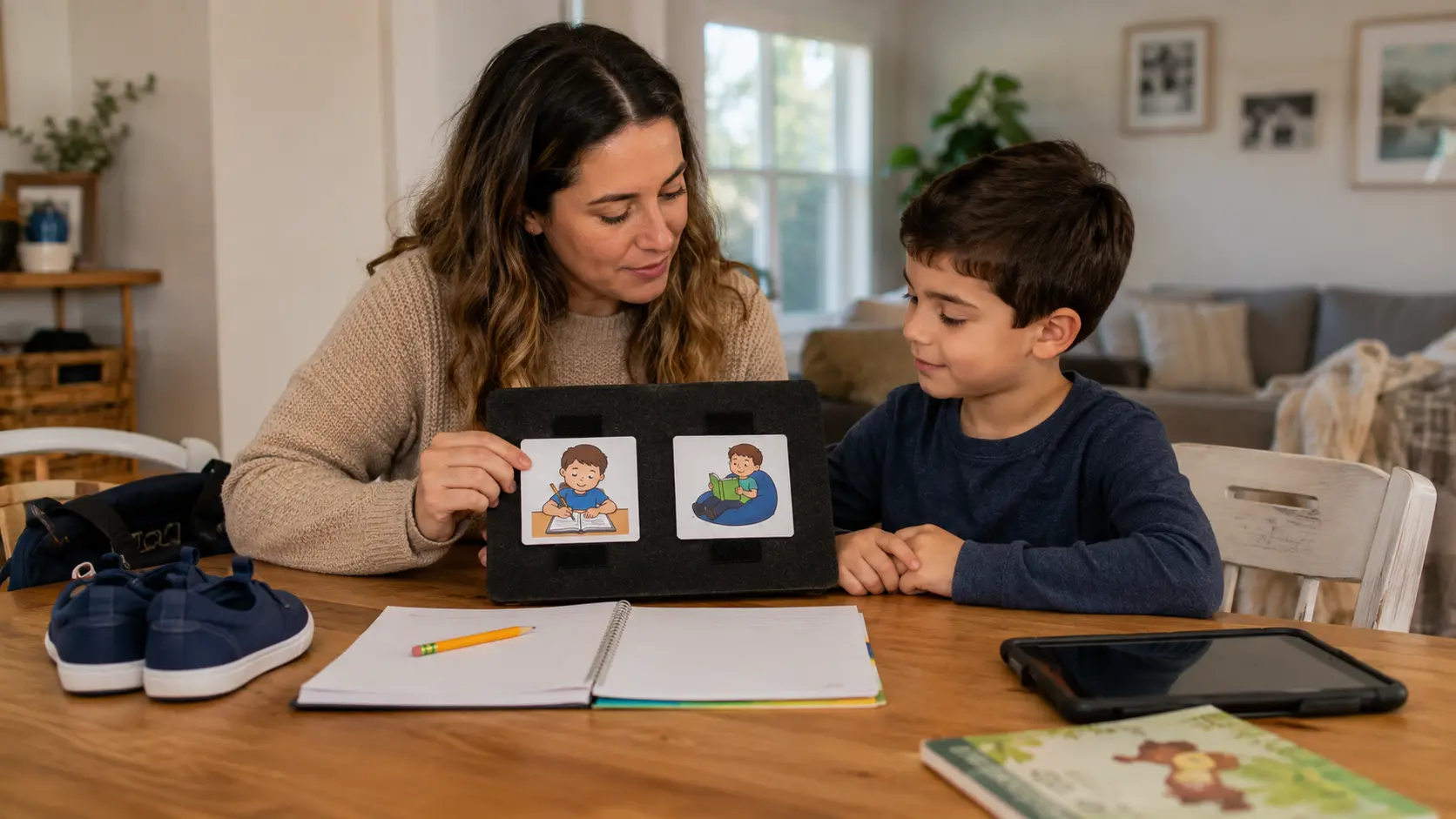
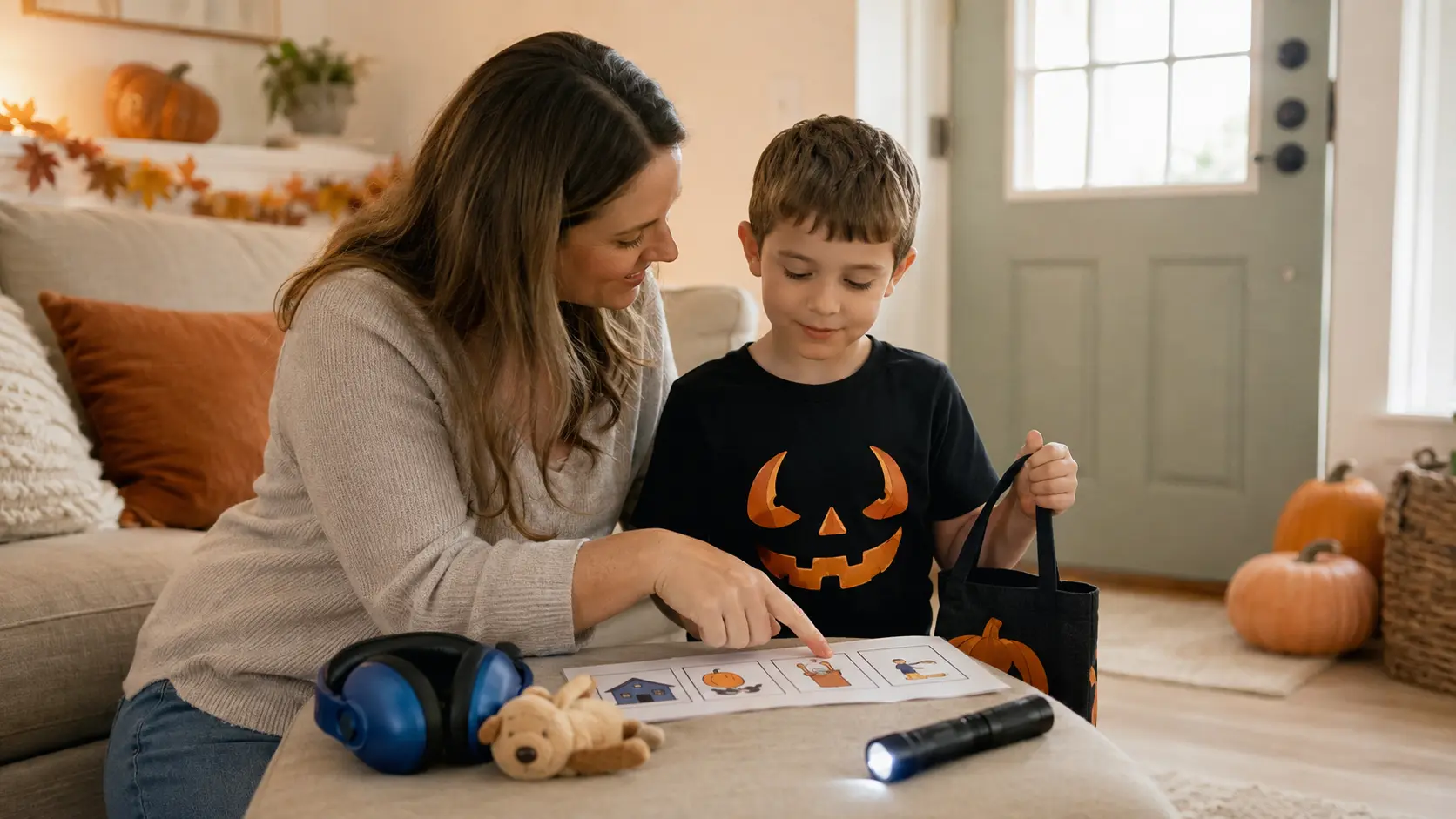
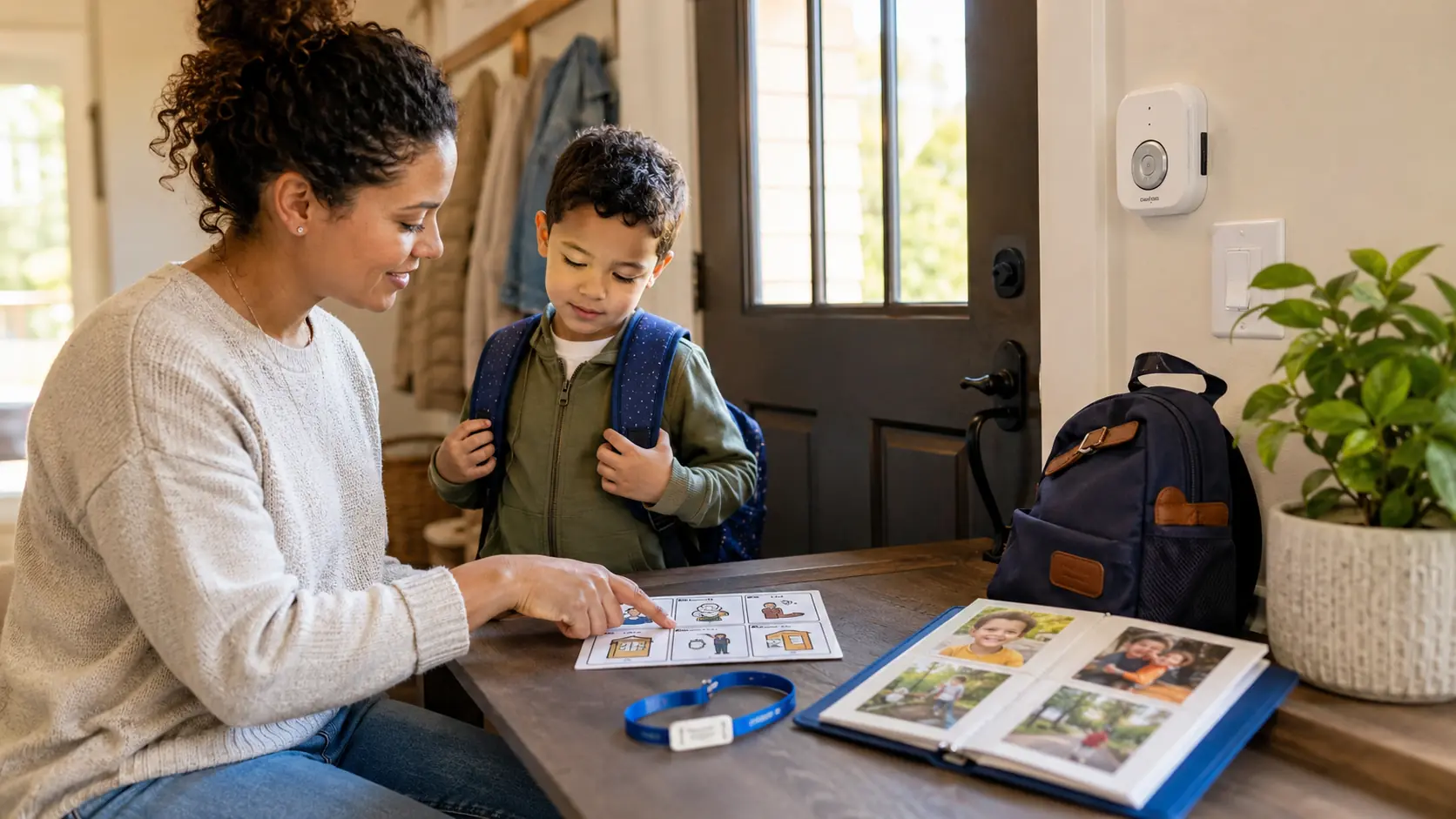
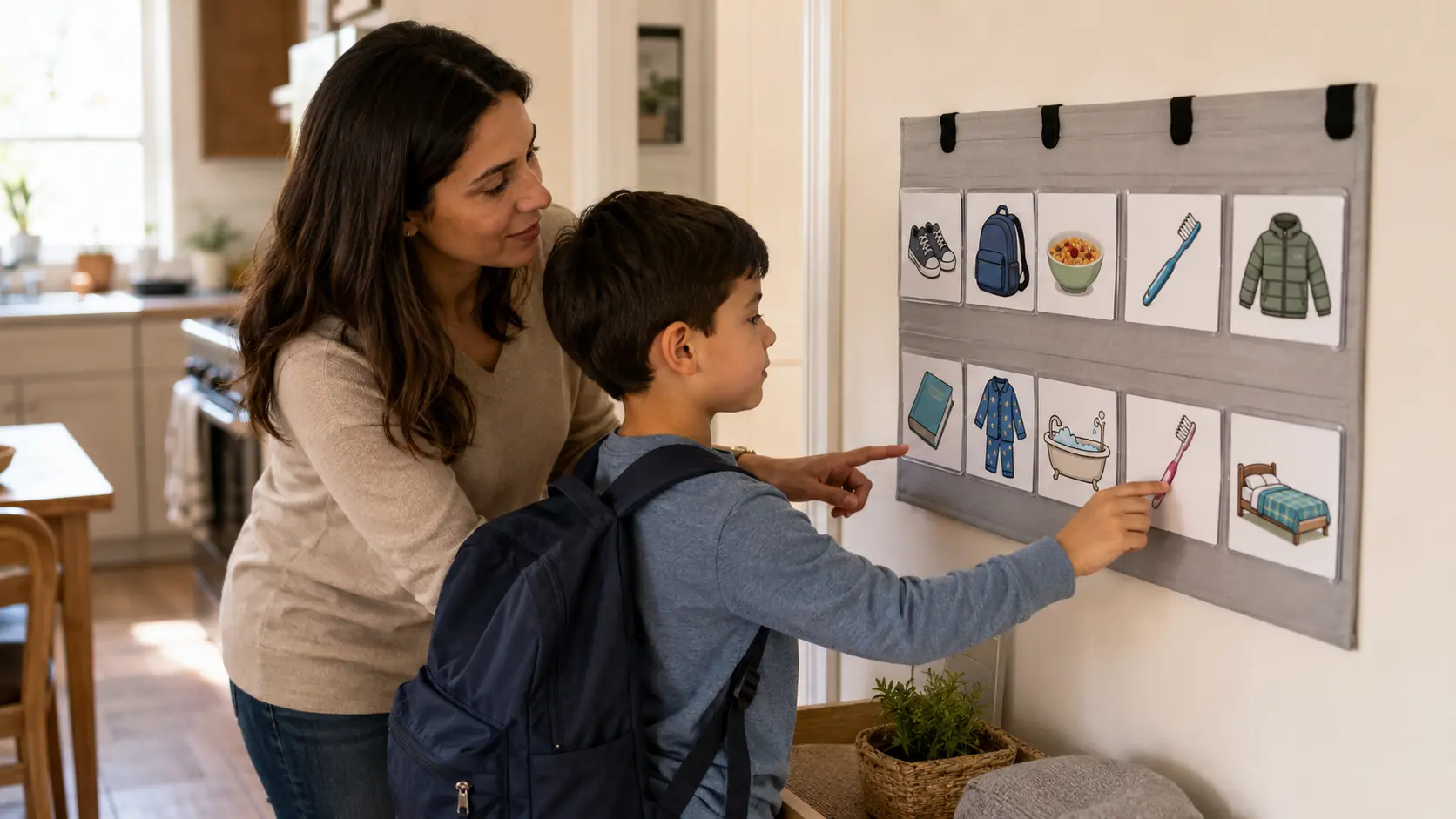
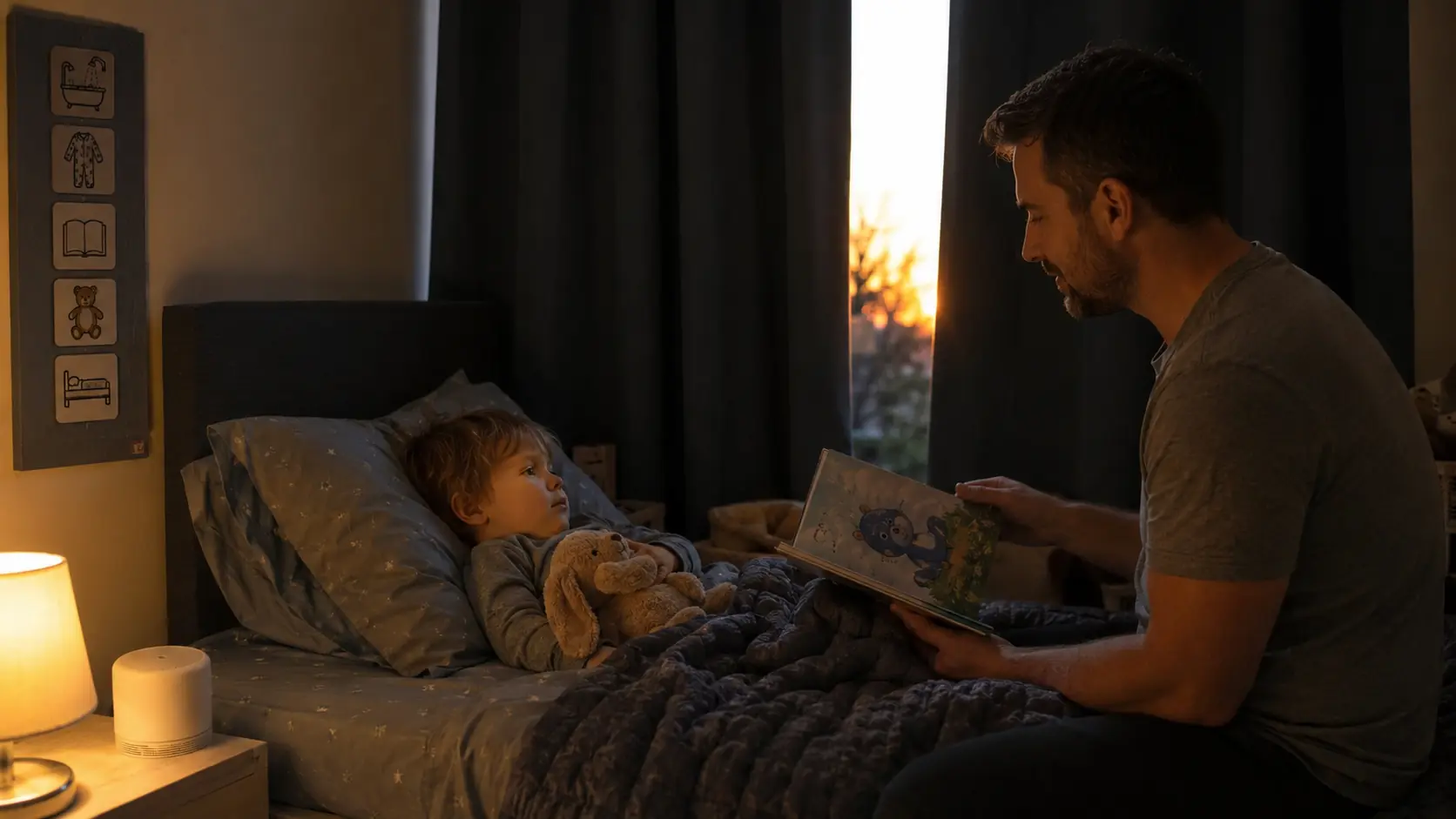
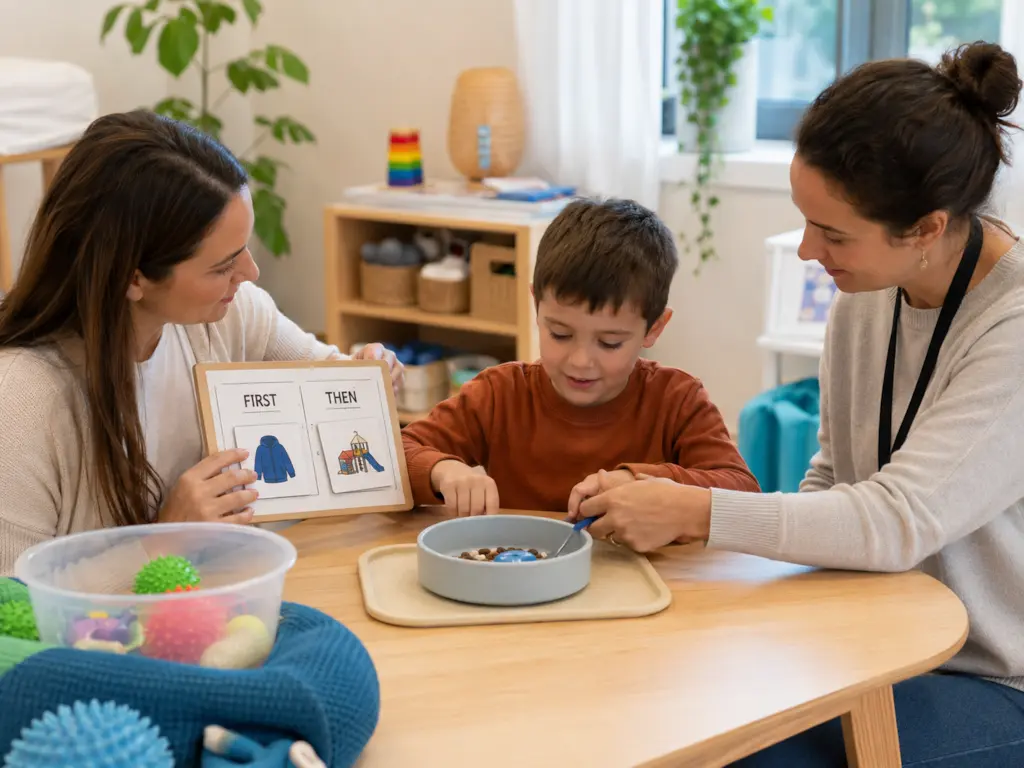
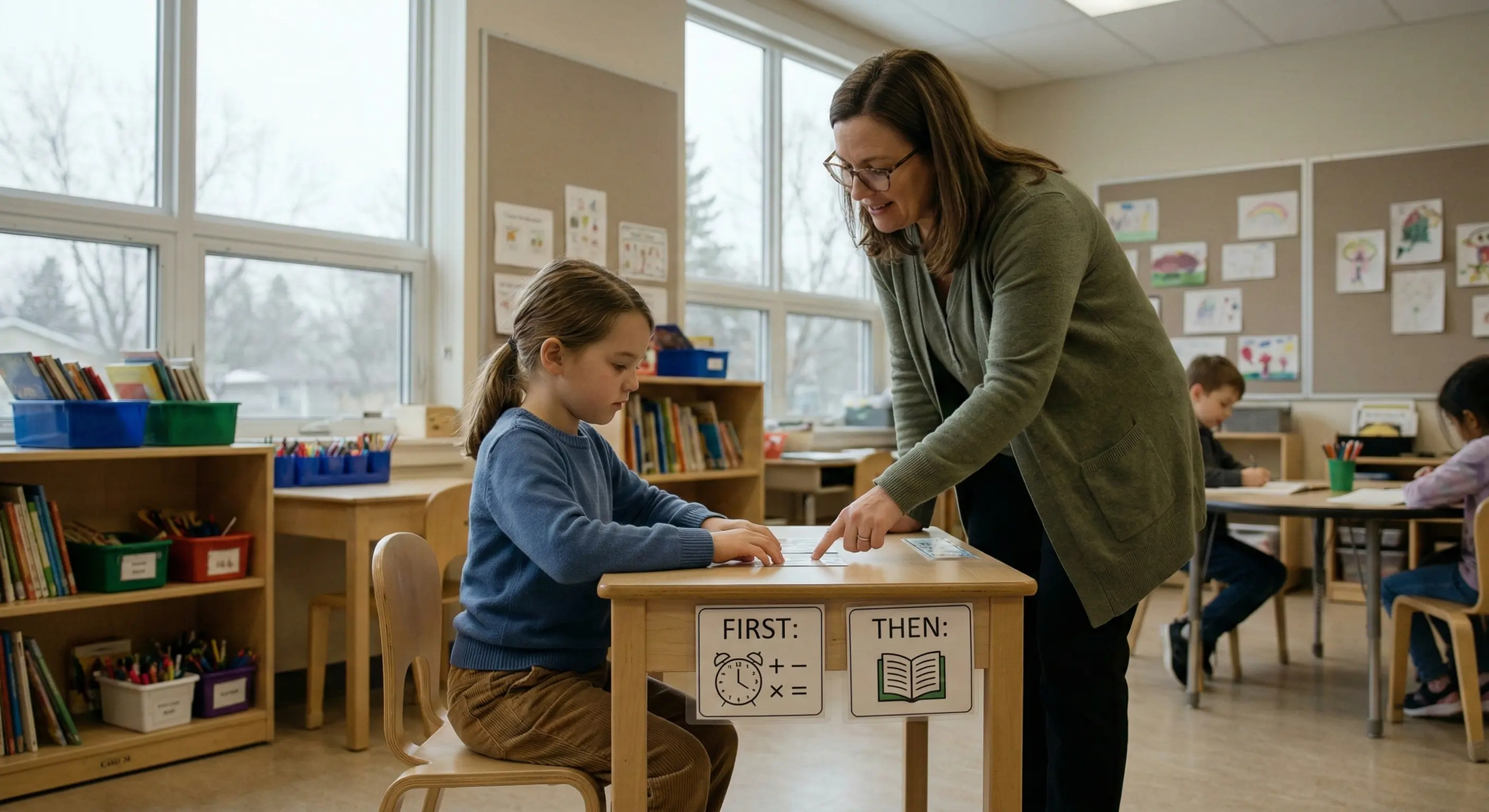
- Use visual supports. For some kids, knowing what's coming helps. Visual schedules or social stories about what you're doing can reduce anxiety.
- Have an exit plan. Before you go somewhere, think about where the quiet spots are. Know where you'll go if things get overwhelming.
- Give yourself permission to leave. You're not failing if you have to cut an outing short. You're taking care of your child.
When to Seek Professional Support
Sometimes families need more support than a blog post can offer, and that's completely okay. Reaching out for help is a sign of strength, not weakness.
How ABA and Other Therapies Can Help
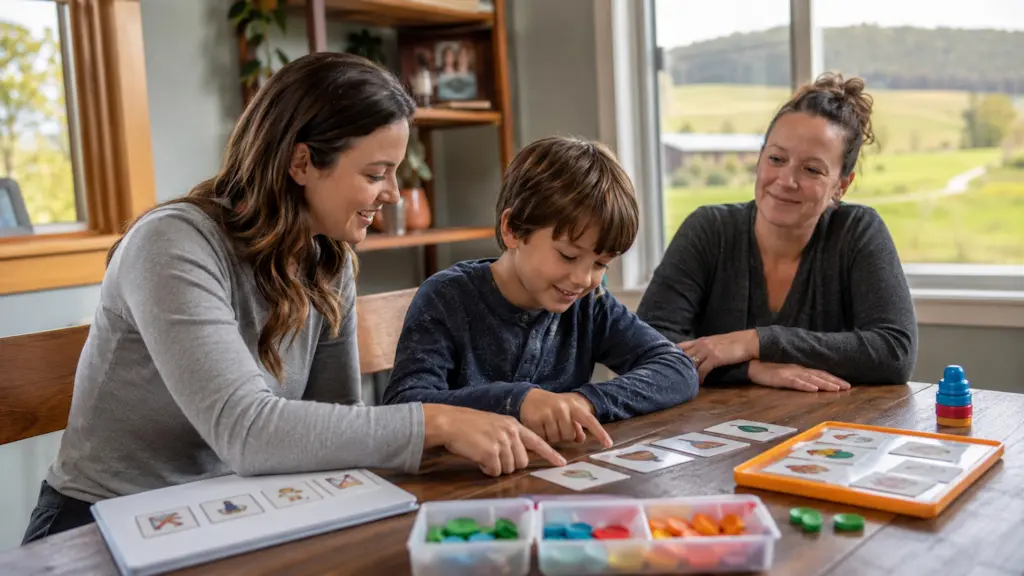
Applied Behavior Analysis (ABA) therapy can help in a few important ways. A good ABA team will work to understand what's driving challenging behaviors—whether it's communication frustration, sensory issues, or something else. They can help build alternative skills so your child has other ways to express needs and cope with challenges.
Occupational therapy is often incredibly helpful for sensory processing challenges. An OT can do detailed sensory assessments and teach specific strategies tailored to your child's unique sensory profile.
The best outcomes usually come when different providers work together—ABA therapists, occupational therapists, speech therapists, and schools all communicating and collaborating.
Signs It Might Be Time for Extra Help
Consider reaching out to professionals if:
- Meltdowns or aggressive behavior are putting your child or others at risk of injury
- Intense meltdowns are happening so frequently that daily life feels impossible
- You're noticing signs of anxiety or depression in your child
- Your child is struggling significantly at school due to behavioral challenges
- You're feeling burned out and need more support for yourself
Safety note: If your child is ever at serious risk of harming themselves or others, please reach out to your healthcare provider or emergency services immediately. This blog is meant to provide general education—not crisis support or medical advice.
How AtlasCare ABA Supports Families Through Tantrums and Meltdowns
At AtlasCare ABA, we understand that parenting an autistic child comes with unique joys and unique challenges. We're here to be your guide through the harder moments.
Our approach includes:
- In-home ABA sessions focused on building communication skills (so your child can express needs without "behavior as communication"), smoother daily routines and transitions, and coping strategies for sensory and emotional challenges.
- School and daycare support to ensure consistency across environments—because strategies only work when everyone's on the same page.
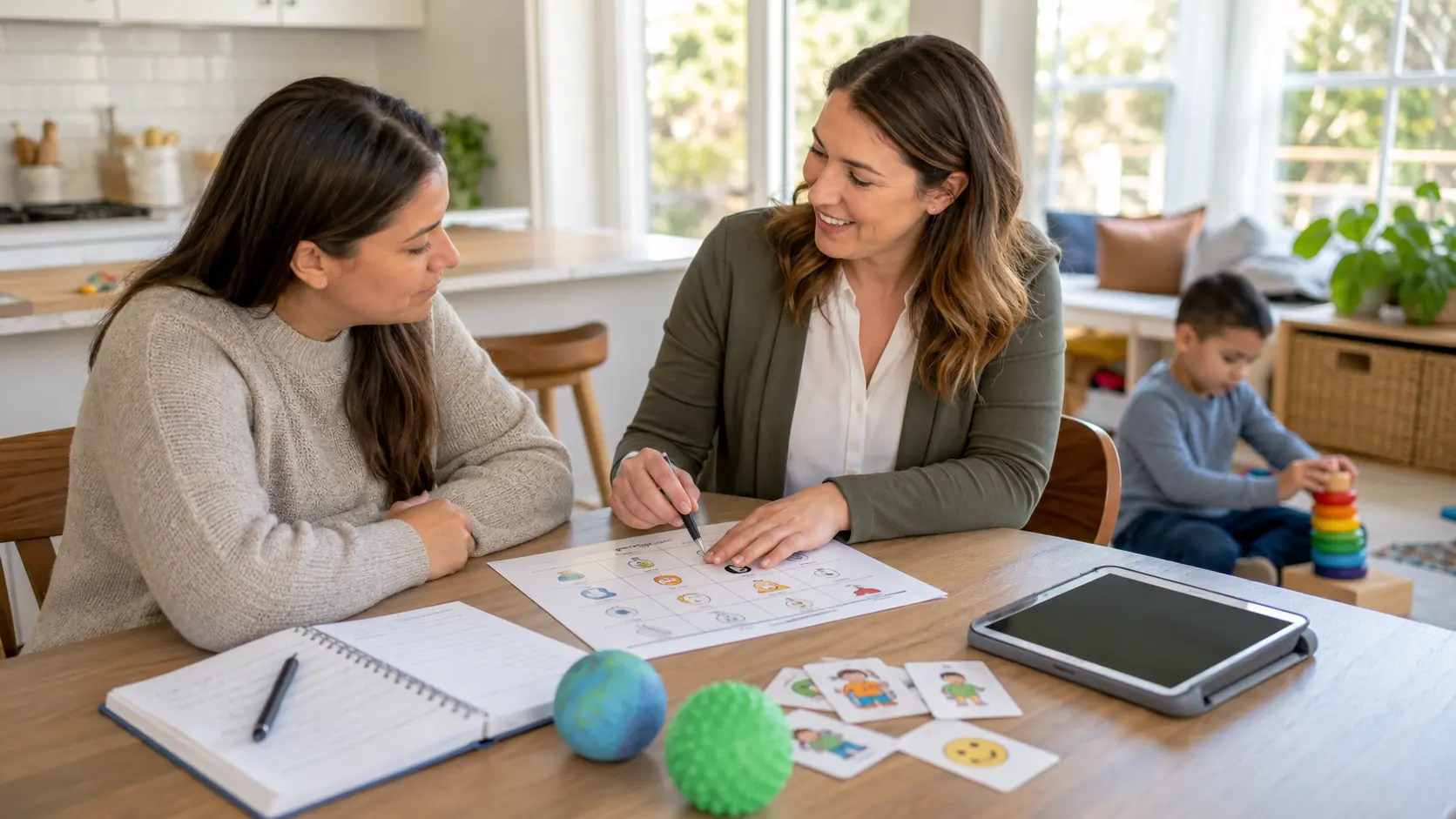
- Parent training that teaches you how to tell tantrums from meltdowns, use proactive sensory supports and visual tools, and practice co-regulation and de-escalation in real-life situations.
We believe in kind, respectful, child-centered intervention. We work collaboratively with other providers in your child's life. And we're always focused on helping your child thrive as their authentic self.







.webp)

.webp)

.webp)
.webp)
.webp)







.jpg)

.webp)

.webp)
.webp)







%20During%20Play%20in%20the%20Home.webp)