.webp)
Community Outings: A Step-by-Step ABA Plan for Successful Grocery Runs and Dining Out
For many families of autistic children, a trip to the grocery store is not a simple errand. It is a full behavioral calculation. Before you even pull into the parking lot, you are already weighing the fluorescent lighting, the crowded Saturday morning aisles, the unpredictable intercom announcements, the denied item at the checkout, and whether today is a day when any of that is manageable. And restaurants carry their own version of that weight: the wait, the noise, the unfamiliar menu, the expectation of sitting still, the other diners watching.
If avoiding these settings has become the default — because it feels safer than the alternative — you are not alone, and you are not failing. But autism community outing strategies can make these situations genuinely more manageable, not by lowering expectations for your child, but by building the right skills and structures before you walk through the door.
Why the "Real World" Feels Different Than the Clinic
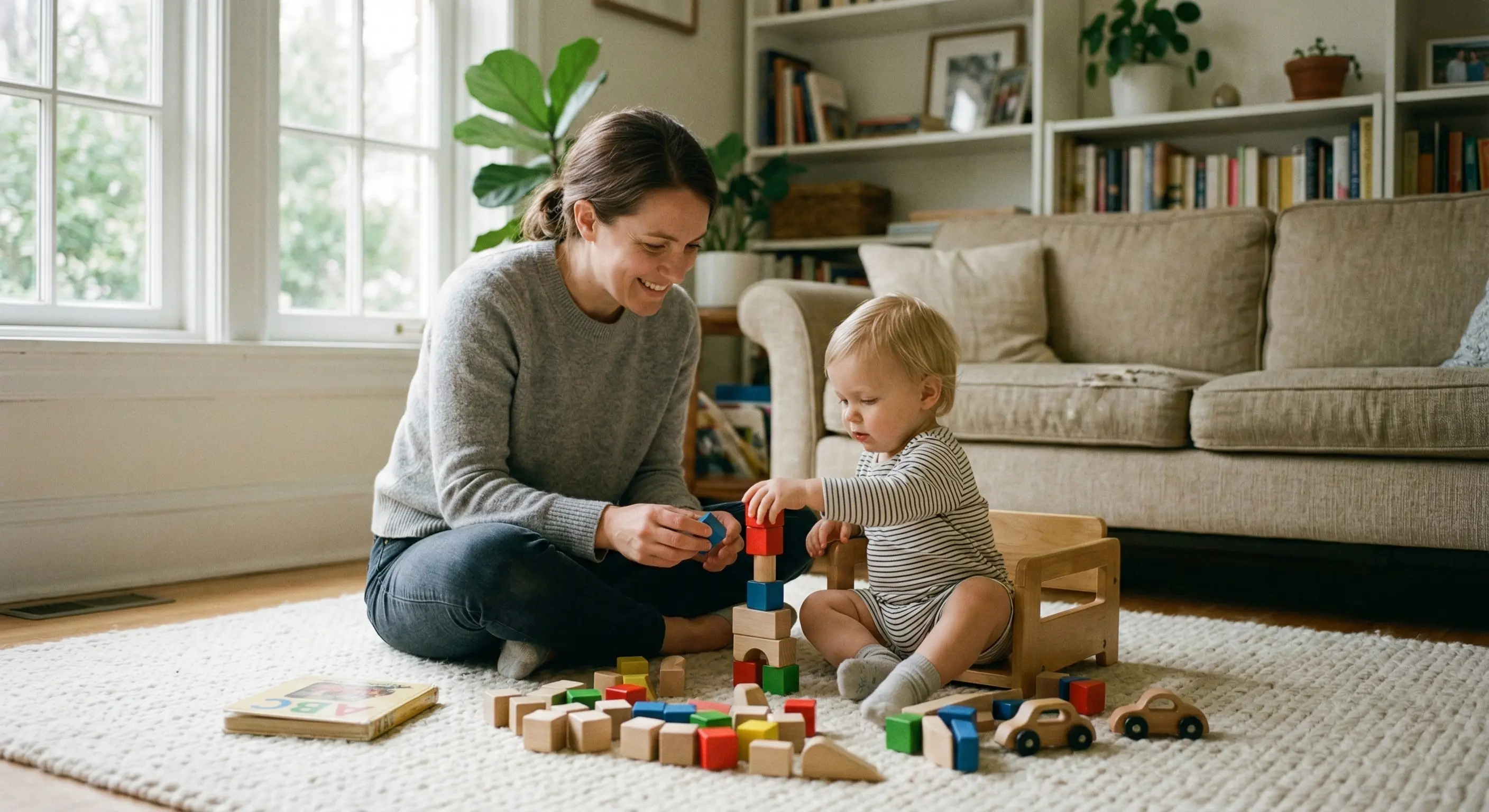
One of the most common things caregivers describe is a version of this: "He does it perfectly at home, and then we get to the store and it all falls apart." This is not a sign that the skill was never really learned. It is a normal feature of how behavioral learning works — skills that are practiced in one environment do not automatically transfer to new ones, particularly environments that are significantly more demanding.
Grocery stores and restaurants involve a concentration of variables that simply do not exist in clinic or home settings:
• Unpredictable sensory input — fluorescent lighting, background music, intercom interruptions, ambient crowd noise, strong food smells, and temperature changes
• Reduced structure and predictability — the sequence of events in a store or restaurant shifts depending on how busy it is, who is working, and dozens of small variables that are hard to control
• Waiting without a clear endpoint — queuing at a register or waiting for food to arrive can be among the hardest demands for a child who has not yet built tolerance for open-ended delays
• Denied access to preferred items — a store or restaurant is an environment full of visible, desirable things that the child may not be able to have, which creates consistent low-level frustration
• Public scrutiny — the social awareness that others are watching adds a layer of pressure to caregivers and can contribute to a rushed response that sometimes makes escalation worse
Validating this reality is the starting point. A skill that is reliable at home is a genuine foundation — it just needs to be taught again, gradually, in the harder setting.
Phase 1: The Pre-Trip Rehearsal
The most effective community outings tend to begin at home, not in the parking lot.
Build a Social Story or Visual Narrative
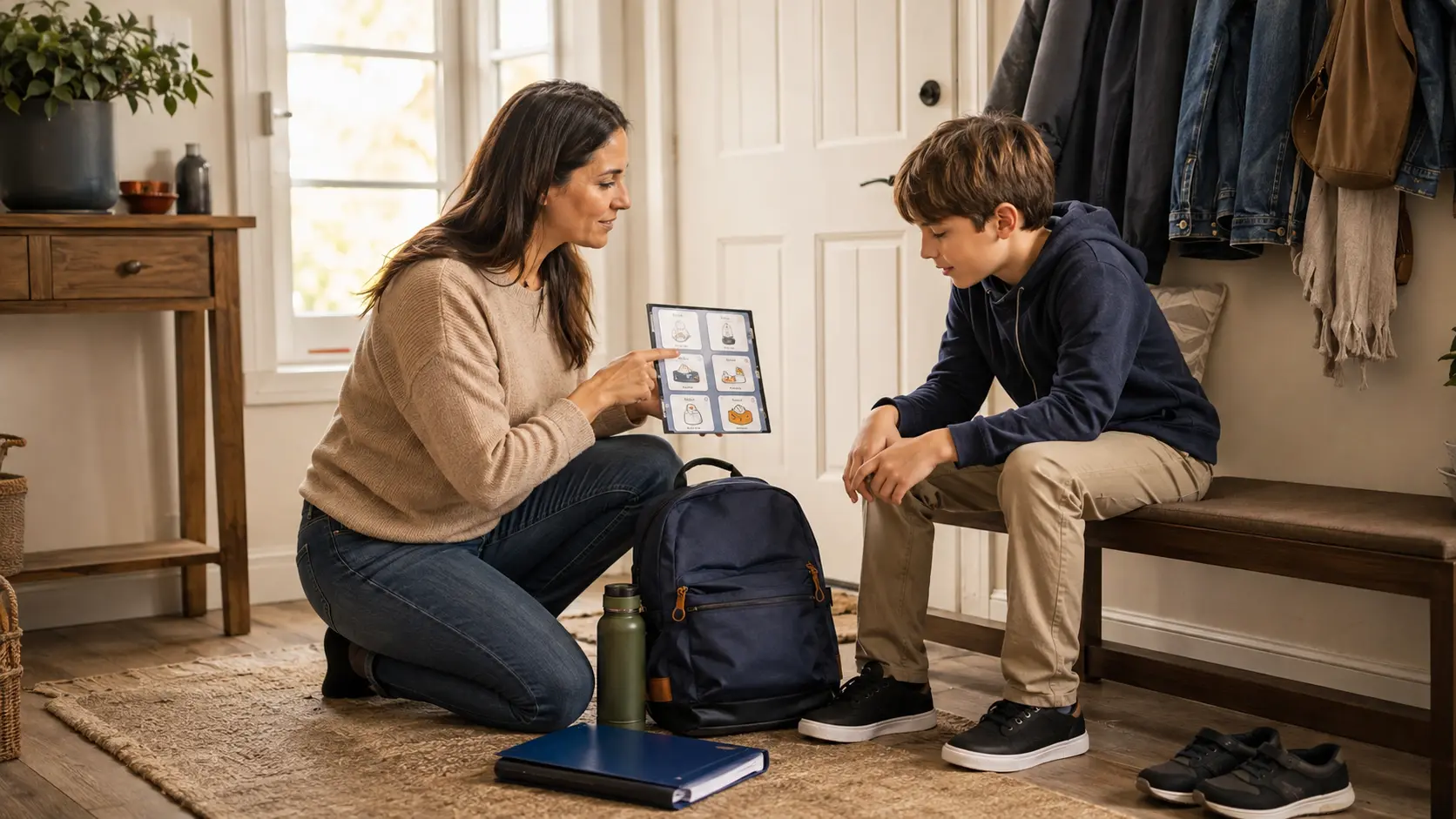
A social story is a short, first-person description of what will happen during an outing: where you are going, what it will look like, sound like, and feel like, what will be expected, and what the child can do if they need support.
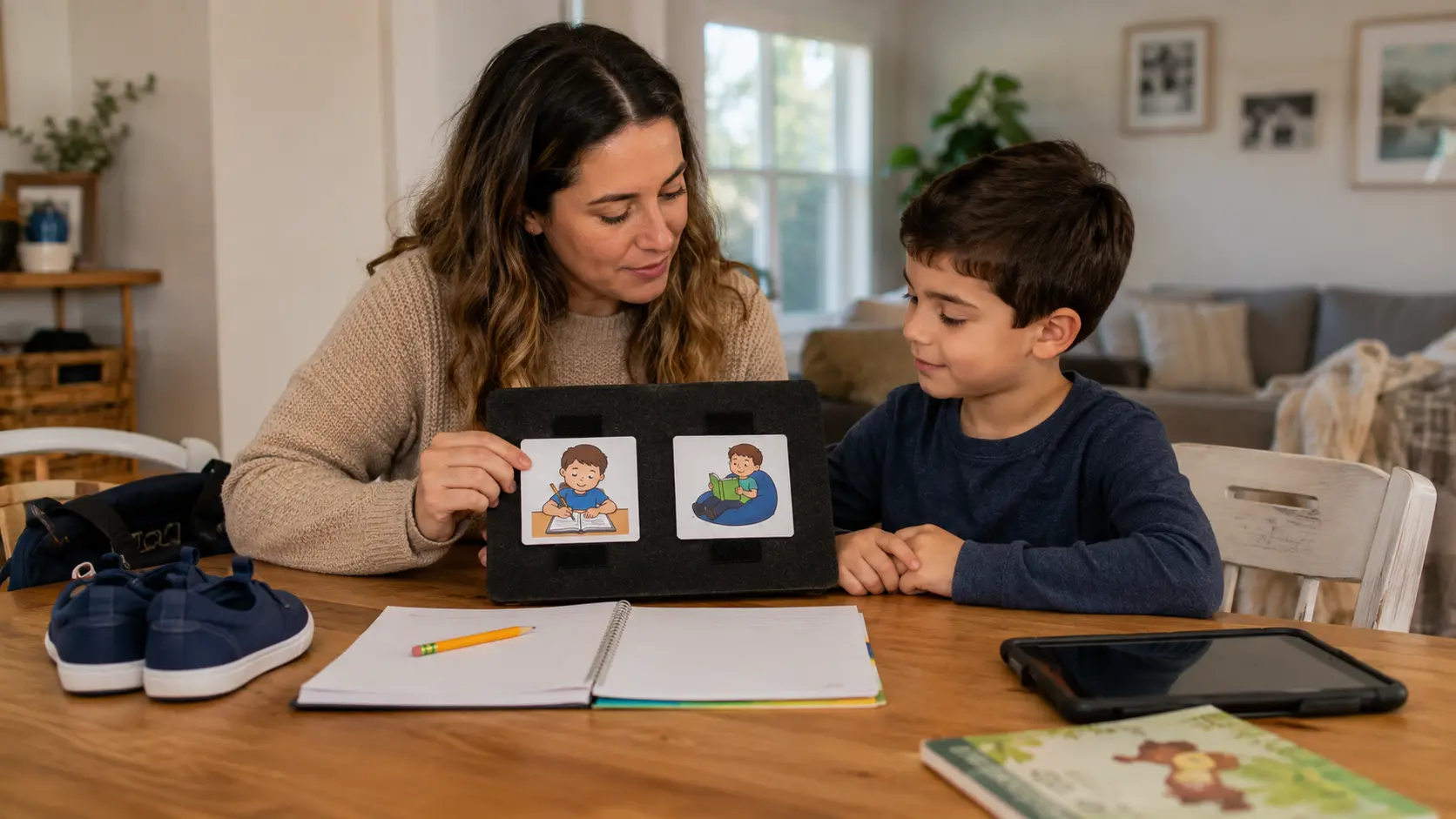
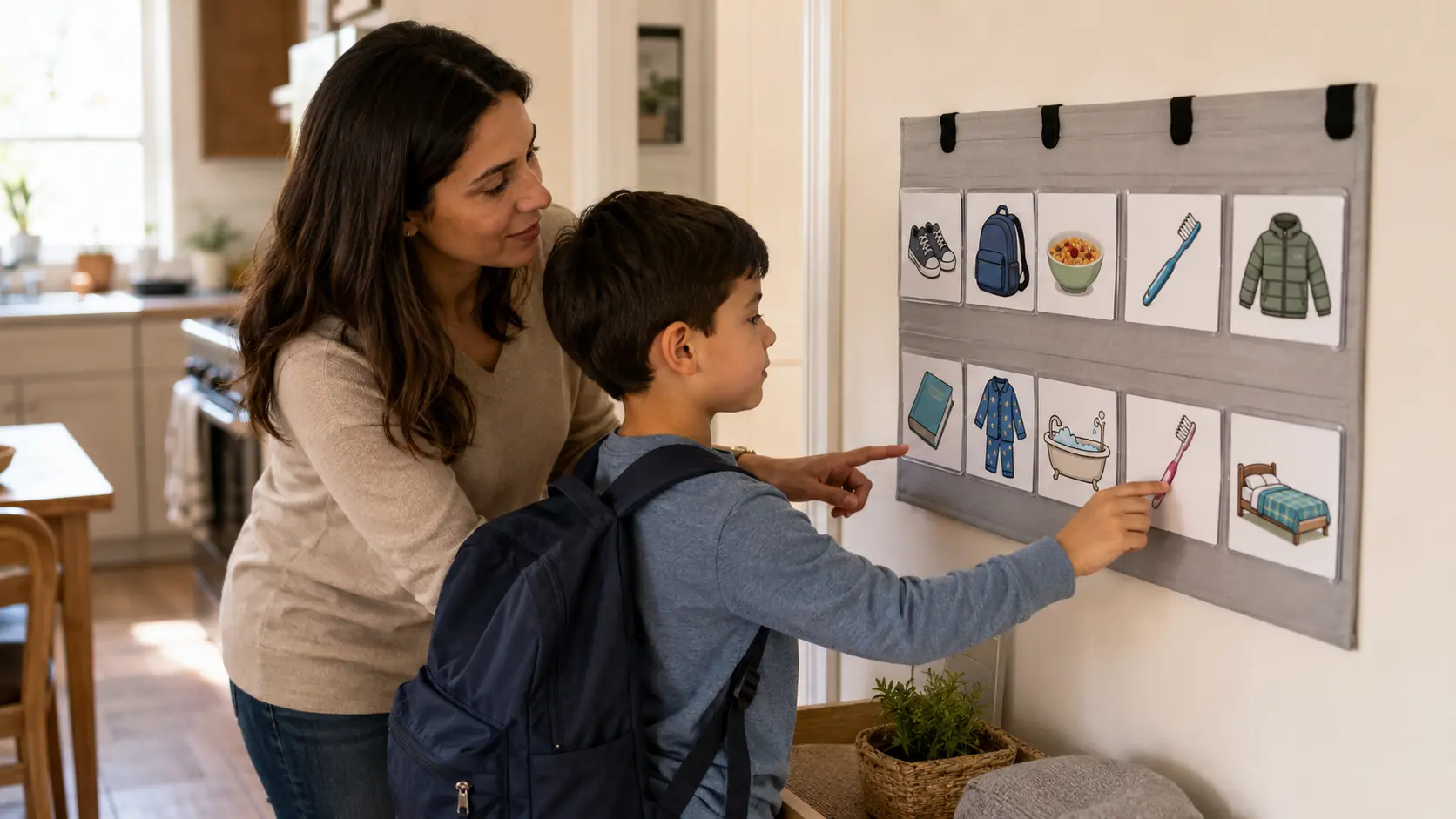
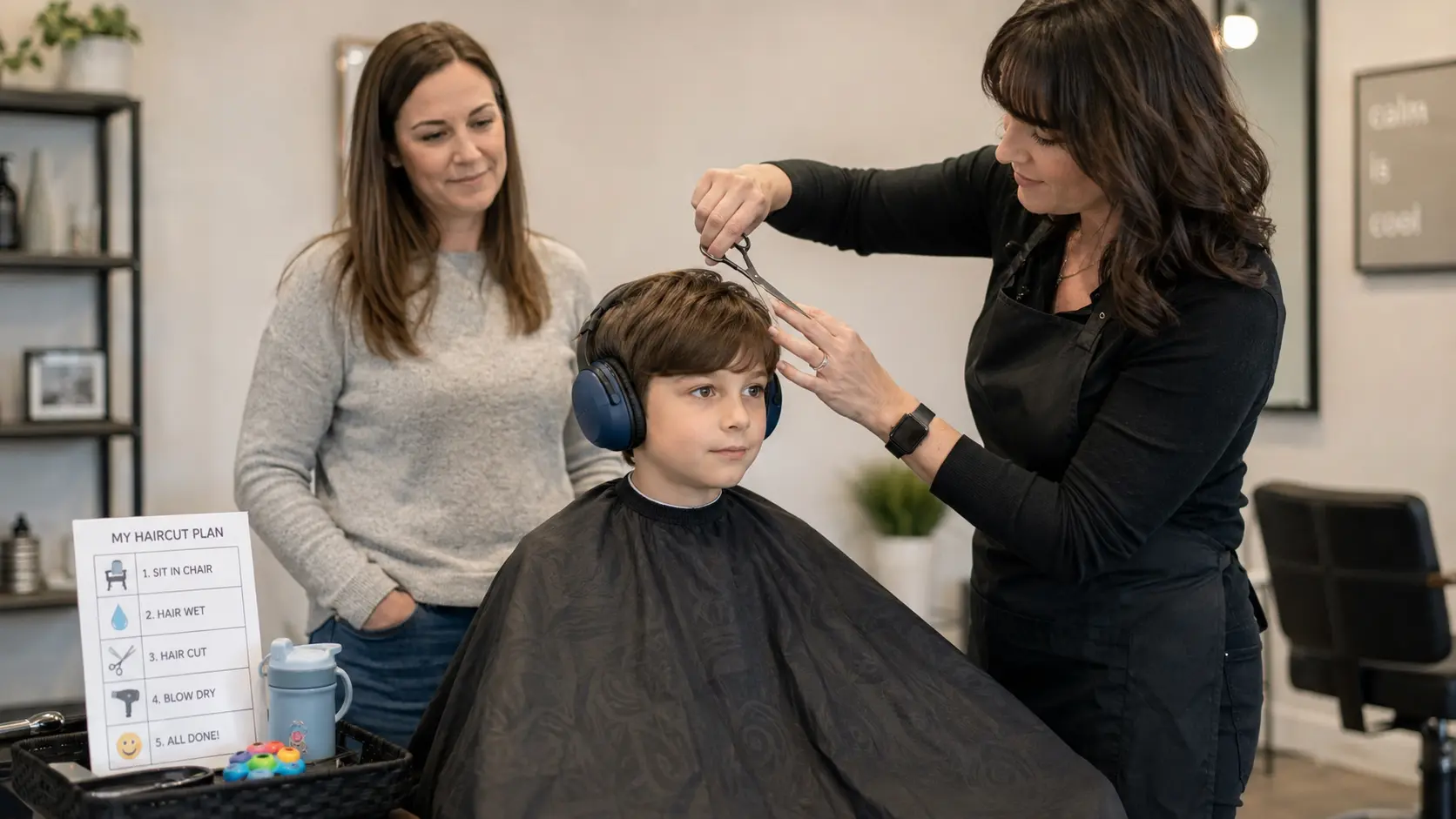
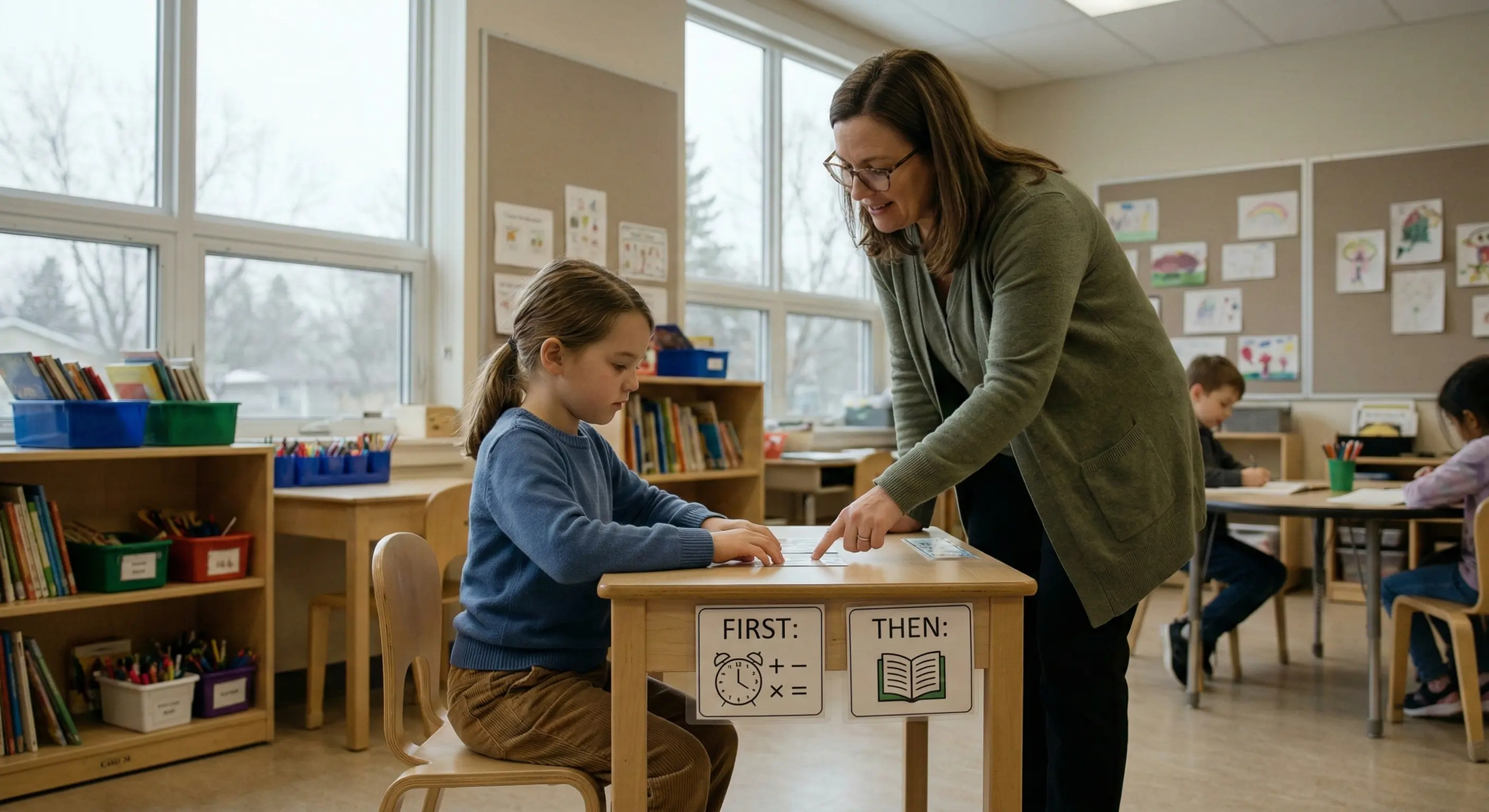
Use a Picture Schedule and First/Then Board
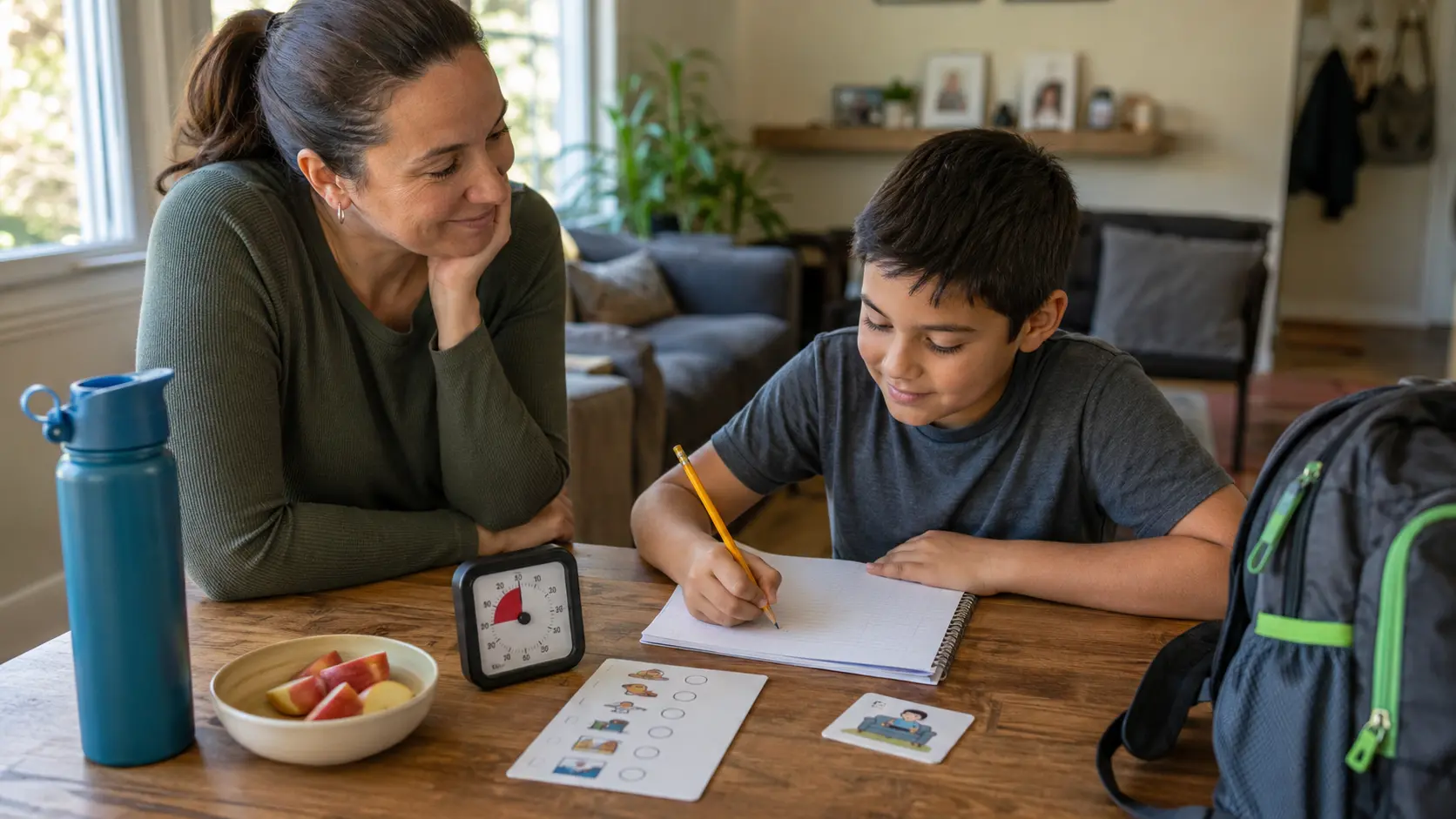
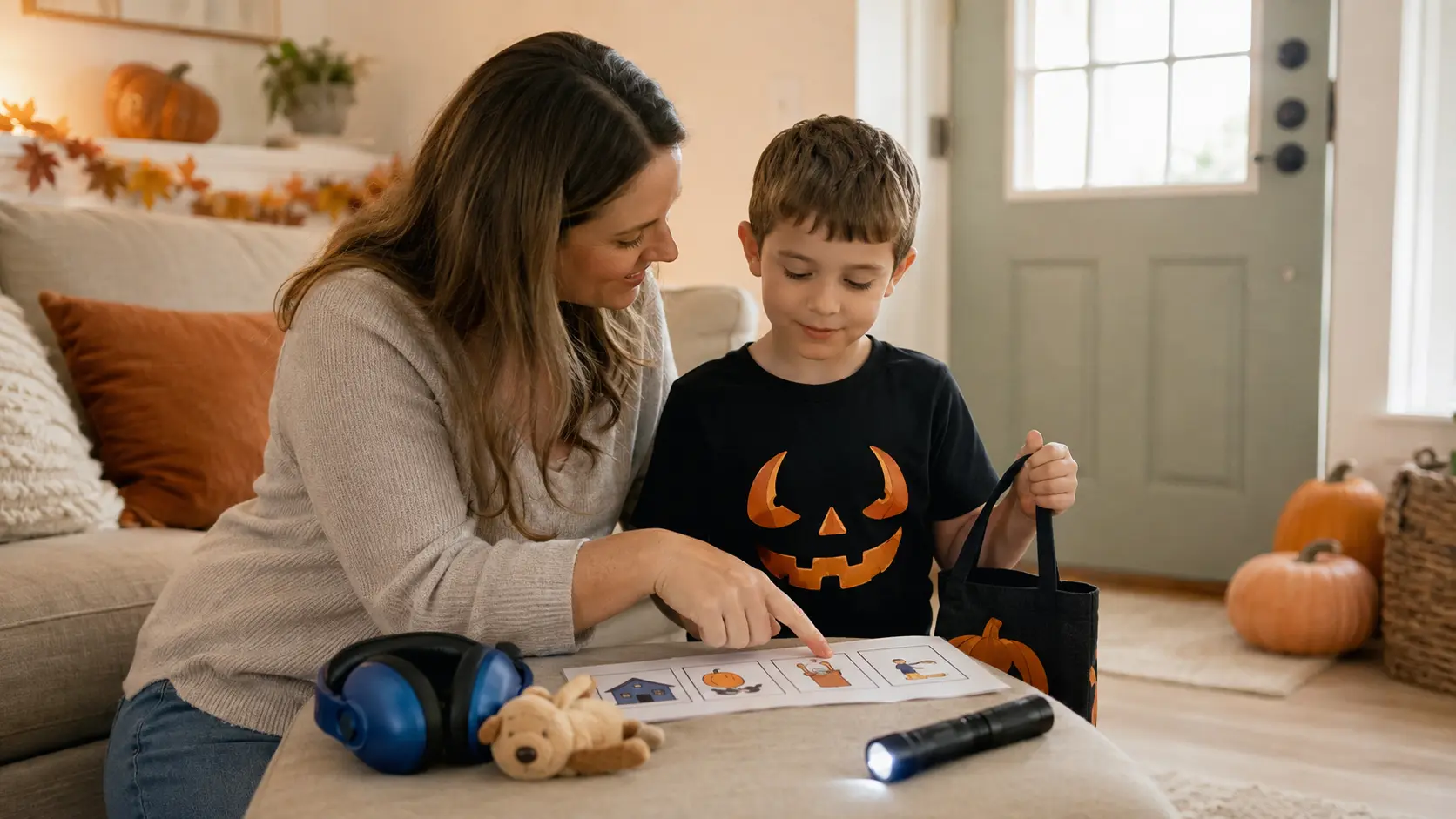
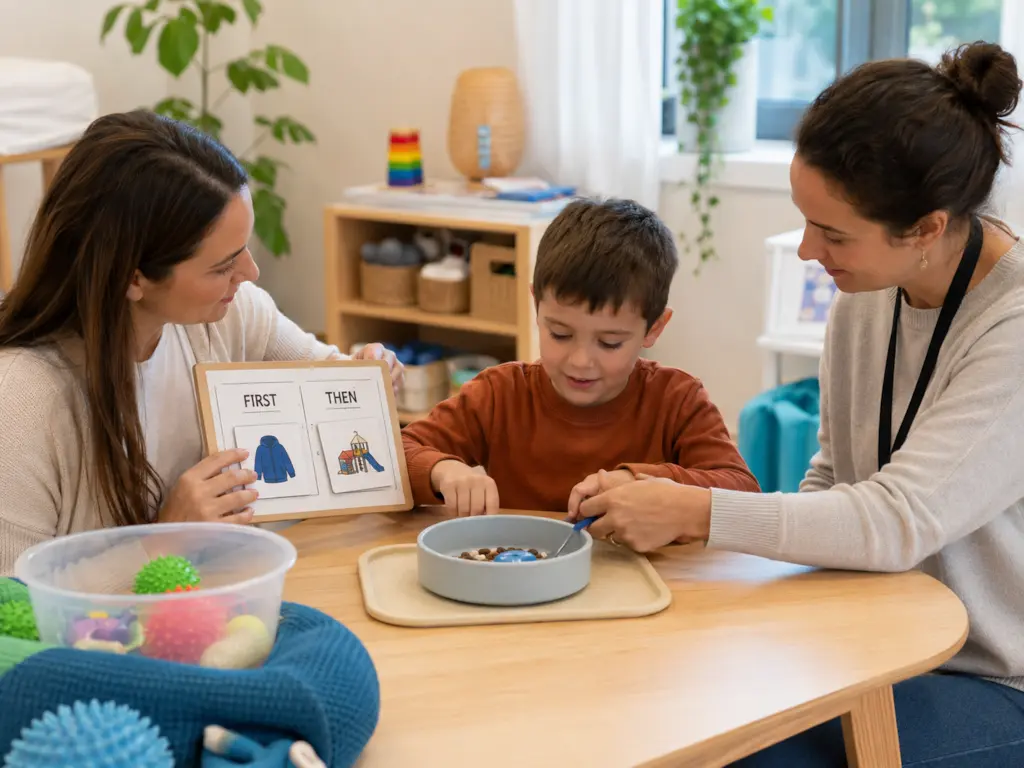
A picture schedule shows the sequence of the outing in visual form. A First/Then board narrows the focus even further: "First we finish shopping, then we choose one snack." First/Then works especially well for children who need a very concrete near-term motivation to navigate a demand they find difficult.
Practice One Target Skill at Home Before Going
Rather than attempting to practice everything at once, choose a single skill to focus on during this trip: staying within arm's reach, using a break request, handing an item to the caregiver, or transitioning between aisles calmly.
Phase 2: Mastering the Grocery Store with Visual Supports
Grocery stores can be restructured significantly just by choosing different conditions for the trip. The environment is not fully controllable, but many of the variables that tend to drive difficulty are.
Step-by-Step Grocery Framework
1. Choose a lower-demand time of day — weekday mornings and early afternoons are typically quieter than weekends or after-school hours. Fewer people means less sensory input, shorter lines, and more space to move without friction.
2. Start with a short trip and a small list — two to five items is a realistic starting point for a child who is still building community-outing skills. Completing a short list successfully is more valuable than attempting a full shop and leaving early in distress.
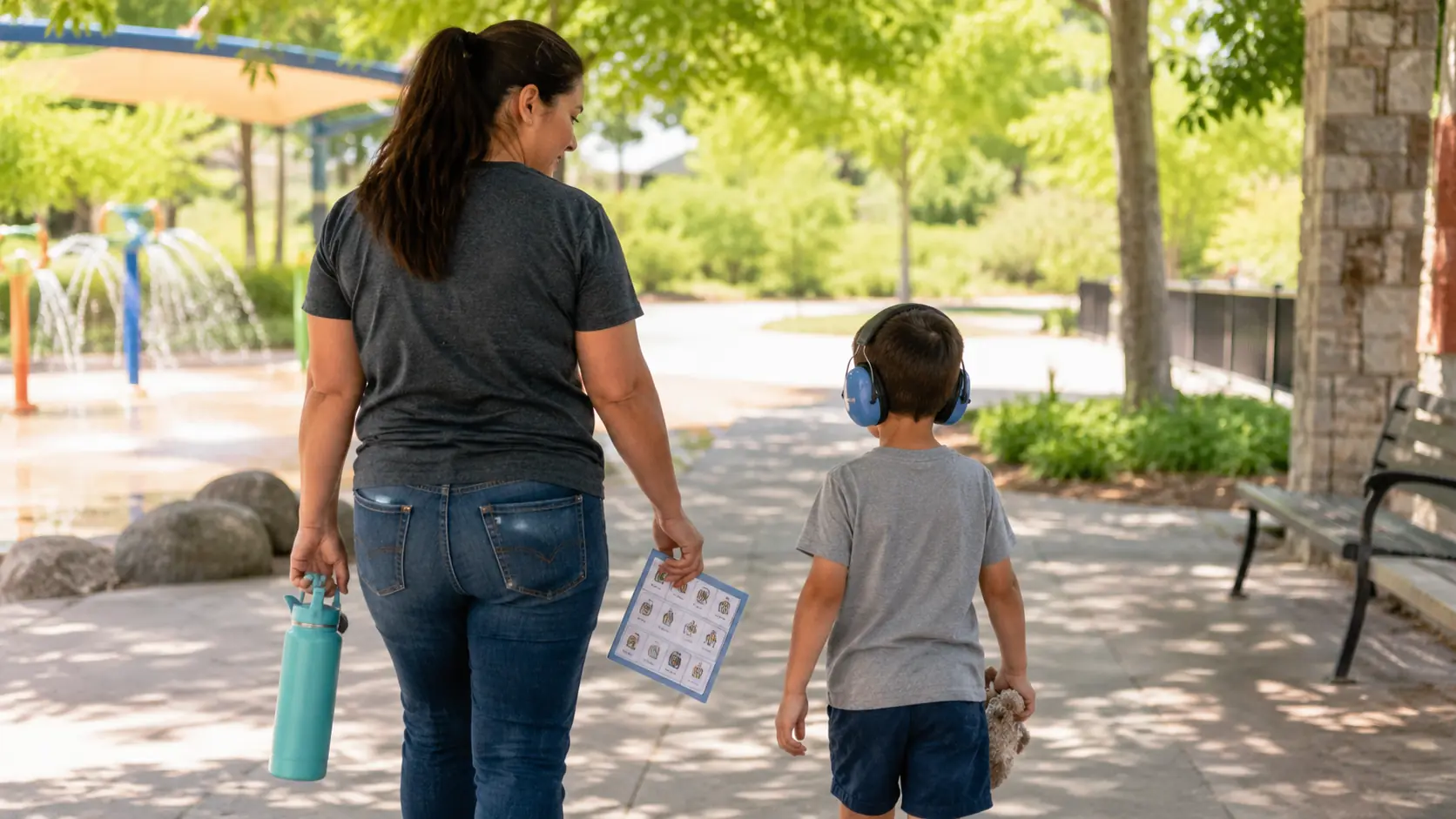
3. Use a visual shopping list — a picture-based list the child can hold and refer to gives the trip a clear, concrete structure. Let the child check off or hand over items as they are collected. Participating in the task gives the child a job to do and a sense of progress.
4. Assign a job the child can succeed with — putting items in the cart, carrying the basket, pressing the button on the self-checkout screen, handing the loyalty card to the cashier. Small, achievable jobs build engagement and reduce the passive waiting that tends to precede escalation.
5. Reinforce calm walking, waiting, and transitions as they happen — brief, specific acknowledgment in the moment, or a token toward a preferred activity, lets the child know that the behavior they are showing is exactly what you were hoping for.
6. Have a clear exit plan in place before you walk in — know which signs mean it is time to leave, and leave before escalation peaks rather than after.
Warning Signs That a Grocery Trip Is About to Go Off Track
Learning to read early escalation signs gives you the window to intervene before a situation becomes unmanageable. These signs are individual, but common ones include: increased verbal repetition or scripting, seeking exits or pulling toward the door, refusing to move, covering ears or eyes, increased physical contact with the cart or shelf, or a sudden drop in communication responsiveness. When these appear, reduce demands immediately, offer a familiar cue or support item, and begin moving toward the exit or a quieter part of the store.
Elopement Planning in Public Spaces
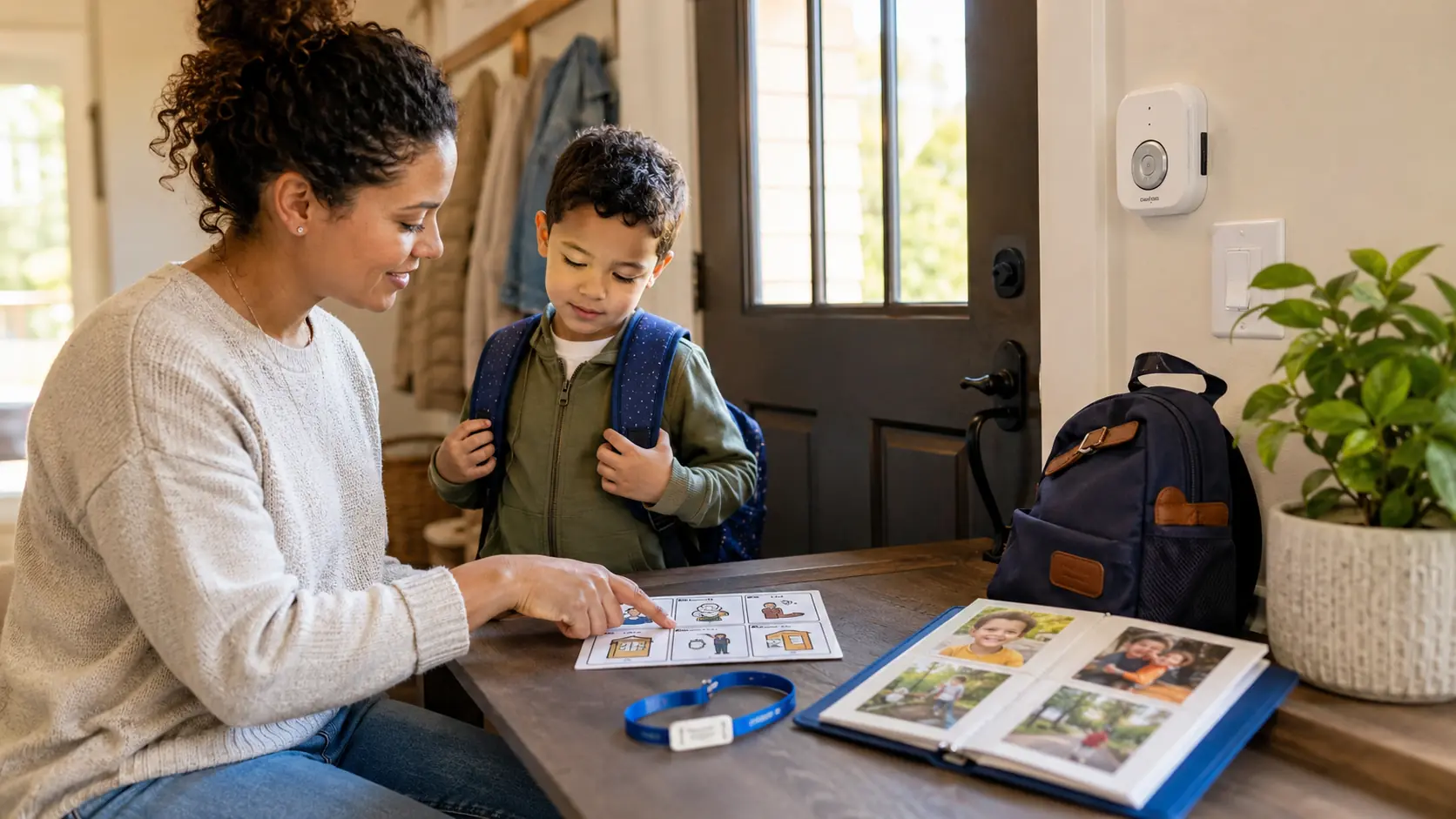
For children with a history of wandering or elopement, grocery stores and public spaces require specific advance planning. The CDC identifies wandering as a significant safety concern for autistic children, and community outings are one of the settings where it most commonly occurs. Practical prevention steps include: establishing clear hand-holding expectations before entering, using a cart seat or stroller if appropriate and accepted by the child, keeping the child on the side away from store exits, and having an agreed meeting point or exit routine if separation occurs. Visible ID — a medical bracelet, a safety ID card, or a tag on clothing — is a sensible precaution for children who are at higher elopement risk in unpredictable settings.
Phase 3: Dining Out — Managing Wait Times and Sensory Input
Restaurants combine almost all of the hardest features of community outings into a single experience: unfamiliar sounds and smells, waiting with no predictable endpoint, an unfamiliar menu, social expectations around sitting and behavior, and often bright or busy visual environments.
Before You Arrive
• Choose off-peak times — an early lunch or a late dinner on a weekday is significantly quieter than a Saturday evening service.
• Make a reservation where possible — avoiding the waiting area entirely removes one of the most common escalation points.
• Preview the menu before you go — look it up together online, identify two or three acceptable options, and discuss the ordering sequence at home so the child already knows roughly what they are choosing.
• Call ahead if accessibility accommodations are helpful — a quieter table, earlier seating, or a table near an exit can make a meaningful difference, and most restaurants will accommodate a polite request.
What to Pack in a Sensory Kit for Dining Out
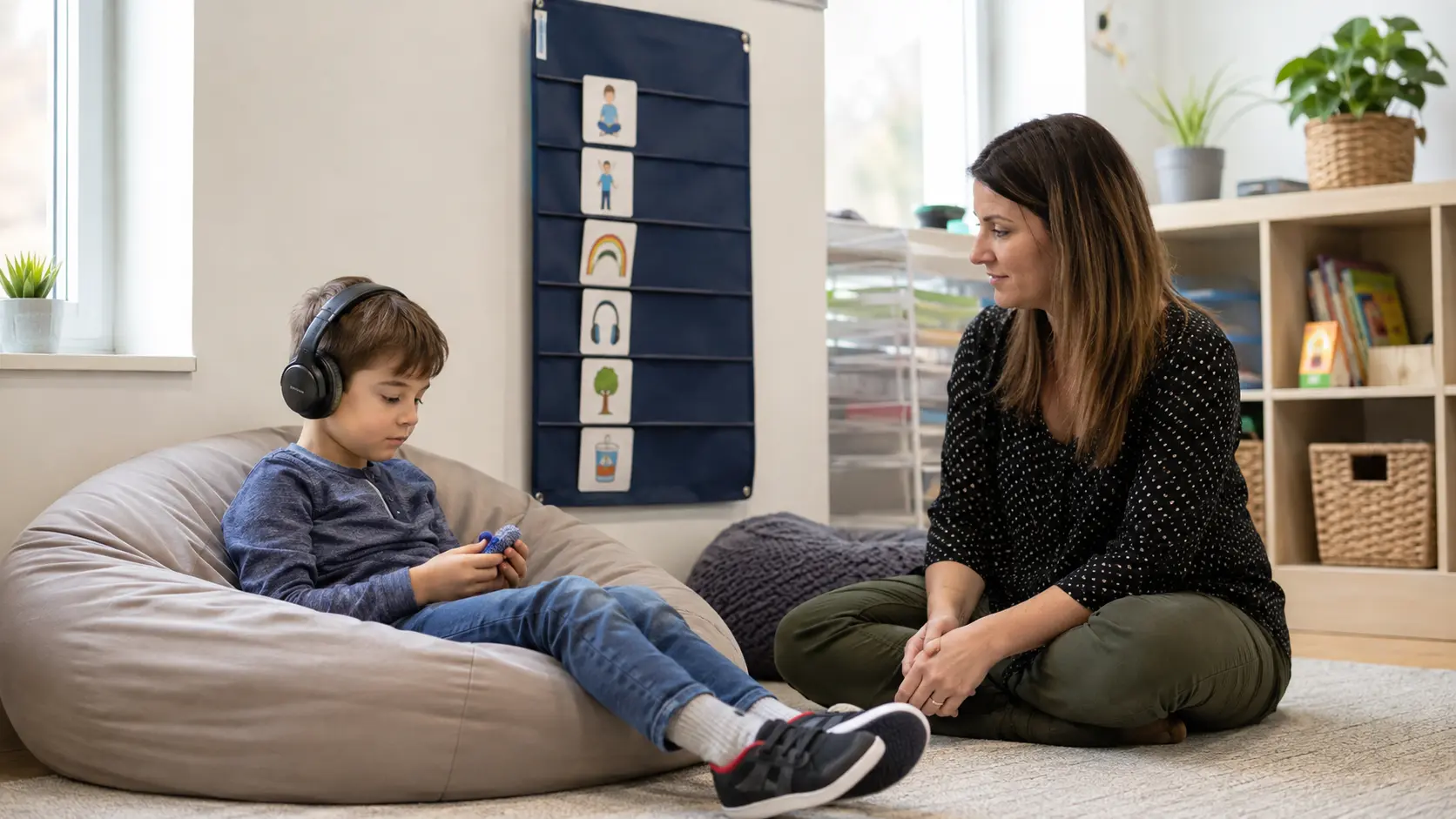
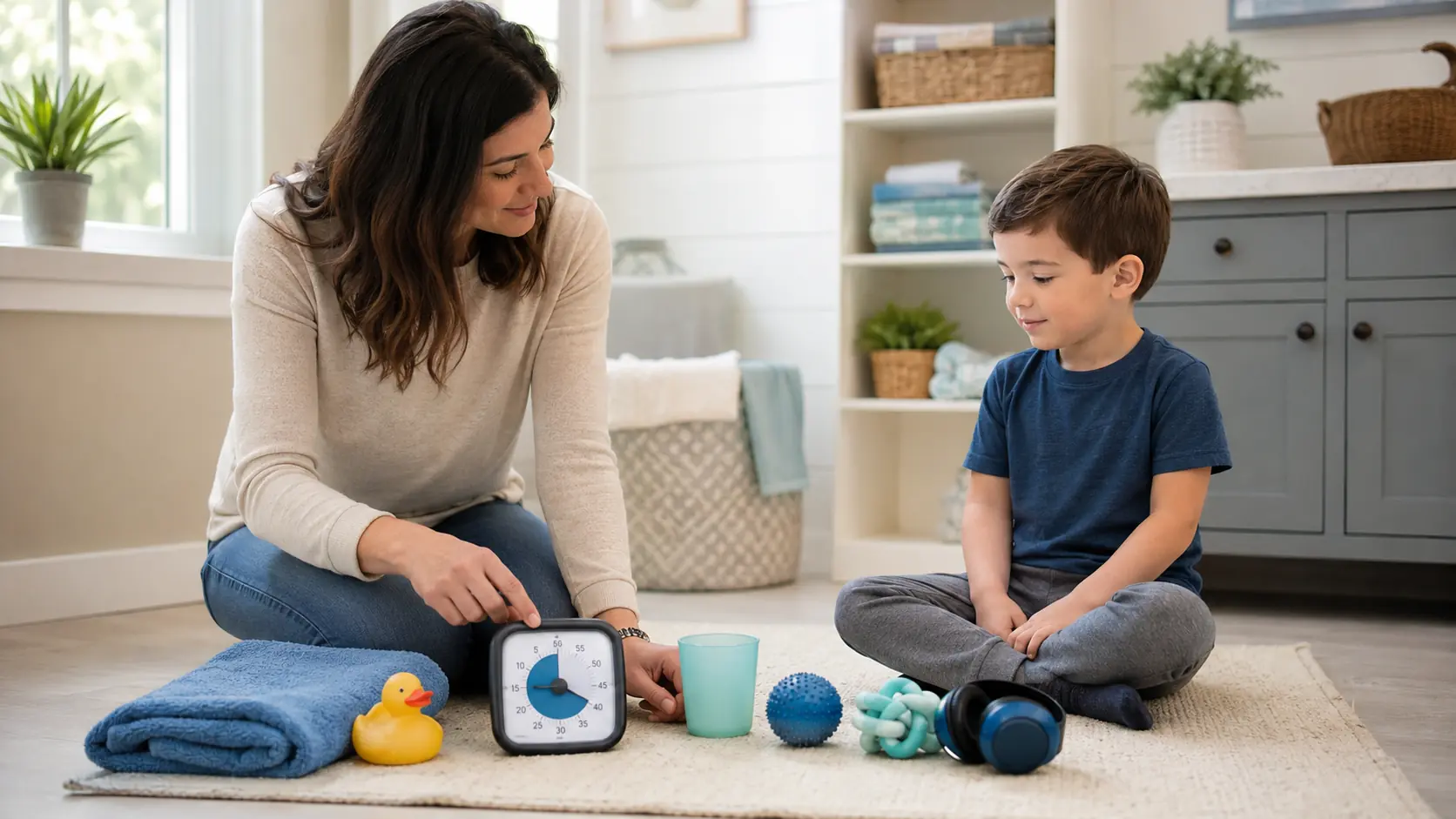
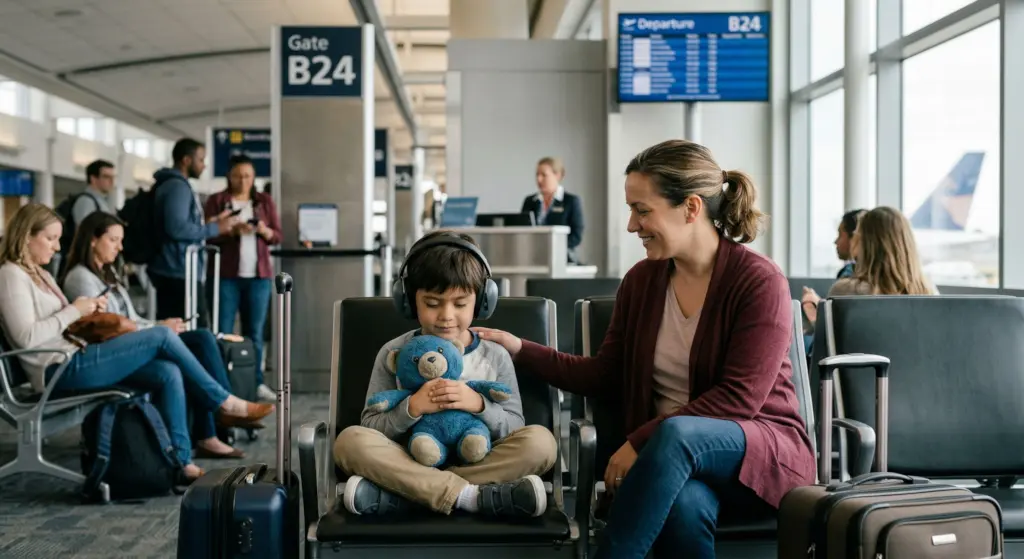
· Noise-canceling headphones or ear defenders — put on before the noise peaks, not in reaction to it
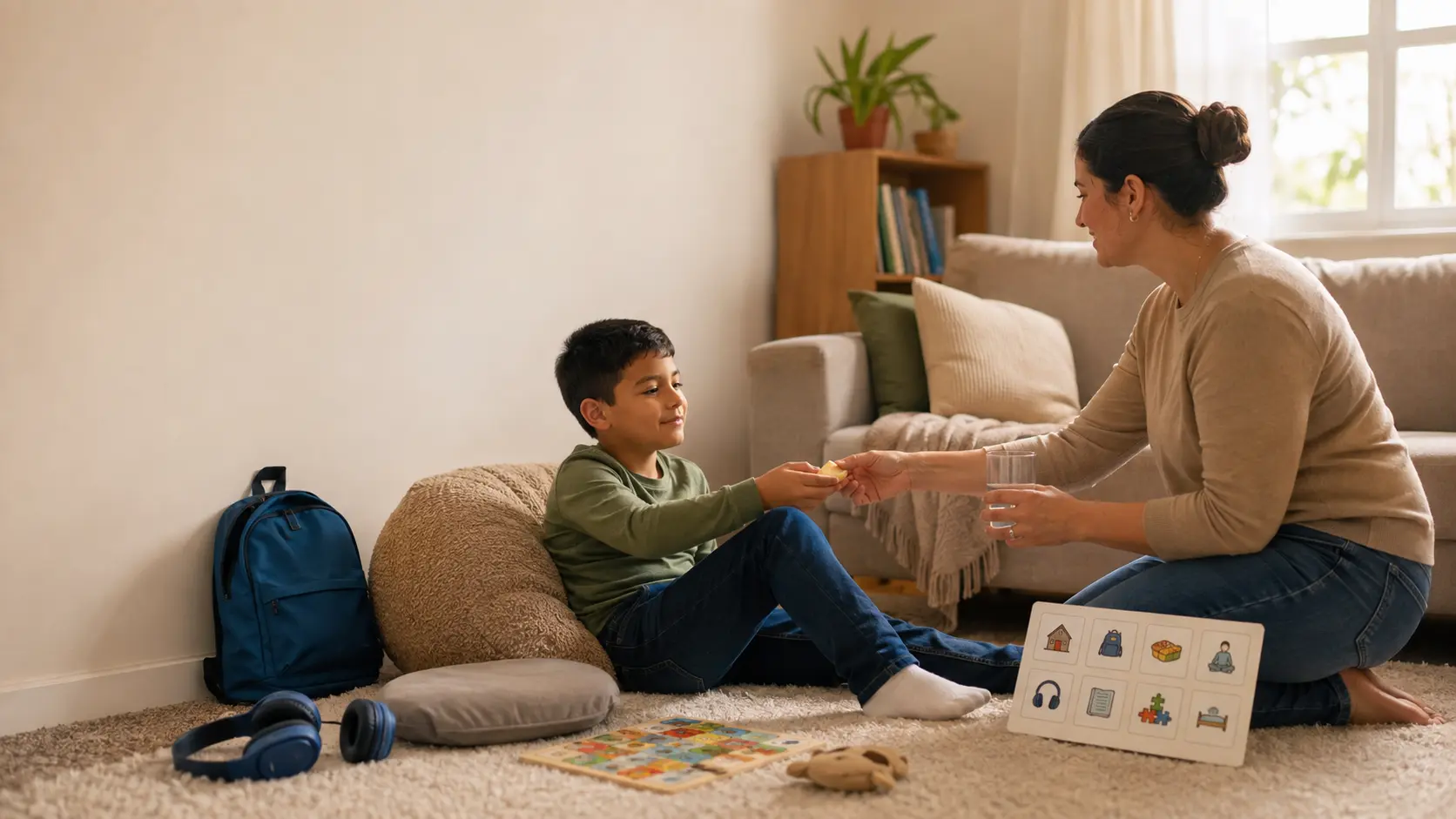
· Preferred fidget or quiet sensory toy — something familiar and low-profile
· A preferred snack to bridge the wait, if appropriate for the child’s needs and permitted by the restaurant
· A visual wait-time support — a small sand timer, a simple countdown, or a wait card
· Earbuds with calming music or a preferred audio program
· A small activity: sticker book, drawing pad, preferred app on a device — something that sustains calm during wait time
· A copy of the visual schedule or social story for the outing
· A break card the child can use to request a pause
Why Restaurant Wait Time Is Often the Hardest Part
The gap between arriving at a table and receiving food is almost entirely unstructured — and unstructured time in an unfamiliar, stimulating environment is one of the highest-risk windows for difficulty. The most effective approach is to fill that gap with something the child can reliably do: a familiar activity, a preferred sensory input, or a social game that has been practiced at home.
Public Meltdown Planning: What to Do When Things Go Sideways
Planning for the moments when an outing does not go well is not pessimism. It is part of a respectful, safety-first outing plan.
How to Handle a Public Meltdown with Dignity
• Reduce language immediately — say less, not more. Instructions, explanations, and negotiations all add cognitive load to a child who is already overwhelmed.
• Move toward a quieter space — a store entrance area, a car, a hallway, or an uncrowded section.
• Stop the demand — do not attempt to complete the shopping list or finish the meal during active distress.
• Use familiar calm cues and support tools — the headphones, the break card, the sensory item from the kit.
• Leave early when the signs are clear — leaving before a situation fully escalates is a better outcome than staying through a complete breakdown.
After you are both safe and the moment has passed, resist the impulse to process what happened at length while emotions are still high.
What Counts as Progress in Community-Based Instruction
Community-based instruction (CBI) is the practice of teaching functional, real-world skills in the actual settings where those skills will be used — not just in a clinic room or at a kitchen table. It is based on the understanding that generalization needs to be deliberately taught, not assumed.
Progress in community settings looks different from progress in structured therapy sessions, and it is worth naming clearly. A child who has not been in a grocery store in six months and who completes one successful aisle before leaving is making genuine progress. A child who waits at a restaurant table for ten minutes without distress, then leaves before the meal ends, is building a real skill.
Examples of meaningful community progress milestones:
• Staying within arm's reach of the caregiver throughout a short store visit
• Handing an item to the cashier or placing it on the belt
• Using a break request instead of an escalating behavior when something is difficult
• Tolerating a short wait at a restaurant with a support activity in place
• Choosing between two food options from a simplified menu
• Walking calmly from the table to the exit when it is time to leave
• Completing one full section of a visual shopping list.
How AtlasCare Supports You During Real-World Outings
The strategies in this guide are grounded in ABA principles and designed to be useful for caregivers working independently. But for families where community outings are significantly challenging — where meltdowns are frequent, elopement is a real risk, or the family has been avoiding public settings for months — professional behavioral support can make a meaningful difference.
AtlasCare ABA's approach to community-based support includes:
• Functional assessment of public behavior — identifying the specific triggers, functions, and patterns that make outings difficult for your child, in your actual community context
• Individualized phased outing plans — structured, step-by-step plans that begin where your child is, not where a generic guide assumes they should be
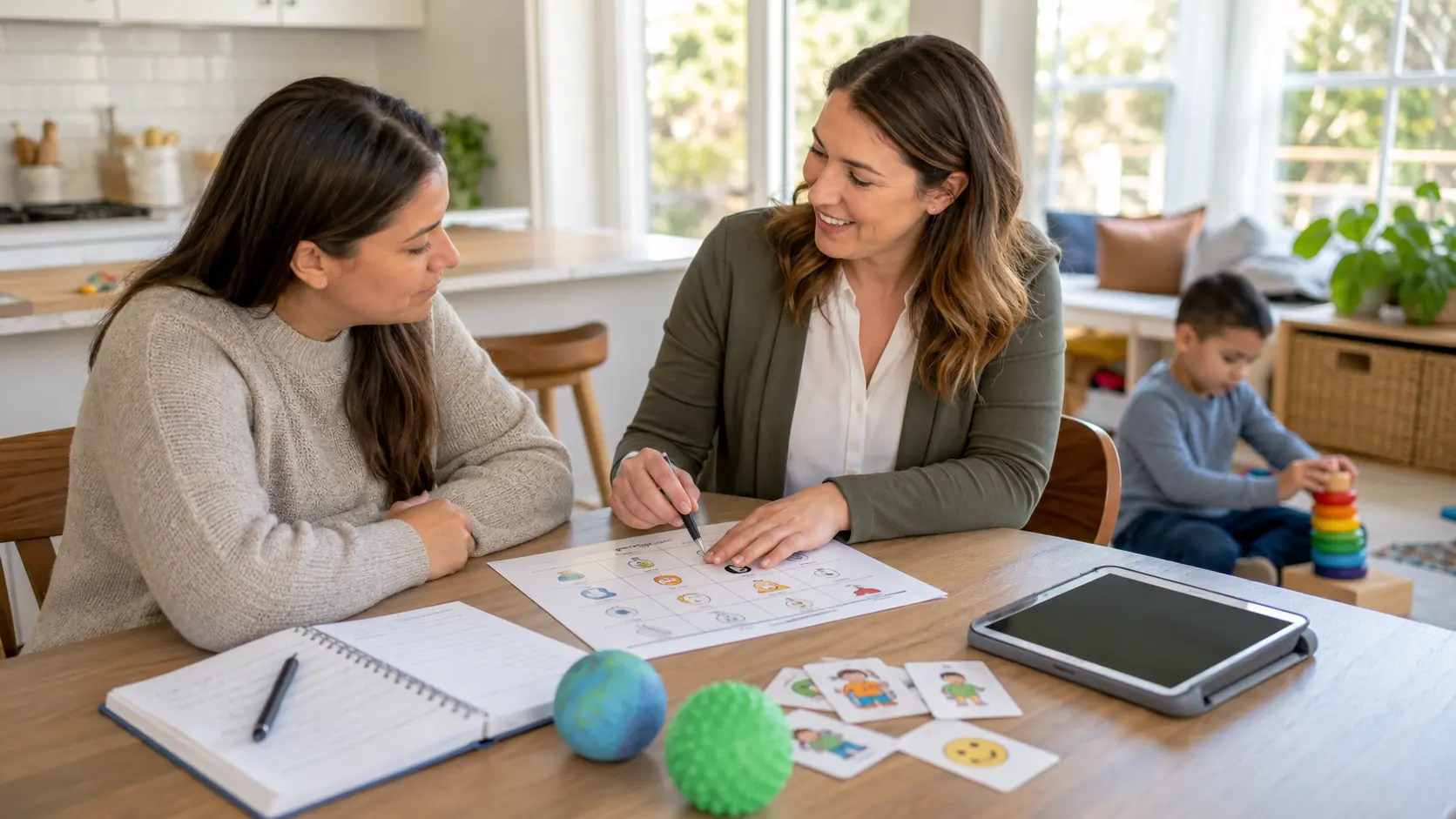
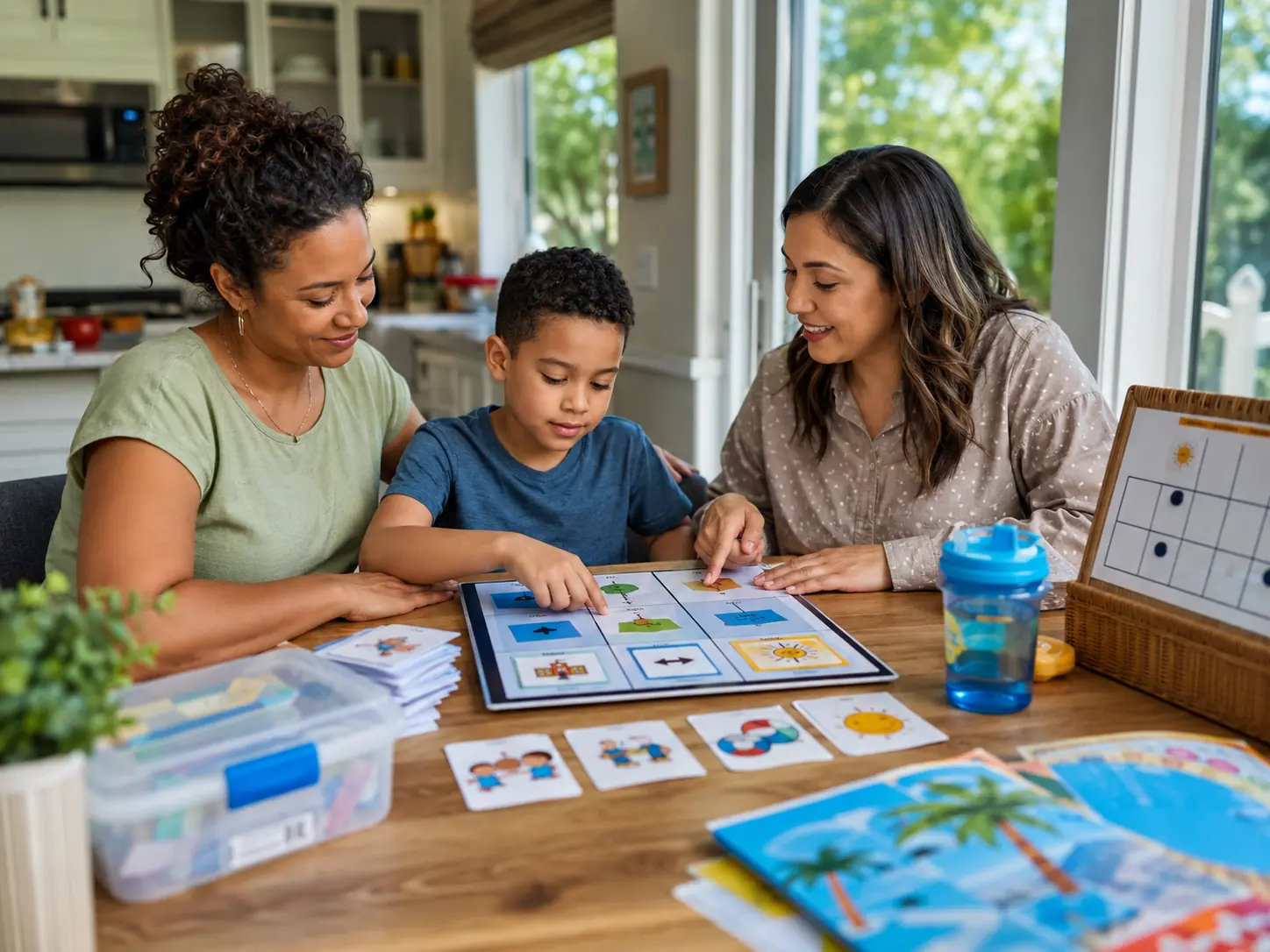
• Visual support creation — custom picture schedules, social stories, First/Then boards, and shopping lists designed around your child's communication level and the specific settings you use most
• Caregiver coaching — working directly with you on how to read escalation signs, implement reinforcement strategies, and make in-the-moment decisions that match your child's actual support needs
• Real-world practice when clinically appropriate — supervised community outing support to practice skills in the actual environments where generalization needs to happen
• Coordination with school and other providers — aligning community outing strategies with what is already being worked on in other settings, so skills transfer more effectively
For many families, getting a clear plan from a qualified behavioral team early on reduces the months of avoidance and frustration that often precede it.
Small Steps Lead to Real Community Participation
Community outings do not have to start with big goals. A child who completes two aisles of a grocery store without distress is building the foundation for four aisles next month. A child who sits at a restaurant table for ten calm minutes is learning something real about how dining out works. Progress in these settings is gradual, sometimes uneven, and always worth counting — even when it looks smaller than what other families seem to manage effortlessly.
With thoughtful preparation, a sensory kit, a clear exit plan, and realistic expectations, families can move from avoidance toward more confident, more regular real-world routines. The goal is not a flawless outing. It is a child who is learning that the community is navigable — and a caregiver who feels supported enough to keep trying.
If you are ready to build a more structured, individualized plan for community outings, AtlasCare ABA is here to help. Our team works with families to design phased plans, create visual supports, and develop the caregiver coaching that makes real-world skill-building sustainable.





.webp)
.webp)
.webp)
.webp)




.jpg)

.webp)

.webp)
.webp)






%20During%20Play%20in%20the%20Home.webp)