
Many parents hear both ABA and occupational therapy recommended and are left wondering what the actual difference is. The confusion is understandable because both can support autistic children and may target daily challenges that look similar on the surface.
The difference is that they approach those challenges from different angles, with different methods and goals. The most useful question is not which therapy is “better,” but which support fits your child’s current needs — and whether both may work best together.
Understanding the Different Goals of ABA and OT
ABA, or Applied Behavior Analysis, is a behavioral approach grounded in understanding how the environment affects behavior and skill acquisition. The CDC describes ABA as focusing on what happens before and after behavior — the antecedents and consequences — and on measuring changes in skill over time.
Occupational therapy (OT) takes a different but complementary approach. Rather than focusing primarily on behavior and learning principles, OT addresses a child's ability to participate in daily activities — the occupations of everyday life.
Real-Life Examples of What Each Therapy Addresses
- Brushing teeth: OT may address sensory discomfort, hand coordination, and adaptive tools. ABA may focus on building the routine, reducing avoidance, and increasing independence.
- Getting dressed: OT may work on motor planning, buttons, zippers, and clothing sensitivity. ABA may help with starting the task, following the routine, and reducing refusal.
- Sitting for a meal: OT may target posture, utensil use, and food sensory tolerance. ABA may focus on mealtime routines, communication, waiting, and participation.
The key difference is not that one therapy owns a goal and the other does not. It is that they often support the same challenge from different angles. For many children, both can be useful together.
The "Sensory vs. Behavior" Debate: How They Overlap
A common misunderstanding is that OT handles “sensory” and ABA handles “behavior” as if those are fully separate problems. In real life, they often overlap.
Why the Same Behavior Can Have More Than One Cause
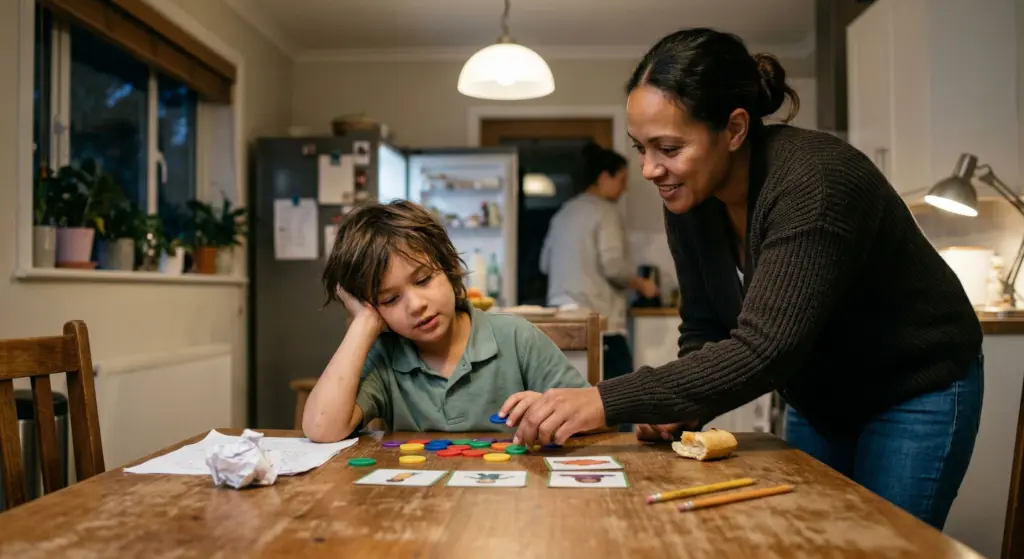
A child who refuses to brush their teeth may be reacting to sensory discomfort, fine motor difficulty, anxiety about the routine, a learned escape pattern, or a mix of all of these. OT may address the sensory and motor side, while ABA may address the routine, avoidance pattern, and communication around discomfort.
The same is true for many everyday challenges, like covering ears in a noisy gym, avoiding handwriting, refusing certain foods, or melting down during transitions. Sensory needs and behavioral patterns often interact, which is why many children benefit most from a plan that considers both.
ABA, OT, and Where Goals Overlap: A Quick Reference
The table below illustrates how the two disciplines differ in their primary focus — and where both may contribute meaningfully to the same functional goals.
What ABA May Be Best Positioned to Help With
ABA-informed support is often most helpful when the main challenge involves communication, routines, skill building, or behavior patterns that affect daily life.
Areas where ABA is often especially useful include:
- Communication: Building functional communication through speech, signs, PECS, or AAC so the child can express needs, make choices, and interact more effectively.
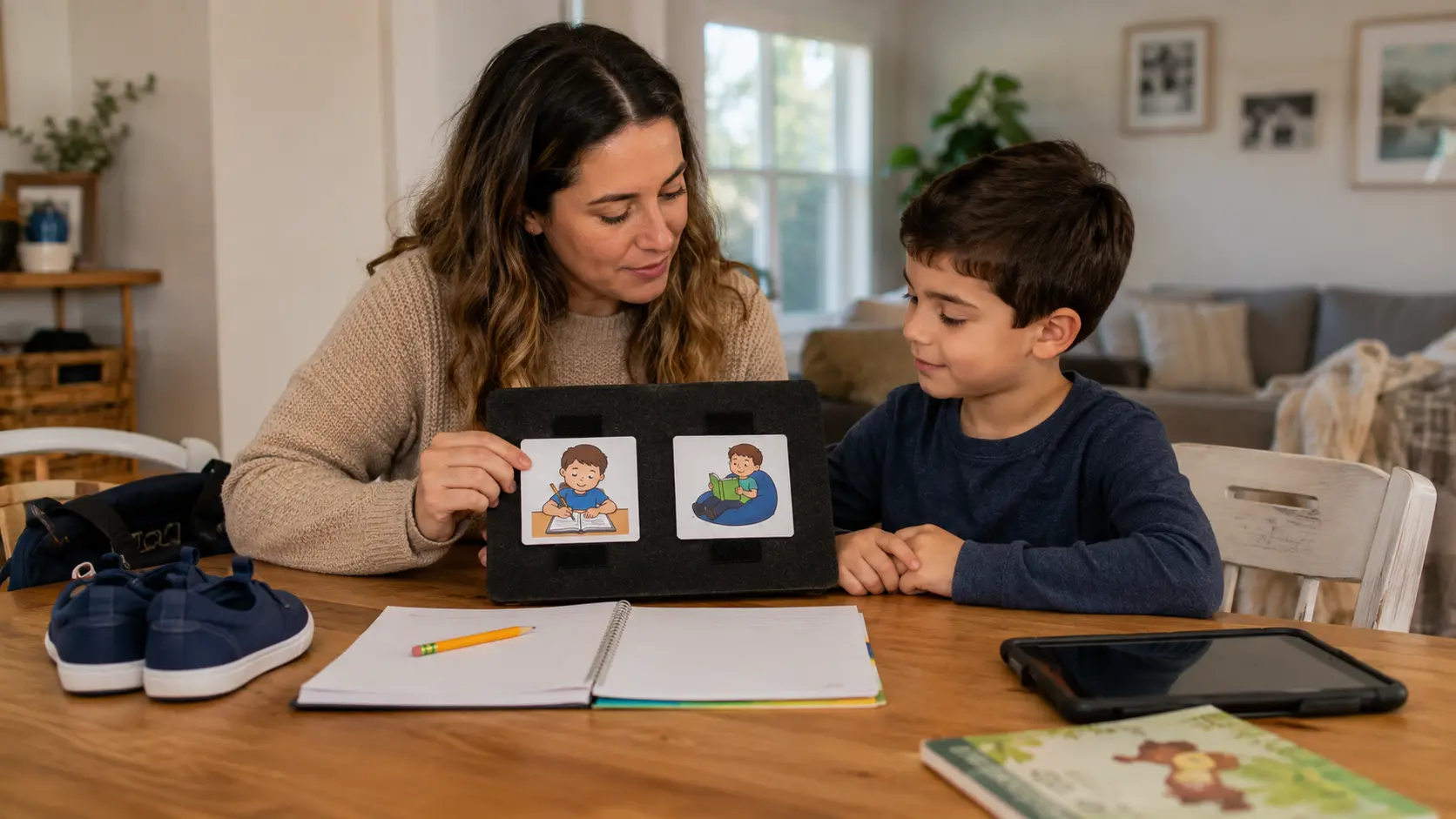
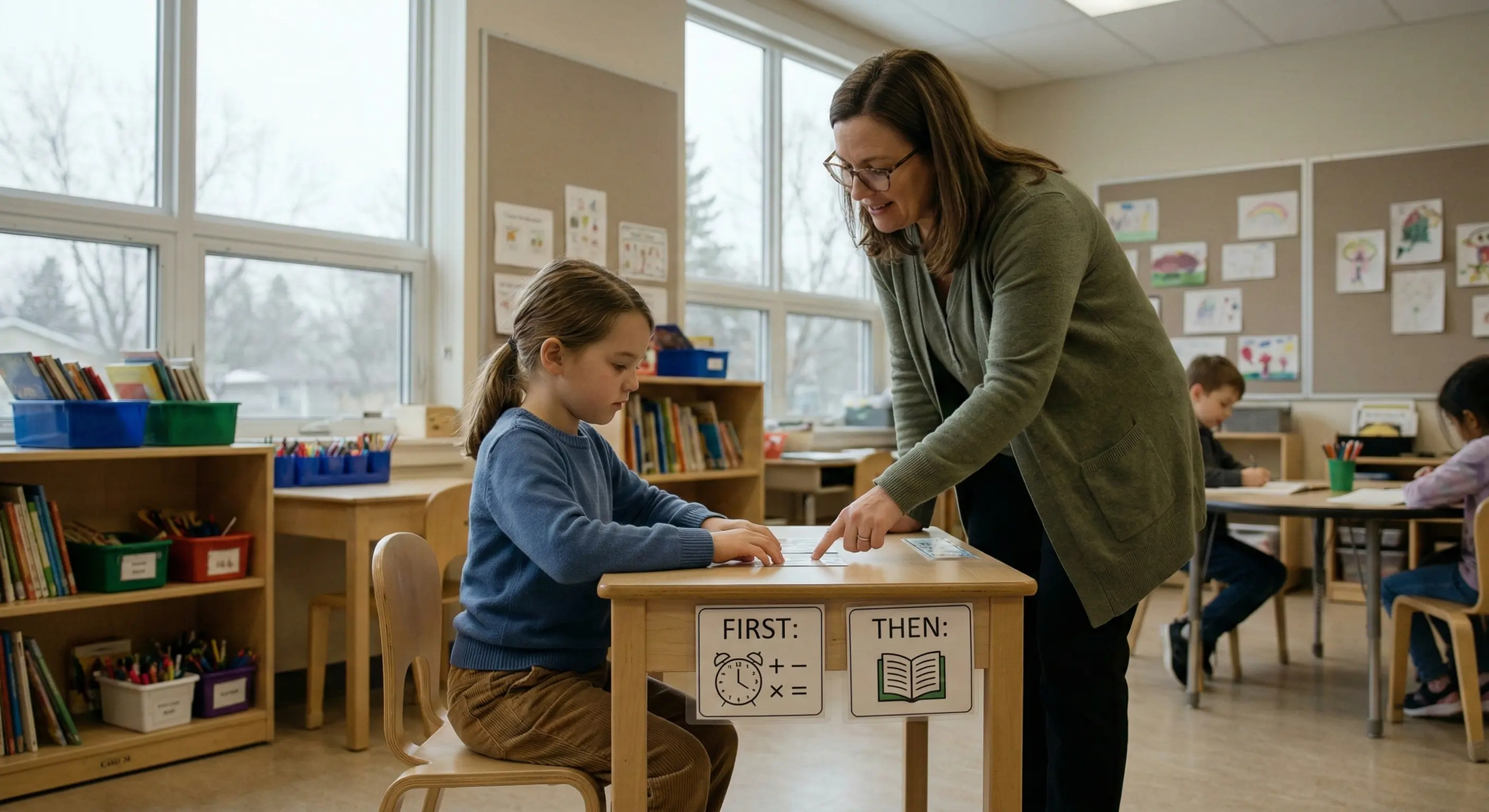
- Daily routines and transitions: Using supports like visual schedules, First/Then boards, and reinforcement to make routines more predictable and consistent.
- Behavior reduction through replacement skills: Identifying what is driving a behavior and teaching a safer, more effective alternative that serves the same purpose.
- Toileting routines: Supporting toilet training through structured, behavior-based approaches.
- Parent and caregiver coaching: Helping adults use strategies consistently across home, school, and community settings.
- Waiting, following instructions, and participation: Building tolerance for delay, multi-step directions, and success in structured settings.
What OT May Be Best Positioned to Help With
Occupational therapy is often most useful when the main barriers involve sensory processing, motor skills, or everyday independence.
Areas where OT is often especially helpful include:
- Fine motor skills and handwriting: pencil grip, cutting, letter formation, and handwriting fluency
- Self-care tasks: dressing, buttons, zippers, utensil use, grooming, and hygiene
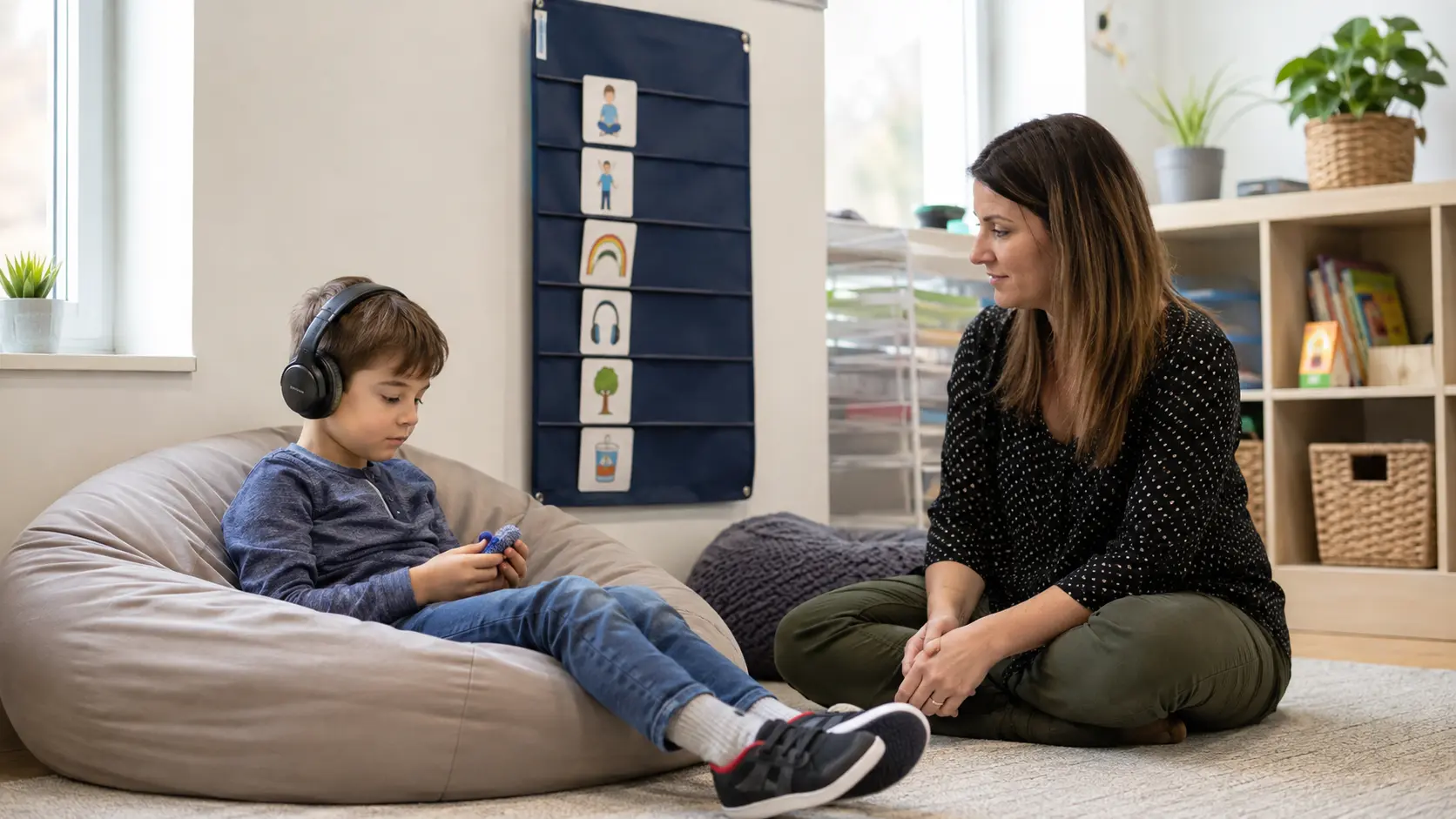
- Sensory regulation strategies: identifying supports that help a child stay regulated and participate more comfortably
- Motor planning and body awareness: helping with coordination for multi-step movements and physical tasks
- School participation: supporting accommodations and adaptations for classroom, art, PE, and other school routines
OT is broader than sensory work alone. Its goal is to help children participate more fully in daily life, wherever functional barriers are making that harder.
Why a Collaborative Approach Often Leads to the Best Outcomes
The most common clinical picture is not a child who needs one therapy but not the other. It is a child whose goals span both disciplines — and whose outcomes depend on those disciplines working together rather than in parallel without communication.
How Collaboration Reduces Parent Confusion
When a child's ABA provider and OT are working toward different versions of the same goal, or using incompatible strategies for the same routine, the parent ends up caught in the middle — trying to implement two different approaches for the same mealtime, the same morning routine, or the same transition. That inconsistency can slow progress by sending the child mixed signals about what is expected and how to respond.
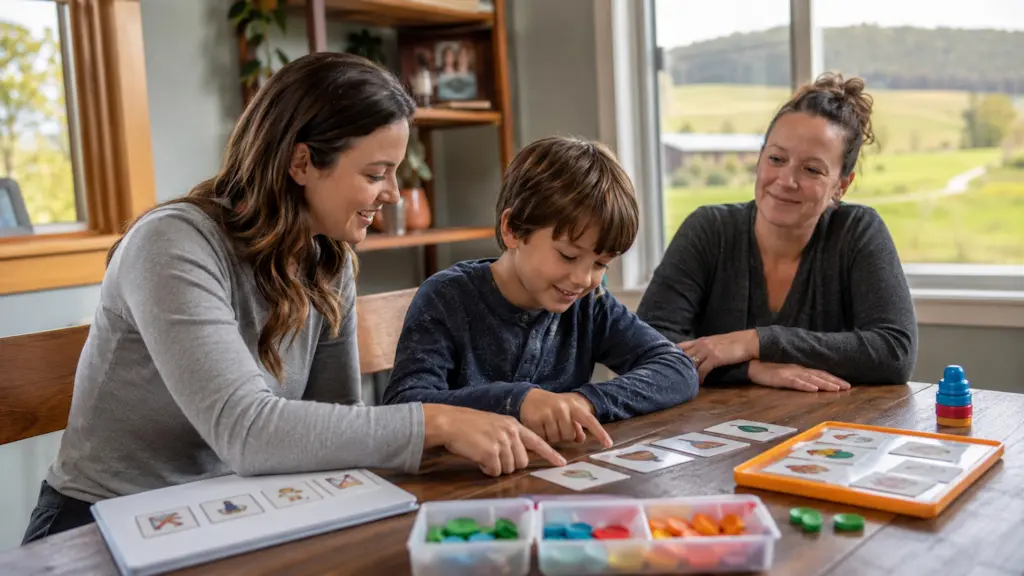
A collaborative plan addresses this directly: both teams understand the shared functional goals, communicate about which strategies are in use, and build on each other's progress rather than working against it.
Examples of Goals ABA and OT May Share
- Morning routines: OT may support dressing and grooming from a sensory or motor angle, while ABA helps build the routine and reduce avoidance.
- Handwashing and hygiene: OT may address sensory tolerance and motor skills, while ABA teaches the sequence and builds independence.
- Mealtime participation: OT may focus on sensory and motor needs, while ABA supports routine, communication, and consistency.
- Classroom participation: OT may address posture, handwriting, or sensory supports, while ABA may help with transitions, following instructions, and communication.
Good collaboration does not mean both therapies do the same job. It means they share information, stay aligned, and help the family follow one clear plan.
Which Therapy Should My Child Start First?
That depends on which challenges are affecting your child’s daily life most right now.
If the biggest concerns are communication, severe behavior, safety, or routines that are breaking down at home, ABA may be the more immediate priority. Building communication and reducing distress in daily routines often makes other skills easier to support.
If the biggest concerns are self-care, motor planning, coordination, or independence with tasks like dressing, feeding, or school participation, OT may be the better place to start. Strengthening those sensory and motor foundations can make routines easier overall.
For many children, the answer is both. The best starting point depends on the child’s evaluation results and the family’s most urgent priorities.
When Feeding, Sensory Needs, and Routines Overlap
Feeding is one of the clearest examples of where ABA and OT often overlap. Eating challenges in autistic children may involve sensory sensitivities, strong food preferences, avoidance of new foods, anxiety around change, or motor and oral-motor difficulties.
Because of that, feeding concerns are often best addressed through a team approach. Depending on the child’s needs, that may include OT, ABA, and sometimes a speech-language pathologist. No single therapy owns feeding — the best plan is the one that matches the factors affecting that child most.
How AtlasCare Coordinates With Your Child's OT Team
At AtlasCare, ABA support is built with the understanding that a child’s care rarely happens in one setting alone. When a child is also receiving OT, speech, PT, or school-based services, progress is strongest when goals and strategies are aligned.
That coordination often includes:
- Shared goals: Understanding what the OT is targeting so ABA strategies support those same priorities.
- Routine consistency: Using similar expectations and supports across routines like mealtimes, dressing, or hygiene.
- Avoiding mixed messages: Reducing conflicting strategies that can confuse both the child and the family.
- Parent communication: Helping families understand how different therapies connect and how to support consistency at home.
The goal is not to blend disciplines into one. It is to make sure different providers are working toward the same bigger outcome: helping the child participate more fully, safely, and independently in daily life.
The Right Question Is About Your Child, Not the Therapies
The most helpful question is not “ABA or OT?” on its own. It is: what is making daily life harder for my child right now, and which support best addresses that? Sometimes the answer is ABA. Sometimes it is OT. Often, it is both.
The best outcomes usually come from building a plan around the child’s real needs, keeping providers aligned, and adjusting support as those needs change. ABA and OT are not competing therapies — they can work together to support daily life more clearly and consistently.
If you are trying to decide whether ABA, OT, or both make sense for your child, AtlasCare ABA can help you think through the next step with more clarity.
Reach out to schedule a consultation with the AtlasCare team.















.webp)

.webp)

.webp)
.webp)
.webp)







.jpg)


.webp)

.webp)
.webp)








%20During%20Play%20in%20the%20Home.webp)