
It is 7:42 in the morning. You have said 'go get your shoes' four times. Your child is still in the kitchen, deeply absorbed in something completely unrelated to shoes. The mental countdown to the bus is running. Everyone's stress level is climbing. If this sounds like a familiar morning, you are not alone — and you are also not doing it wrong. Mornings like this are one of the main reasons families start exploring a visual schedule for autism.
A visual schedule is a simple tool: pictures, icons, or words arranged to show what will happen and in what order. It does not require a degree in special education to make, and it does not need to be elaborate to be useful. What it does need to be is consistent, accessible, and matched to how your specific child understands information.
What Is a Visual Schedule for Autism?
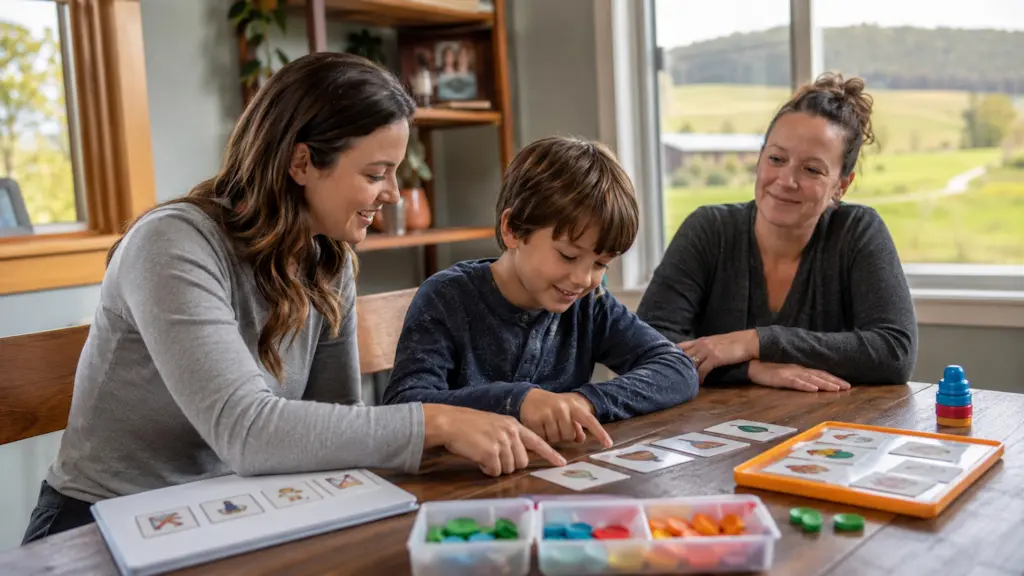
A visual schedule is a set of pictures, cards, words, objects, or images that shows a child what will happen next. It can show a full day or just one short routine, such as brushing teeth, getting dressed, or getting ready for bed.
An autism visual schedule is a practical visual support that helps children understand routines, expectations, and transitions without relying only on spoken directions.
A first-then board is the simplest version, showing what happens now and what comes next. A full daily visual schedule shows a longer sequence. For many younger children, a picture schedule for autism using real photos from home can be especially helpful because it makes the routine more concrete and predictable.
Why Visual Schedules Help Autistic Children
Visual schedules help by making daily routines more predictable. When a child can see what is coming next, transitions feel less sudden and expectations become easier to understand.
Spoken directions disappear quickly. A direction like “brush your teeth, get dressed, then come for breakfast” requires the child to remember several steps at once. A visual schedule stays available, so the child can look back at it during the routine.
Visual schedules can support:
- Reduced verbal load: The child can check the schedule instead of relying only on repeated reminders.
- Smoother transitions: Moving from a preferred activity to a non-preferred one can feel less abrupt when the next step is visible.
- Task completion: Children can remove, check off, or move each item as they finish it.
- Independence: Over time, familiar routines may require less adult prompting.
Visual schedules do not prevent every difficult moment. Some days will still be hard. The goal is to reduce routine-related stress and make daily expectations clearer and more manageable.
Home vs. School Visual Schedules
A visual schedule for autism classroom use and a home schedule have the same goal: helping the child understand what comes next. But they usually look different.
School schedules are often built around the classroom day — circle time, activities, lunch, transitions, and dismissal. A visual schedule for students with autism may be larger, group-facing, and connected to the school timetable.
Home schedules should be simpler, more personal, and more flexible. They work best when they are tied to real routines your family does every day, use images your child recognizes, and are placed where the routine happens.
You can borrow the idea from school, but the steps should match your home routine. If your child already uses certain symbols at school, ask their teacher or therapist whether those visuals can be adapted for home.
A visual schedule for autism at home should match your family’s real routines, not simply copy a classroom schedule.
How to Create a Simple Visual Schedule
Some families prefer printed pictures or real photos, while others may explore a visual schedule autism app. For many younger children, physical visuals placed where the routine happens are easier to use than a screen-based schedule.
You do not need special software or expensive materials to start. The best visual schedule is one your child can understand and your family can use consistently.
- Choose one routine: Start with a routine that causes daily stress, such as morning, bedtime, or leaving the house.
- Break it into 3 to 6 steps: Keep it simple. For example: bathroom → get dressed → breakfast → shoes → backpack.
- Choose the right format: Use real photos, printed icons, objects, or written words — whichever your child understands best.
- Place it where the routine happens: A bathroom routine schedule should be in the bathroom, not across the house.
- Teach it calmly: Point to each step as you go. Your child needs time to learn how to use the schedule.
- Fade prompts slowly: Start by guiding your child, then gradually pause and see if they check the schedule independently.
You can use free icons online or simply take photos with your phone, print them, and attach them to cardboard, paper, or a small board.
Best Routines to Start With
For parents searching for a daily visual schedule for autism, the best routines to start with are the ones that happen every day, follow a predictable sequence, and currently require repeated verbal prompting:
Visual Schedules for Transitions and Meltdowns
Transitions can be difficult for autistic children because they involve ending one activity and starting another. A visual schedule helps by showing the transition before it happens and making the next step clear.
For short transitions, a first-then board can be especially helpful. It uses two simple visuals: what happens now and what comes next.
First-Then Examples to Try at Home
- First brush teeth, then story
- First shoes, then car
- First homework, then tablet
- First bathroom, then bubbles
- First dinner, then outside
- First one more minute, then phone goes away
A visual timer can also help with transitions, especially when ending screen time or leaving a preferred activity. Seeing time pass can make the ending feel less sudden and more predictable.
Common Mistakes Parents Make With Visual Schedules
If a visual schedule is not working yet, it may simply need adjustment. Common mistakes include:
- Making the schedule too long: Start with 3–5 steps instead of a full-day schedule.
- Only using it during hard moments: Use the schedule during calm, normal routines so it becomes familiar.
- Changing visuals too often: Give the schedule a few weeks of consistent use before changing it.
- Talking too much over the visual: Once your child understands the schedule, reduce verbal reminders and let the visual guide the routine.
- Expecting independence too soon: Teach the schedule first by walking through it together.
- Using visuals as punishment: A schedule should stay neutral and supportive, not something used to shame or threaten.
If you have used a schedule consistently and routines are still difficult, the format may need to change. The steps may need to be simpler, or sensory, communication, or behavior factors may need more individualized support from an ABA team or specialist.
How ABA Teams Use Visual Supports
Visual supports are commonly used in ABA-informed programs to teach routines, reduce transition stress, support communication, and build independence.
ABA teams may use visual schedules alongside:
- Task analysis: Breaking routines like brushing teeth or getting dressed into small steps.
- Prompting and fading: Helping the child use the schedule at first, then reducing support over time.
- Reinforcement: Encouraging progress with something meaningful to the child.
- Functional communication training: Pairing visuals with communication tools so the child can express needs and preferences.
- Parent coaching: Teaching caregivers how to introduce, adjust, and use visual supports consistently at home.
AtlasCare ABA works with families to create visual supports that fit real home routines — not generic templates. The goal is to build a system that matches the child’s communication level, family schedule, and the routines that are most difficult each day.
Start Small. Stay Consistent.
A visual schedule does not need to be complicated to help. A few photos on the bathroom wall, a first-then board on the fridge, or a small card for leaving the house can make daily routines more predictable.
The key is to start with one routine, teach it calmly, and use it consistently. A simple schedule used every day is more helpful than a perfect system that never gets started.
If routines, transitions, or task completion are still difficult, AtlasCare ABA can help create visual supports that fit your child’s communication level and your family’s real daily routines.
Contact AtlasCare ABA to ask about parent training and in-home routine support.











.webp)


.webp)

.webp)
.webp)
.webp)








.jpg)


.webp)


.webp)
.webp)









%20During%20Play%20in%20the%20Home.webp)