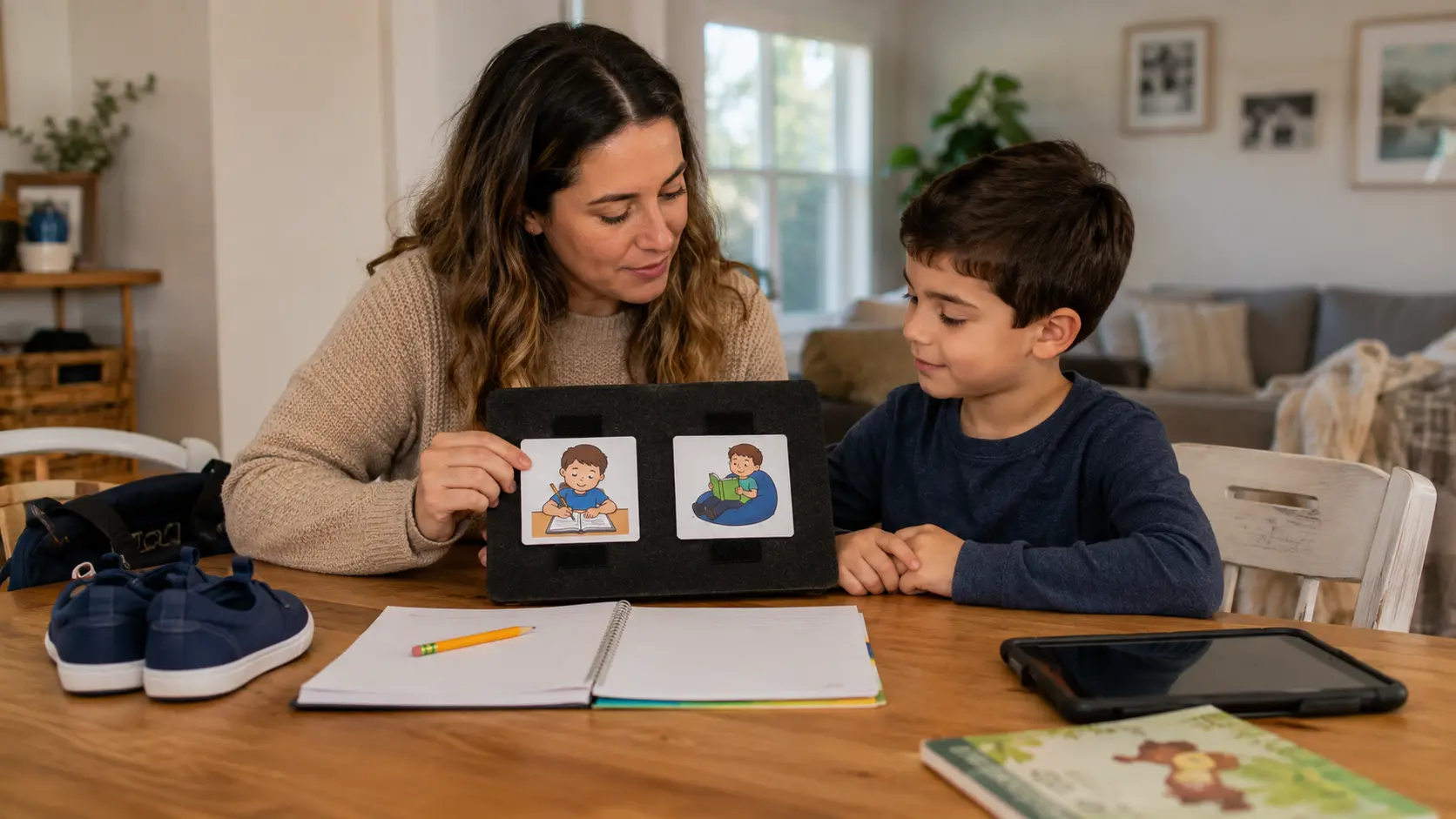
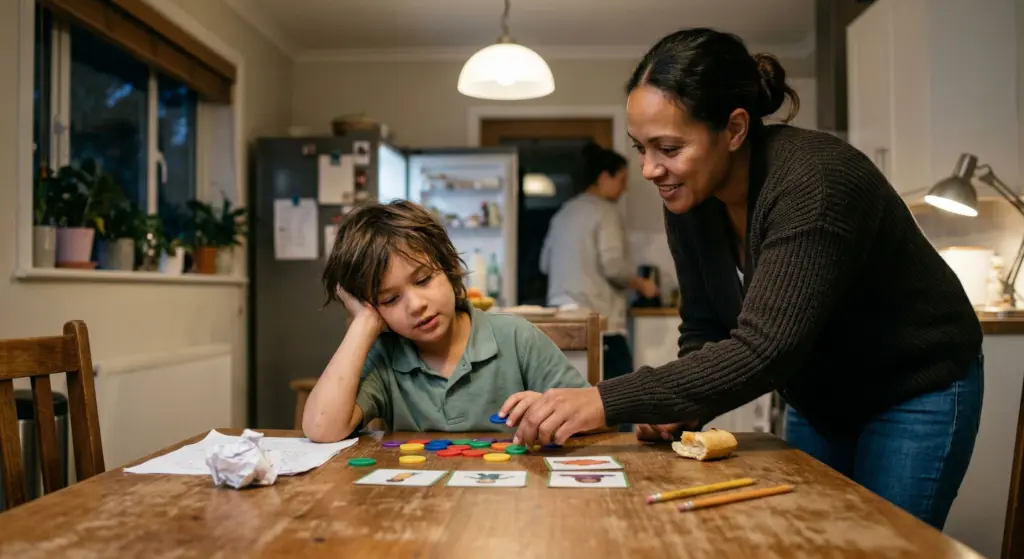
It is four in the afternoon and the tablet has been on for an hour. You know dinner needs to start in ten minutes. You say 'time to turn it off' and your child does not move. You say it again, a little more firmly. What follows is the part of the day that exhausts everyone. If this pattern — or a similar one around shoes before leaving, starting homework, getting into the bath, or shifting from play to bedtime — is a reliable part of your household, a first-then board for autism may be worth trying.
A first-then board is a simple two-panel visual tool: it shows the child what comes first and what comes next. Nothing more.
What Is a First-Then Board?
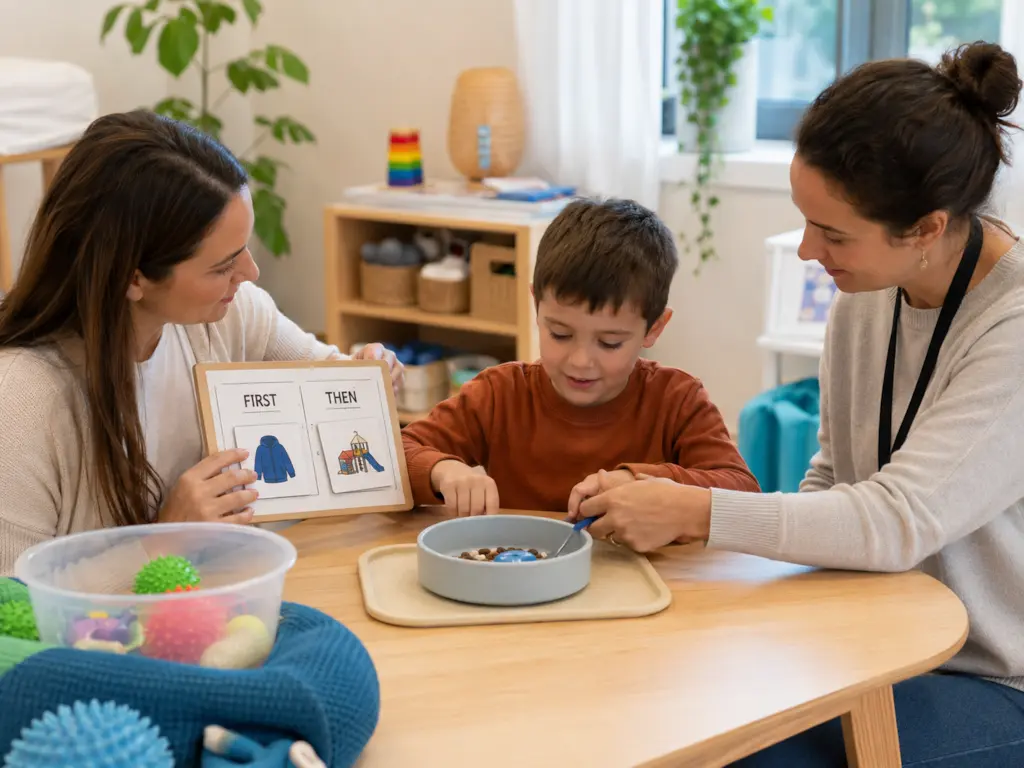
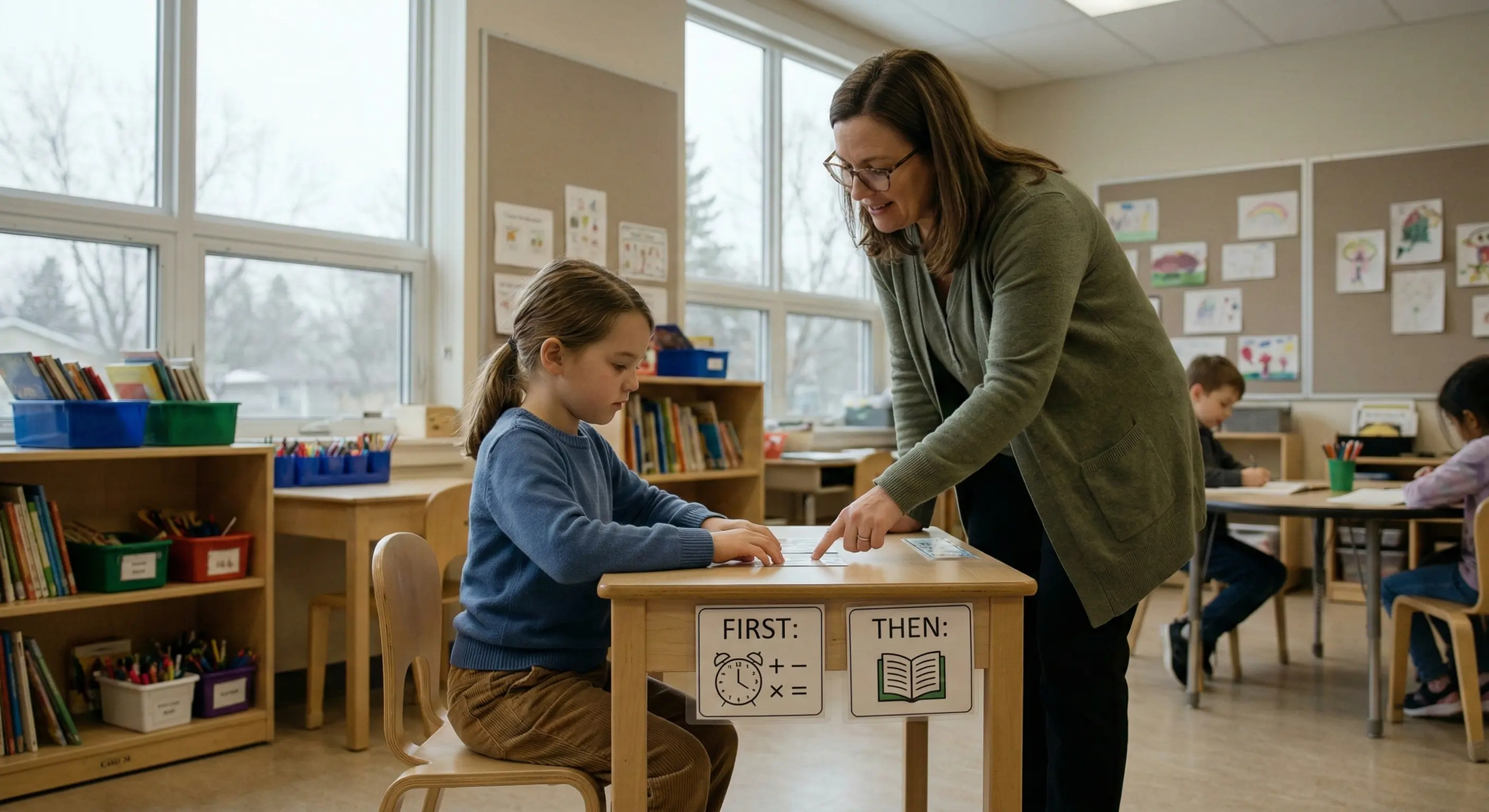
A first-then board is a simple visual support that shows a child two things: what needs to happen now and what comes next.
The basic format is:
First [specific task] → Then [preferred or next activity]
For example:
- First: Shoes on → Then: Car music
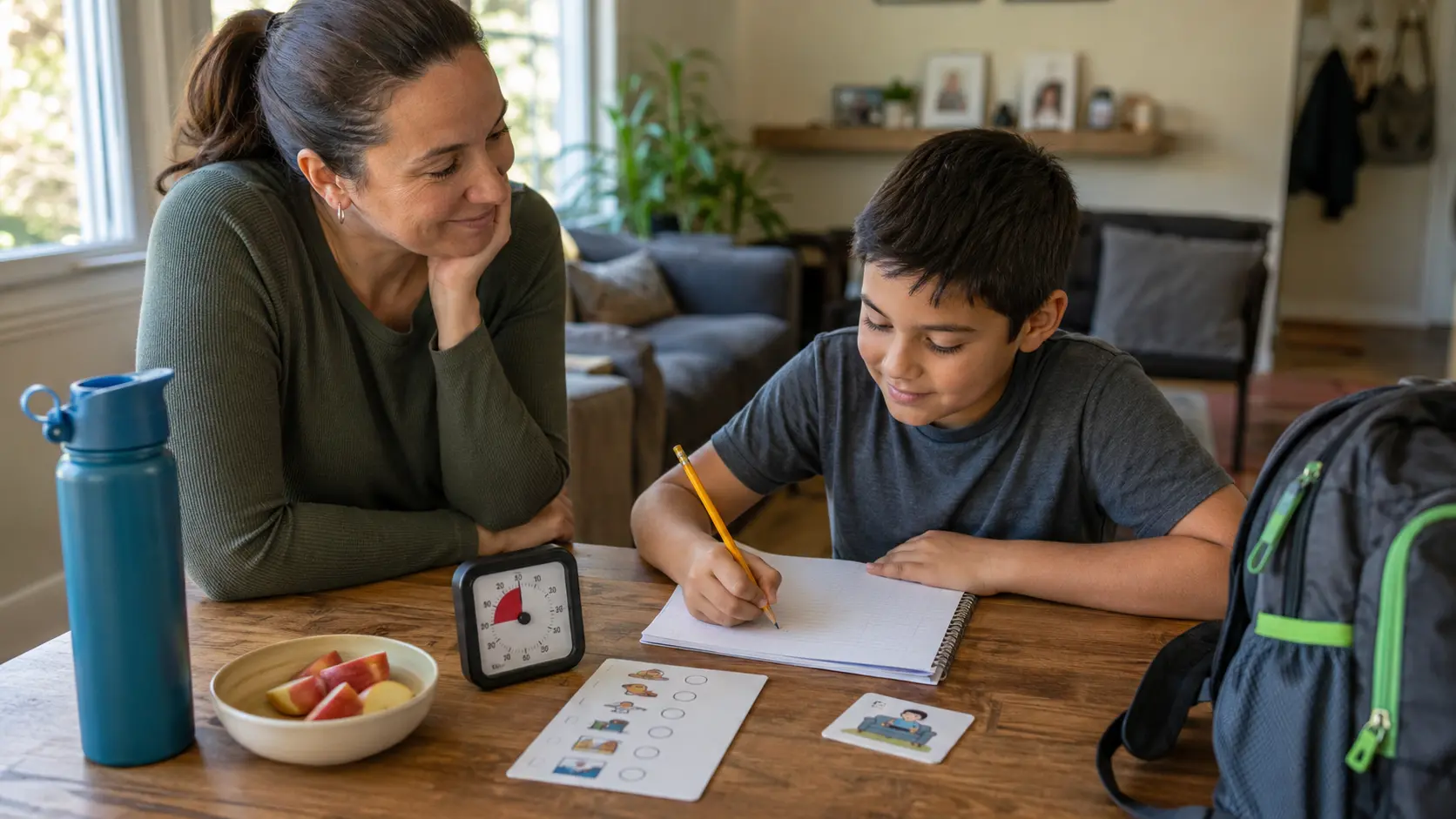
- First: Three math problems → Then: Five-minute break
- First: Pajamas → Then: Two books
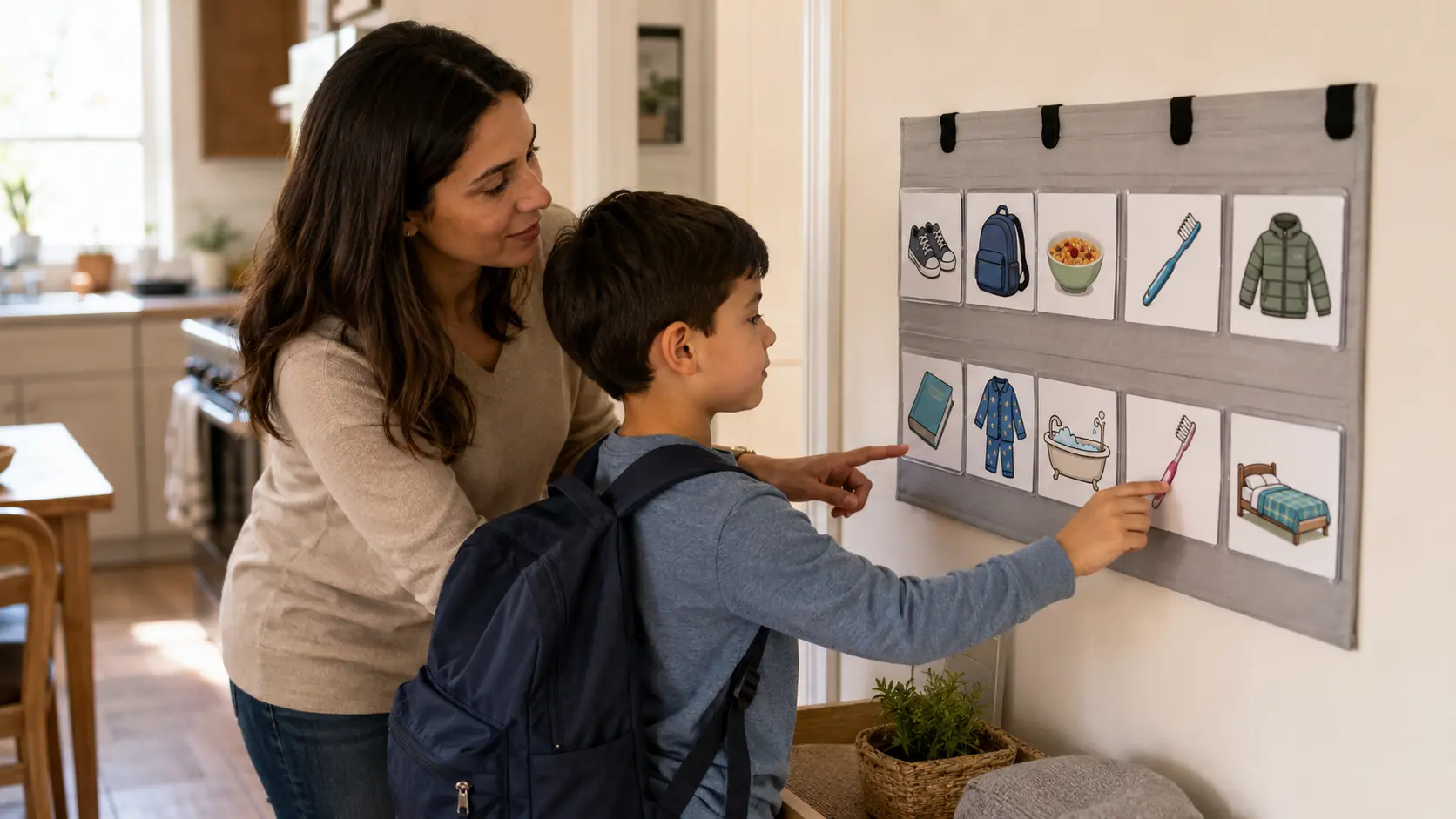
The board can use photographs, printed icons, simple drawings, written words, or even objects. The best format is whichever the child can understand most easily and consistently.
By making the sequence visible, the board reduces reliance on spoken instructions and helps the child see what will happen next.
Why First-Then Boards Can Help Autistic Children
Transitions can be difficult for autistic children because they involve stopping one activity, shifting attention, and dealing with uncertainty about what comes next. A verbal instruction like “time to stop” may not clearly show what will happen afterward or when the new task will end.
A first-then board makes that sequence visible and predictable.
How First-Then Boards Help
- Reduce working-memory demands: The child does not have to remember multiple spoken instructions while managing the transition.
- Show a clear endpoint: “First homework, then break” makes it clear that the task has an end.
- Reduce repeated verbal prompting: Caregivers can point to the board instead of repeating instructions.
- Build predictable routines: Consistent first-then sequences can help children learn what happens next during mornings, homework, hygiene, and bedtime.
Visual supports are commonly used in autism support and ABA to make routines and transitions clearer. A first-then board will not work for every child or every situation, but it can be a useful part of a broader communication and routine-support strategy.
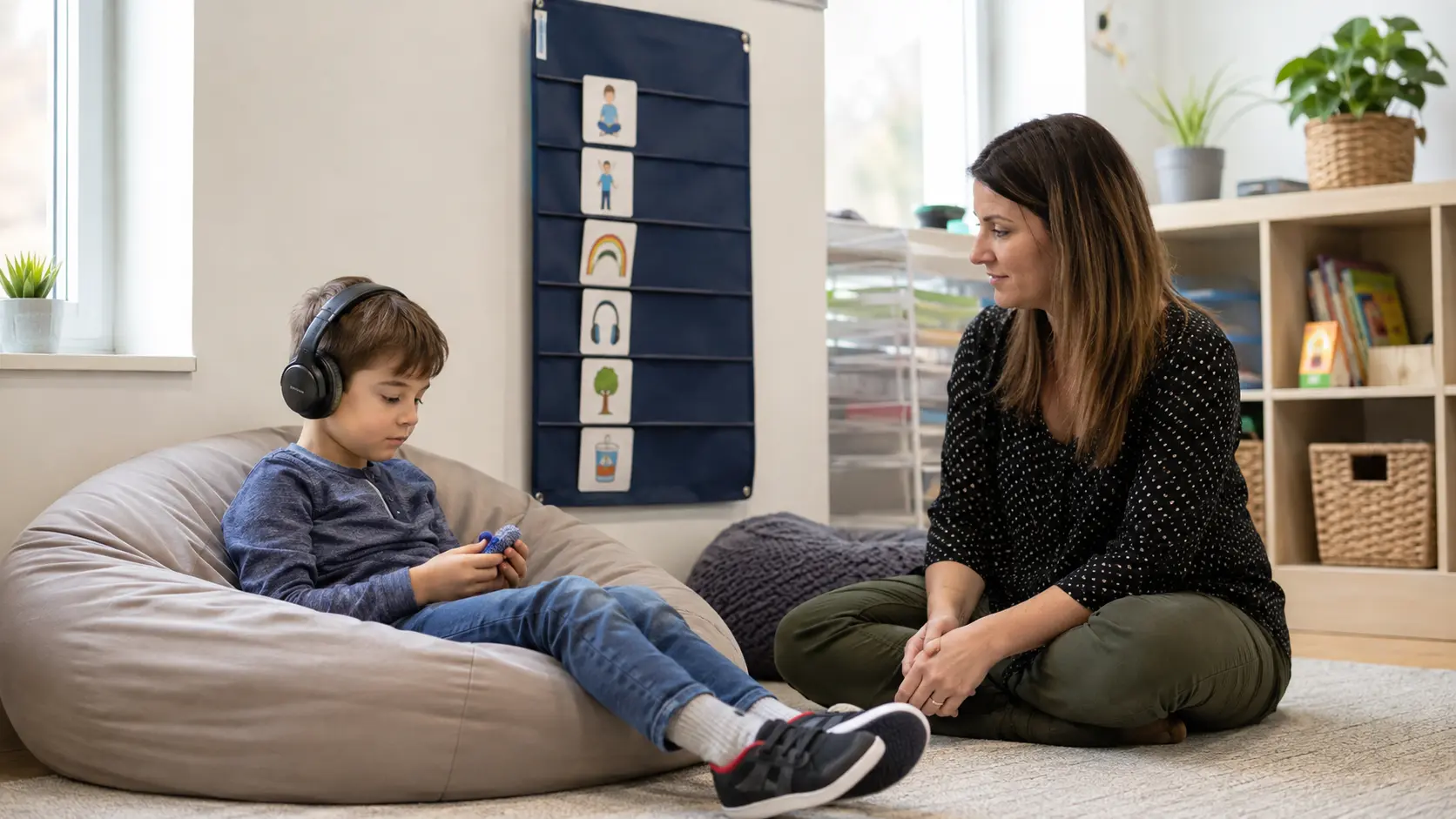
First-Then Board vs. Full Visual Schedule
A first-then board and a picture schedule for autism are both visual supports, but they serve different purposes.
A first-then board is usually the easiest place to start because it can be created in minutes. A full visual schedule for autism at home is more useful when the child needs to understand several steps across a longer routine.
Many families use both: a full schedule for the overall day and a first-then board for specific transitions that need extra support.
How to Create a First-Then Board at Home
A first-then board does not require special materials. Families can use card stock, a whiteboard, laminated pictures, sticky notes, a notebook, or even a tablet. The goal is simply to make the next two steps easy for the child to see and understand.
6 Steps to Set It Up
- Choose a format: Use card stock, a whiteboard, notebook, tablet, or Velcro-backed picture board.
- Select two visuals: Choose one image or word for the first task and one for the then activity. Use photos, icons, drawings, or written words based on what the child understands best.
- Label the sections: Clearly mark the board FIRST and THEN, or use familiar symbols.
- Place it where it is needed: Keep the board near the location where the transition usually happens, such as the homework table, bathroom, or tablet charging area.
- Present it simply: Point to the board and use short first-then language, such as: “First math, then break.”
- Follow through: Once the first task is complete, provide the then activity as shown. Consistency helps the child learn that the board is predictable and trustworthy.
FIRST / THEN Template
Print, draw, or photograph — use whatever format the child responds to.
FIRST
[photo / icon / word]
THEN
[photo / icon / word]
Tip: Use Velcro-backed pictures on a board so images can swap easily as routines change.
If your child uses AAC, picture symbols, or another visual communication system, use the same symbols on the first-then board whenever possible. Keeping the visual language consistent can make the board easier to understand.
Choosing the Right First Task and Then Activity
Make the First Task Clear and Manageable
A common mistake is choosing a first task that is too broad. “Do homework” is vague, while “complete three math problems” is clear. “Clean your room” can feel overwhelming, while “put your shoes in the basket” is specific and achievable.
A good first task should be:
- Specific: The child knows exactly what to do and when it is finished.
- Achievable: It matches the child’s current skills and energy level.
- Appropriately sized: It is small enough to feel manageable.
Choose a Meaningful Then Activity
The then activity should be something the child genuinely values and can expect consistently after the first task.
It should be:
- Motivating: A preferred toy, sensory activity, show, outdoor time, snack, or another enjoyable routine.
- Reliable: Deliver it as shown so the board remains predictable.
- Proportionate: Match the preferred activity to the effort required for the first task.
As routines become more familiar, the then activity may simply become the next expected step rather than an added incentive. Over time, the child may need the first-then board less often as the routine becomes more predictable.
First-Then Board Examples for Morning, Homework, Hygiene, and Bedtime
These examples can be adapted to fit your child’s routines, interests, and current skill level.
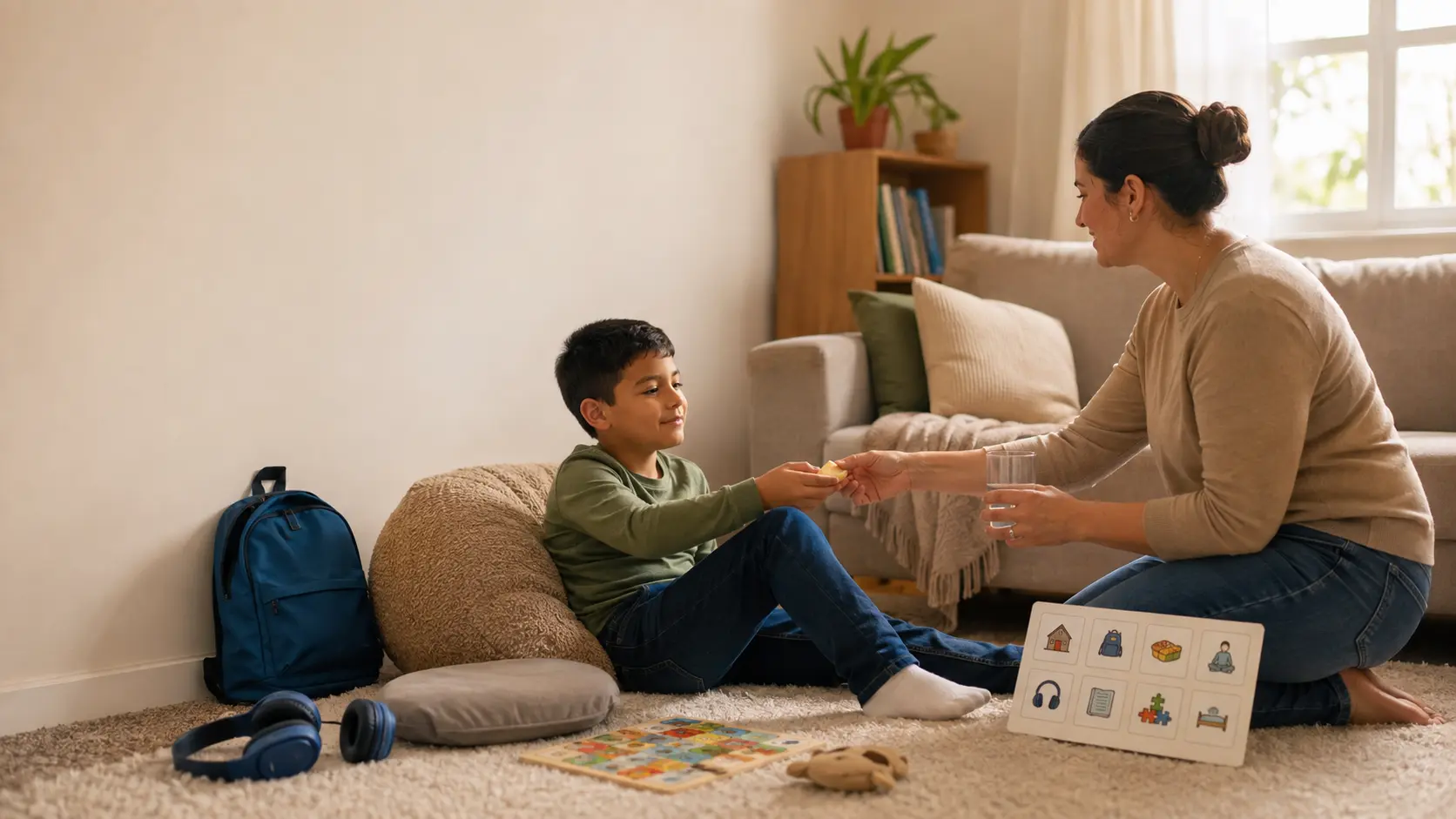
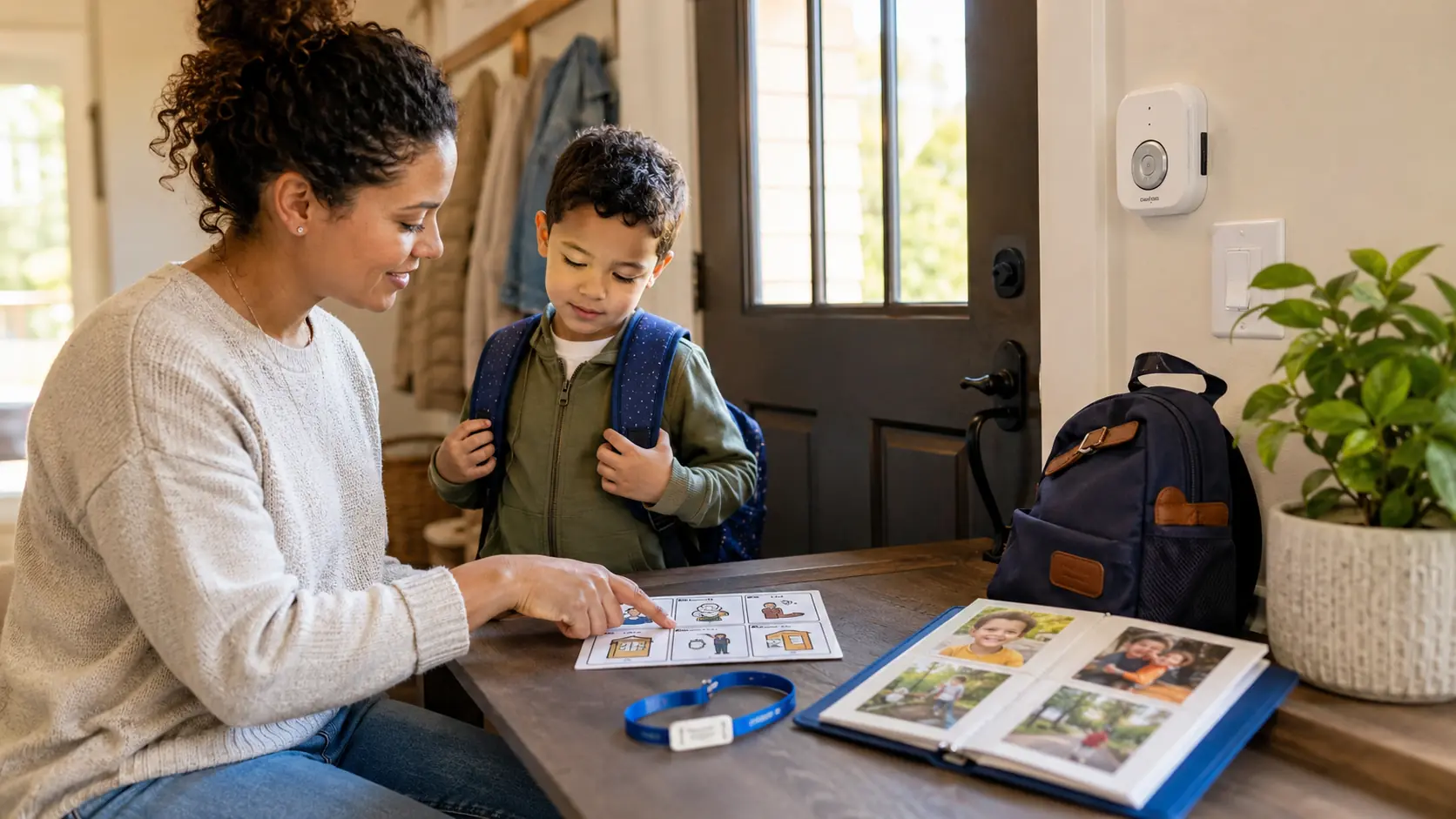
Keep the language simple and use the communication format your child understands best. If your child uses AAC or picture symbols, use the same symbol system on the board. For children who respond better to photographs, use pictures of familiar objects, activities, and places.
Common First-Then Board Mistakes
If a first-then board works inconsistently, the issue is often how it is being used rather than the board itself.
- The first task is too large: Break broad tasks like “do all your homework” into smaller, clearly finished steps.
- The then activity is not motivating: Use something the child genuinely values, not what you assume should be rewarding.
- The then activity changes or is delayed: If the child completes the first task, follow through as shown so the board stays predictable.
- There is too much verbal explanation: Keep language brief. Point to the board, name the sequence, and follow through.
- Caregivers use it differently: Consistency across parents and caregivers helps the child understand what to expect.
- The board is not updated: Adjust tasks, visuals, and preferred activities as the child’s skills and routines change.
A first-then board works best when it stays simple, predictable, and matched to the child’s current needs.
What to Do When the Child Refuses the First Task
Refusal is useful information. If the child does not engage with the first task, ask whether:
- The task is too large, unclear, or demanding
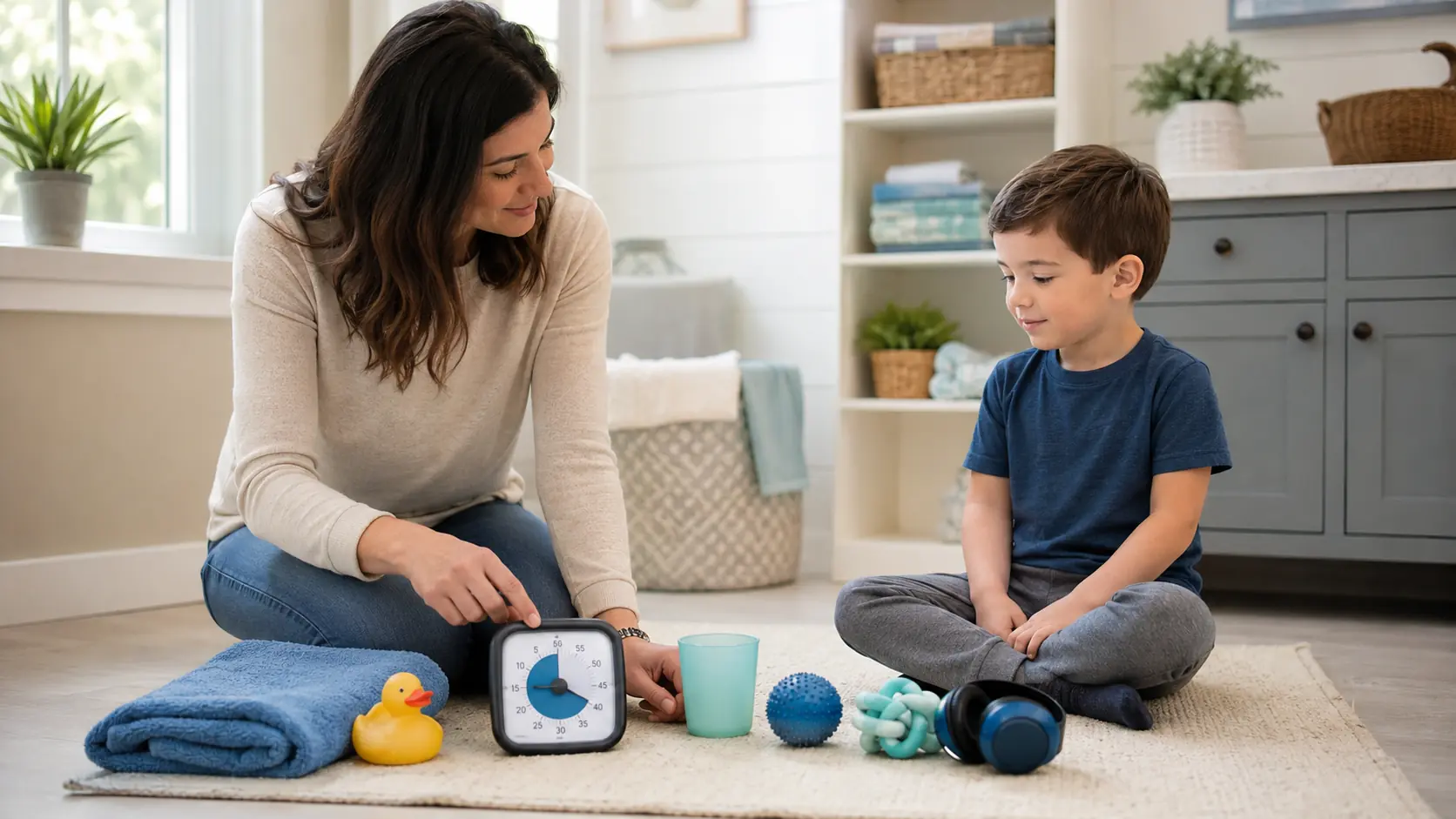
- The task involves uncomfortable sensory input
- The child understands what is expected
- The then activity is genuinely motivating
- More prompting or support is needed to get started
Instead of increasing pressure, try making the first task smaller, adding support, or adjusting the then activity. Refusal can signal that the first-then plan needs to be changed.
How ABA Parent Training Can Improve Consistency
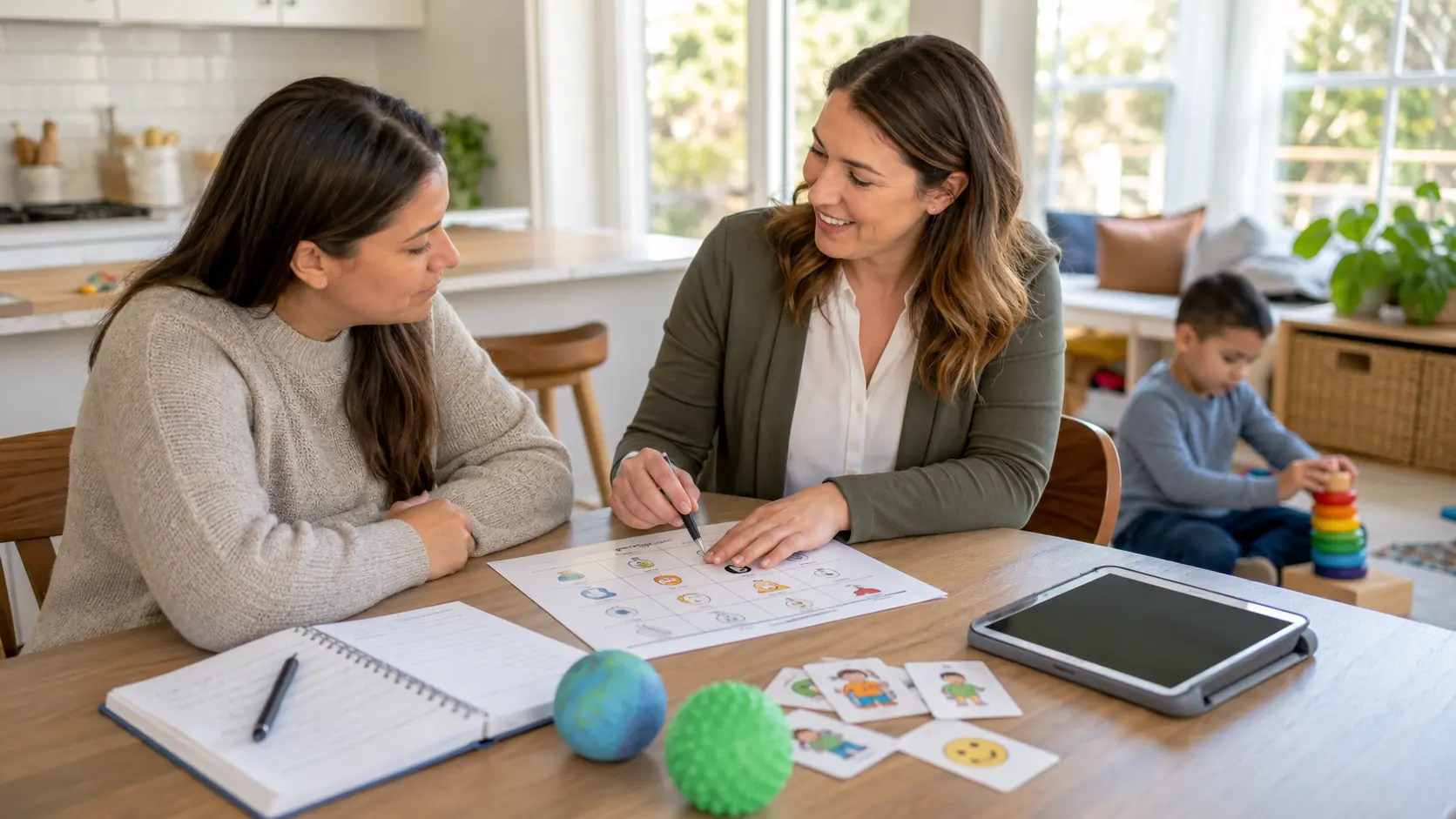
A first-then board can be a helpful starting tool, but families often need support to understand why certain transitions are difficult and how to use the board consistently.
AtlasCare ABA parent coaching can help families:
- Understand difficult transitions: Identify whether the challenge is related to sensory input, task demands, communication, or stopping a preferred activity.
- Choose effective reinforcers: Use activities and items the child genuinely values.
- Plan prompting and fading: Provide enough support to get started, then gradually reduce help as the routine becomes more independent.
- Improve caregiver consistency: Help parents, grandparents, school staff, and other caregivers follow the same approach.
- Troubleshoot changes: Adjust the board when routines, preferences, or challenges change.
The goal is to build more predictable and independent routines while keeping visual support available whenever it remains helpful.
Does Your Child's Routine Need More Than a Printable?
If transitions, homework, hygiene, or other daily routines still turn into daily battles even after trying a first-then board, AtlasCare ABA parent coaching can help you build a system that fits your child's specific communication style, motivations, and home routine.
Contact AtlasCare to learn more about parent coaching and home-based behavior support.








.webp)

.webp)

.webp)
.webp)
.webp)







.jpg)

.webp)

.webp)
.webp)







%20During%20Play%20in%20the%20Home.webp)